
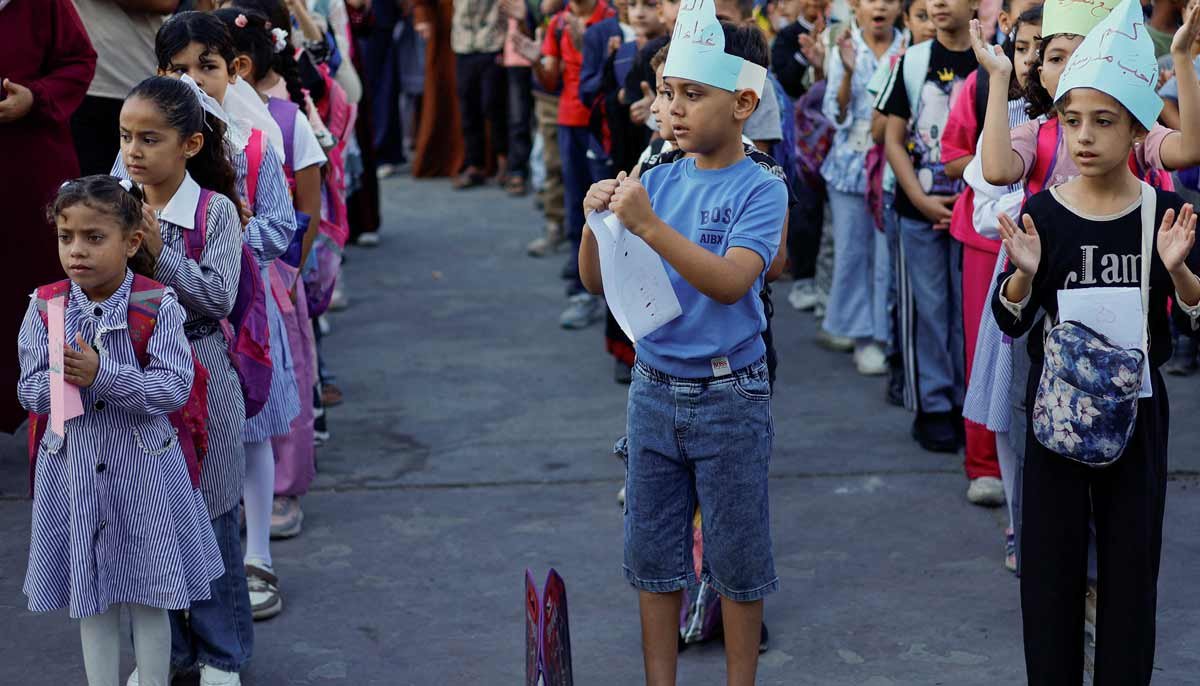

Hundreds of thousands of students in Gaza have returned to in-person classes after nearly three years. The new school year began on September 19.
Students now attend classes in damaged buildings, tents and temporary learning centers. Many families also struggle to afford basic school supplies.
660,000 Students Lost Regular Classroom Access
UNICEF says 98% of schools in Gaza have suffered damage or destruction during the war. Education officials estimate that about 660,000 students lost regular access to classrooms.
The conflict has also caused heavy losses among students and education workers. Gaza education officials say around 22,000 students and more than 770 education workers have died during the conflict.
Despite these losses, education authorities have started the 2026-27 academic year. Local and international organizations have helped establish temporary schools across Gaza.
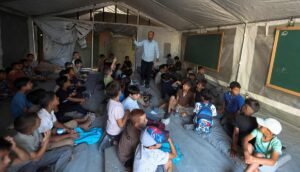
Students Study Inside Tents
Many temporary classrooms now stand on sandy ground. Some have only mattresses and a blackboard.
Fifteen-year-old student Samar Abu Salmi returned to class after years of online learning. She said students had studied through phones because they could not attend school.
Her family now lives in a tent. Basic items such as notebooks, pens and clothing have also become costly.
Meanwhile, 14-year-old Yamen Abu Samra described the difficult conditions inside his temporary classroom. He said students now face fear and extreme heat while trying to study.
More Than 500,000 Students Expected in Classes
Education officials expect at least 540,000 students to attend classes this year. They will study in temporary schools, private facilities and learning centers.
UNICEF is supporting several education programs across the territory. Online classes will also continue for students who cannot attend in person or who left Gaza during the war.
However, major challenges remain. Damaged schools, limited supplies and high prices continue to affect Gaza’s education system.
For many students, returning to a classroom marks an important step after years of disruption. They are continuing their education despite difficult living and learning conditions.

