
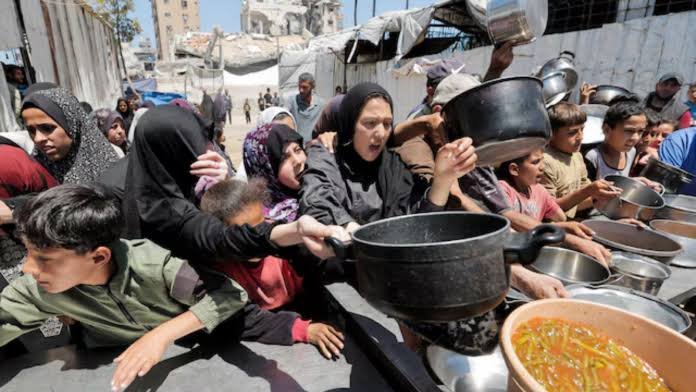

Hunger Levels Could Rise Again by December
The United Nations World Food Programme has warned of major aid reductions in Gaza unless donors provide urgent funding.
WFP currently supports around 70 percent of Gaza’s population.
However, the agency says growing financial shortages could force it to reduce food and cash assistance further.
The warning follows a new assessment by the Integrated Food Security Phase Classification.
The global hunger monitor estimates that more than 1.4 million people could face acute food insecurity by December 2026.
That figure represents around 67 percent of Gaza’s population.
The number of people facing acute hunger fell to around 1.2 million between mid-April and late June.
Humanitarian assistance helped produce that limited improvement.
However, the IPC warned that recent progress could quickly disappear as aid agencies reduce operations.
Around 212,000 people are expected to remain in emergency-level food insecurity during the second half of 2026.
WFP Needs More Than $420 Million
WFP needs more than $420 million to continue operations in Gaza and the occupied West Bank through December.
Ross Smith, WFP’s director of emergency preparedness and response, said insufficient funding would affect people who rely on assistance for survival.
The agency has already started reducing support.
Cash assistance for 75,000 people was cut by 25 percent this month.
Food rations provided to around 220,000 households were also reduced by half.
WFP warned that much deeper cuts could begin by October unless additional funding becomes available.
The agency identified donor fatigue as the main reason behind the funding crisis.
Global attention and financial support have increasingly shifted towards other emergencies.
Higher operational expenses have also placed pressure on humanitarian budgets.
The war involving Iran contributed to rising oil prices and disrupted international supply chains, increasing the cost of delivering aid.
Conflict and Restrictions Keep Families Dependent on Aid
Most people in Gaza remain dependent on humanitarian assistance following years of conflict and repeated displacement.
Damage to homes, farms, markets and public infrastructure has severely limited access to food and income.
Humanitarian agencies have also reported major difficulties delivering supplies because of movement restrictions and insecurity.
The IPC said continued hostilities could further damage food access and reverse improvements achieved through humanitarian support.
Israel says it does not restrict food deliveries into Gaza.
The Israeli Foreign Ministry said more than 1.8 million tonnes of food had entered the territory since the October 2025 ceasefire.
Humanitarian organisations maintain that reliable access and sustained funding remain essential to prevent hunger from worsening.
WFP warned that declining assistance would affect families already struggling to meet basic needs.
Without new donor commitments, millions could receive smaller food packages, reduced cash payments or no assistance at all.

