

Worshippers Attacked During Friday Prayers in Ungushi Community
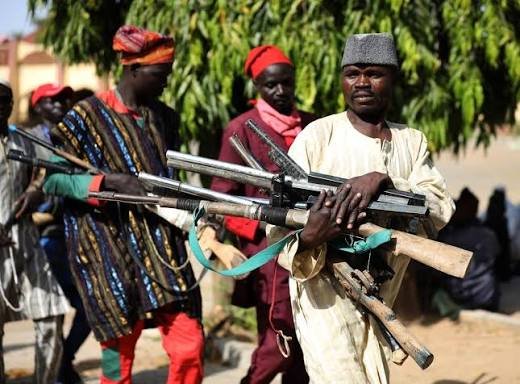
Dozens of people have been killed after suspected militants attacked a community in Nigeria’s northwestern Sokoto State while residents were attending Friday prayers.
The deadly assault took place in Ungushi community in Kebbe Local Government Area, according to local officials and residents.
Initial accounts put the death toll at around 30.
A police spokesman cited in reports placed the toll at 28, while residents later told Nigerian media that as many as 32 bodies had been recovered and buried. The differing figures reflect continuing difficulties in confirming casualties in the remote area.
Shamsuddeen Mai Akwai, secretary of the Kebbe local government council, said the attackers were suspected members of the militant group known as Lakurawa.
According to local accounts, the armed men entered Ungushi while residents were observing Friday prayers.
Residents said the attackers arrived heavily armed and began firing as the assault spread through the community.
A local witness told Nigerian media that the attackers initially disrupted prayers before moving deeper into the town.
The violence reportedly continued for several hours, forcing residents to flee their homes and seek safety in surrounding areas.
Some residents reportedly escaped toward nearby hills and farmland while gunfire continued.
Bodies were still being recovered after the attackers withdrew, contributing to changing casualty estimates.
Poor telecommunications and the remote location of affected villages have also made it difficult for authorities and families to establish the full scale of the attack.
Attack Follows Killing of Four Soldiers in Kebbe
The Ungushi killings came shortly after another major security incident in Kebbe.
Four Nigerian soldiers were reportedly killed on Friday when suspected Lakurawa militants attacked Kebbe town and exchanged fire with security personnel.
Reports said hundreds of suspected fighters entered the area on motorcycles and confronted troops stationed near the town.
The attackers also reportedly moved through commercial areas and targeted property before withdrawing toward surrounding communities.
A resident familiar with the latest violence said the attack on Ungushi followed the fighting in Kebbe involving the soldiers.
Security forces have since increased their presence in the region.
The Nigerian Army’s 8 Division carried out an operational assessment in Kebbe following renewed attacks linked to suspected Lakurawa militants.
Military officials said security arrangements were being adjusted to prevent further infiltration and protect vulnerable communities.
Residents have also appealed for stronger and more permanent security deployments.
Several communities in the region have experienced repeated attacks, livestock theft and displacement.
Some families have abandoned villages and moved toward larger towns because they fear further raids.
Lakurawa Threat Adds to Nigeria’s Growing Security Crisis
Lakurawa has emerged as a serious security threat in parts of northwestern Nigeria.
The armed group operates primarily in areas close to Nigeria’s borders with Niger and has been blamed for attacks in Sokoto and neighbouring Kebbi State.
Researchers and security analysts have examined possible links between Lakurawa and militant networks operating across the Sahel, including Islamic State-linked organisations.
Earlier in February 2026, suspected Lakurawa militants killed at least 34 people during coordinated attacks on rural communities in northwestern Nigeria, according to a security report cited by Reuters.
Nigeria is confronting several overlapping security crises.
The northeast remains the centre of the country’s longstanding jihadist insurgency, while northwestern states have also faced violence from militant organisations and armed criminal groups commonly described as bandits.
The spread of militant activity from neighbouring Sahel countries has created further challenges for communities near Nigeria’s northern borders.
Large rural areas have limited security presence, making isolated communities particularly vulnerable.
Attacks can also remain unreported for hours or even days because of poor roads, weak mobile networks and the distance between villages and government centres.
The latest attack on worshippers has again highlighted the vulnerability of civilians in Sokoto State.
Authorities are expected to continue security operations while attempting to establish the final casualty toll and identify those responsible.
For families in Ungushi, the immediate focus remains burying the victims, locating displaced relatives and seeking greater protection against further attacks.

