

Artifacts loaned before war arrive home after more than 15 years
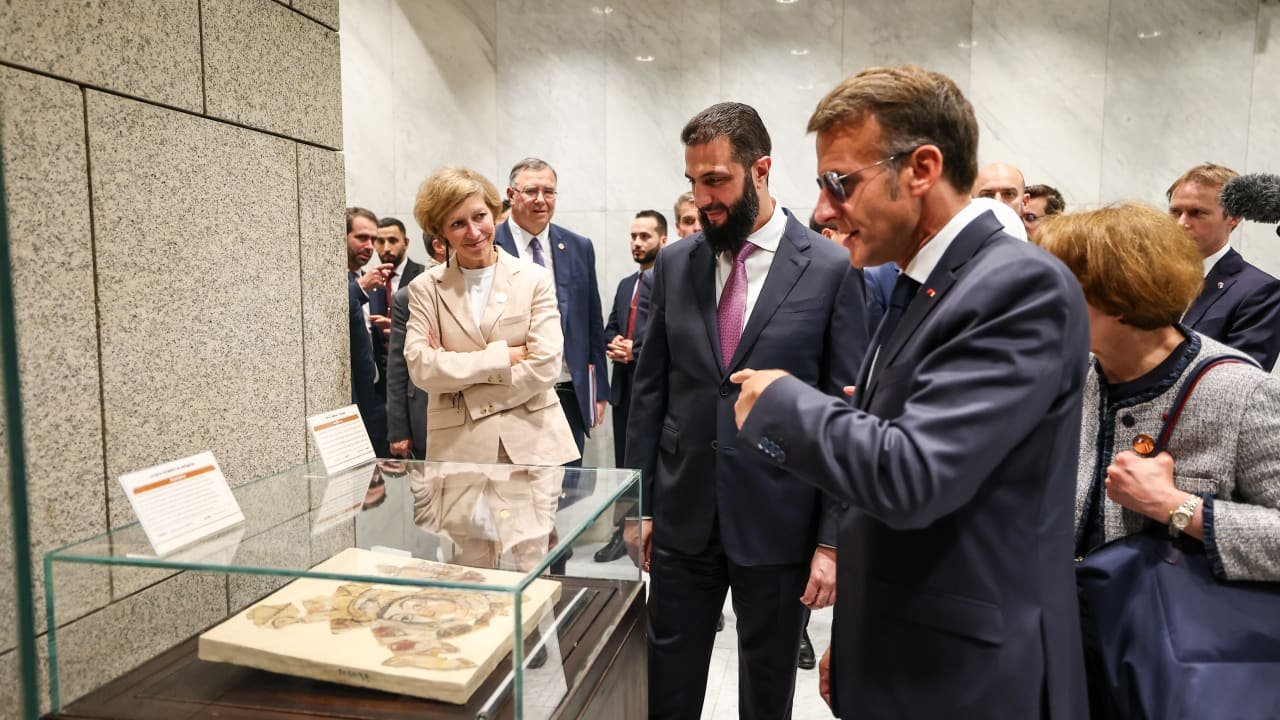
DAMASCUS: France has returned 23 archaeological artifacts to Syria, marking a significant step in cultural cooperation between the two countries during French President Emmanuel Macron’s recent visit to Damascus.
The collection, originally loaned to the Arab World Institute (IMA) in Paris by museums in Damascus, Aleppo, Latakia and Palmyra in 2010 and 2011, was transported back to Syria aboard the French presidential aircraft alongside Macron.
According to French media reports, the collection includes Roman bronze objects, Byzantine and Islamic coins, funerary reliefs from the ancient city of Palmyra dating to the second and third centuries, and a mosaic fragment from the Umayyad Mosque.
Among the returned pieces is the statue of Ishqi-Mari, an ivory statuette discovered in the Temple of Ishtar in the ancient city of Mari by a French archaeological mission in 1934.
Return follows years of delay
Syria’s Foreign Ministry said France became the first country to cooperate with Damascus in its campaign to recover antiquities held abroad since the change of government in Syria.
According to Syria’s Directorate-General of Antiquities and Museums (DGAM), the artifacts had originally been scheduled for return in 2014. However, the process was delayed because of deteriorating diplomatic relations between Syria and France and concerns over the security and preservation of the collection during the conflict.
Macron and Syrian President Ahmed Al-Sharaa formally oversaw the handover ceremony at the People’s Palace in Damascus on July 7.
Cultural cooperation set to expand
The Syrian Foreign Ministry thanked the French government for facilitating the return of the artifacts, describing the move as an important contribution to preserving Syria’s cultural heritage.
In a statement on social media, Macron said France had protected the archaeological treasures throughout the years of conflict to prevent their destruction or trafficking and expressed pride in returning them to Syria.
Meanwhile, IMA President Anne-Claire Legendre described the return as a deeply significant moment. The institute said the artifacts had helped introduce visitors from around the world to Syria’s rich history during their display in Paris.
The IMA also announced plans to strengthen cooperation with Syrian cultural institutions, including preparations for a major exhibition dedicated to Syria in 2028, signalling a new phase of cultural partnership between the two countries.

