
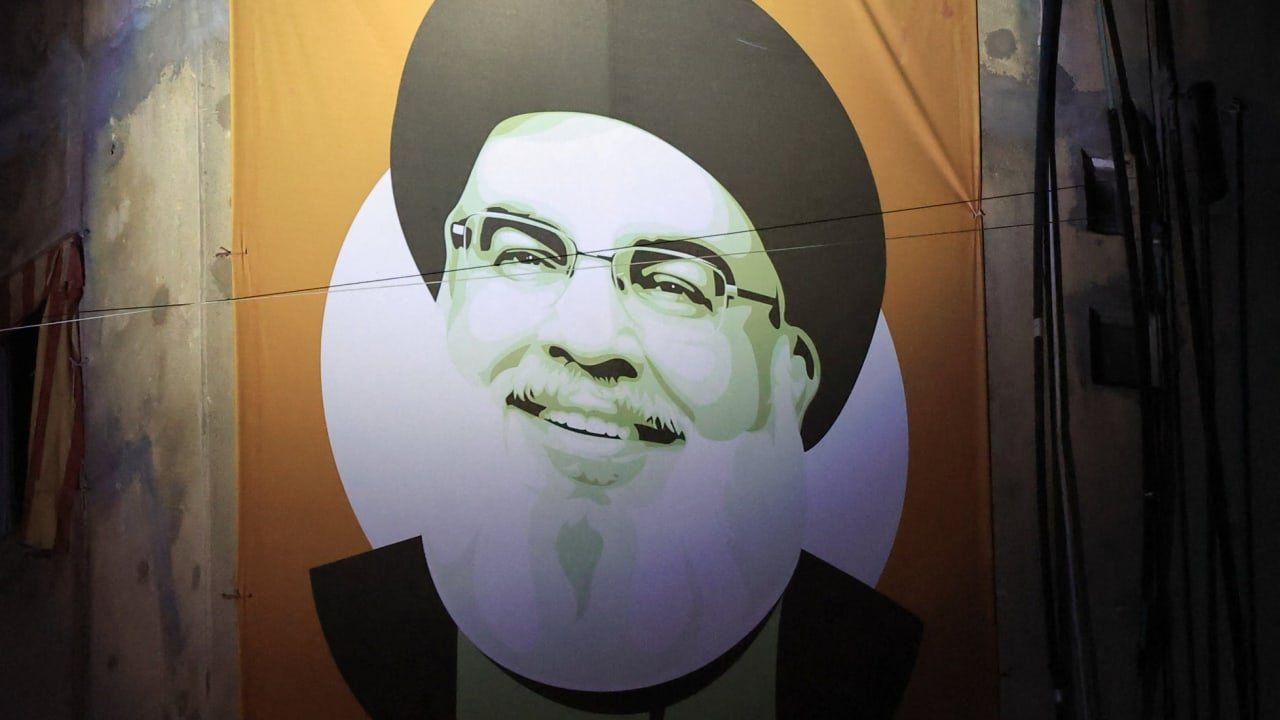

Military Official Challenges Long-Held Assumptions About Hezbollah Leader
JERUSALEM: A senior retired Israeli military officer has disclosed new details about the operation that killed Hezbollah leader Hassan Nasrallah, challenging long-standing perceptions about how and where the group’s longtime chief lived before his death.
In a rare interview with Israeli newspaper Maariv, Col. (res.) S., commander of the Israeli Air Force unit known as “Nahalat Binyamin,” said Nasrallah was not permanently confined to underground bunkers as many believed. Instead, he reportedly spent periods living in residential buildings in Beirut’s southern suburbs and used specially designed escape routes when security concerns arose.
The officer stated that Israeli intelligence tracked Nasrallah for years, monitoring multiple residences, emergency hideouts, and operational locations. According to his account, military planners maintained detailed strike options for various sites associated with the Hezbollah leader.
Col. S. said the operation that killed Nasrallah involved the use of 83 precision-guided munitions targeting a deeply buried underground shelter beneath a residential building.
Planning Focused on Preventing Rescue Efforts
Meanwhile, the former officer described the mission as the result of extensive intelligence gathering and operational planning. He said the strike was designed not only to hit the bunker but also to prevent any rescue attempts following the attack.
According to the account, military planners evaluated potential rescue scenarios and took steps to block access to the site after the strike. The officer claimed that attempts to clear rubble and reach the bunker were disrupted during the operation.
He further revealed details about other high-profile operations targeting senior Hezbollah figures, including Fuad Shukr, Ibrahim Aqil, Ali Karaki, and Hashem Safieddine. In several cases, planners adjusted tactics and munitions to balance operational objectives with concerns over collateral damage.
Regarding Safieddine, who succeeded Nasrallah before being killed weeks later, the officer said the operation required extensive analysis of tunnel networks and escape routes. Military planners reportedly studied bunker layouts in detail before carrying out the strike.
The revelations provide a rare glimpse into the intelligence and operational methods used by Israel against senior Hezbollah leaders during one of the region’s most intense periods of conflict.

