
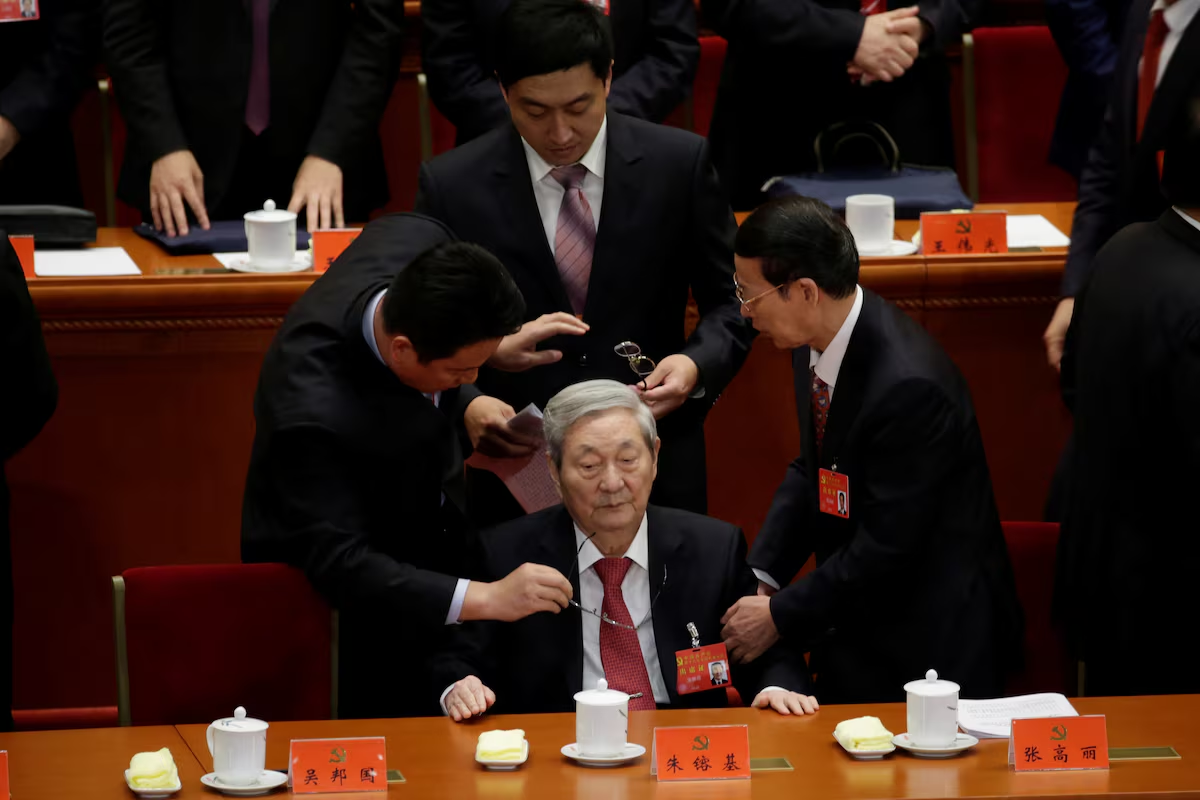

Blunt-speaking former leader reshaped China’s economy, overhauled state industries and helped secure Beijing’s entry into World Trade Organization
BEIJING: Former Chinese Premier Zhu Rongji, one of the leading architects of China’s economic transformation, died Wednesday at the age of 97, leaving behind a legacy of sweeping reforms and an unusually outspoken political style.
Zhu became renowned for bluntly criticising corruption, economic mismanagement and incompetent officials. A four-volume collection of his speeches published in 2011 attracted widespread attention by revealing unusually candid assessments of problems confronting China.
In 1998, Zhu warned that corruption, inequality and abusive local officials were creating public dissatisfaction and potentially serious crises.
From Political Rehabilitation to Economic Leadership
Zhu graduated from Tsinghua University and joined the Communist Party in 1949. Authorities later sent him to the countryside during the Cultural Revolution before politically rehabilitating him.
His career subsequently accelerated, and he became Shanghai mayor in 1987, helping oversee the city’s early transformation into an international financial centre.
After moving to Beijing in 1991, Zhu played a central role in economic policymaking. He helped curb overheating and inflation before becoming premier in 1998.
Furthermore, Zhu pursued major restructuring of state-owned enterprises, strengthened central government control over taxation and promoted housing ownership reforms.
WTO Entry Defined Zhu’s Reformist Legacy
Perhaps Zhu’s most consequential achievement involved guiding China through difficult negotiations for membership in the World Trade Organization.
China ultimately joined the WTO in 2001, accelerating its integration into international markets and supporting its emergence as a global economic power.
However, Zhu’s policies also attracted criticism. Factory restructuring resulted in widespread layoffs, while critics blamed aspects of his agricultural, taxation and housing policies for problems inherited by later governments.
Nevertheless, reform-minded officials and intellectuals continued to view Zhu as a symbol of bold economic policymaking.
His outspoken speeches also retained relevance because they addressed enduring challenges, including local government debt, reckless lending, corruption, inequality and rapid urban development.

