

Extreme Temperatures Put Millions on Alert
A powerful heatwave has swept across Europe, pushing temperatures close to 40°C and forcing authorities to issue widespread warnings. Several countries are experiencing unusually intense conditions at the very start of summer, raising concerns that the continent could face a prolonged period of extreme heat.
The heat surge coincided with the summer solstice, traditionally marking the beginning of the hottest season in the Northern Hemisphere. Meteorologists say the current weather pattern could signal an early arrival of prolonged high temperatures across large parts of Europe.
Italy has been among the hardest-hit countries. Authorities issued the highest-level heat alerts in several major cities, including Rome, Milan, Florence, Bologna, and Turin. Residents and tourists sought shelter from the intense sunshine as temperatures remained well above seasonal averages.
In Rome, visitors gathered in St. Peter’s Square carrying umbrellas, hats, and portable fans to cope with the scorching conditions during outdoor religious events.
Sahara Heat Dome Intensifies Conditions
Weather experts attribute the heatwave to a massive stream of hot air moving north from the Sahara Desert. The phenomenon is being strengthened by a powerful high-pressure system often referred to as the African anticyclone.
This system has created a heat dome across parts of Western and Central Europe. The trapped air prevents cooling and allows temperatures to rise steadily day after day.
Spain has also recorded dangerously high temperatures. National weather authorities issued multiple alerts, warning that temperatures could exceed 40°C in several regions. Officials expect the heatwave to continue through much of the coming week.
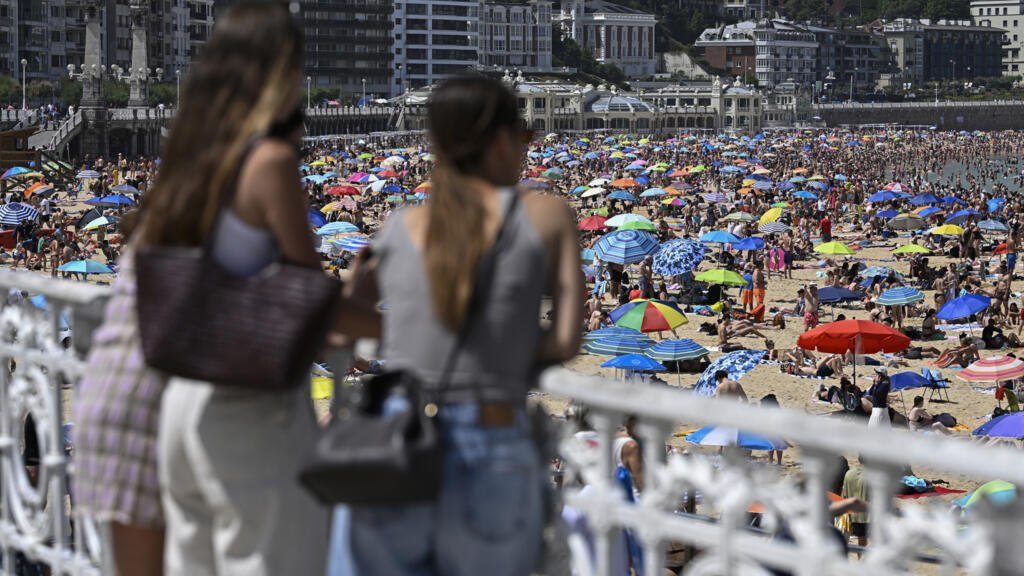
Tourist hotspots have witnessed large crowds seeking shade, cooling stations, and air-conditioned spaces as the extreme weather continues.
Transport Disruptions and Wildlife Under Pressure
The heatwave is already affecting critical infrastructure. In France, railway operators have cancelled dozens of train services due to concerns that excessive heat could damage tracks and overhead power systems.
Thousands of railway workers have been deployed to monitor the network and carry out emergency repairs where necessary. Authorities have advised vulnerable travelers to postpone non-essential journeys.
Germany has also experienced severe weather impacts. High temperatures have been followed by thunderstorms and heavy rainfall in some areas, disrupting outdoor events and public gatherings.
Wildlife experts are reporting growing concerns as animals struggle to cope with the extreme conditions. Rescue centers in Belgium have received a surge of heat-stressed animals, particularly young birds. Specialists warn that nestlings are especially vulnerable during prolonged periods of intense heat.
Climate scientists say the latest heatwave reflects a broader trend. Europe has experienced increasingly frequent and severe heat events in recent years. Researchers continue to link these patterns to long-term climate change and rising global temperatures.
Authorities across the continent remain on high alert as forecasts suggest the extreme weather could persist for several more days.

