
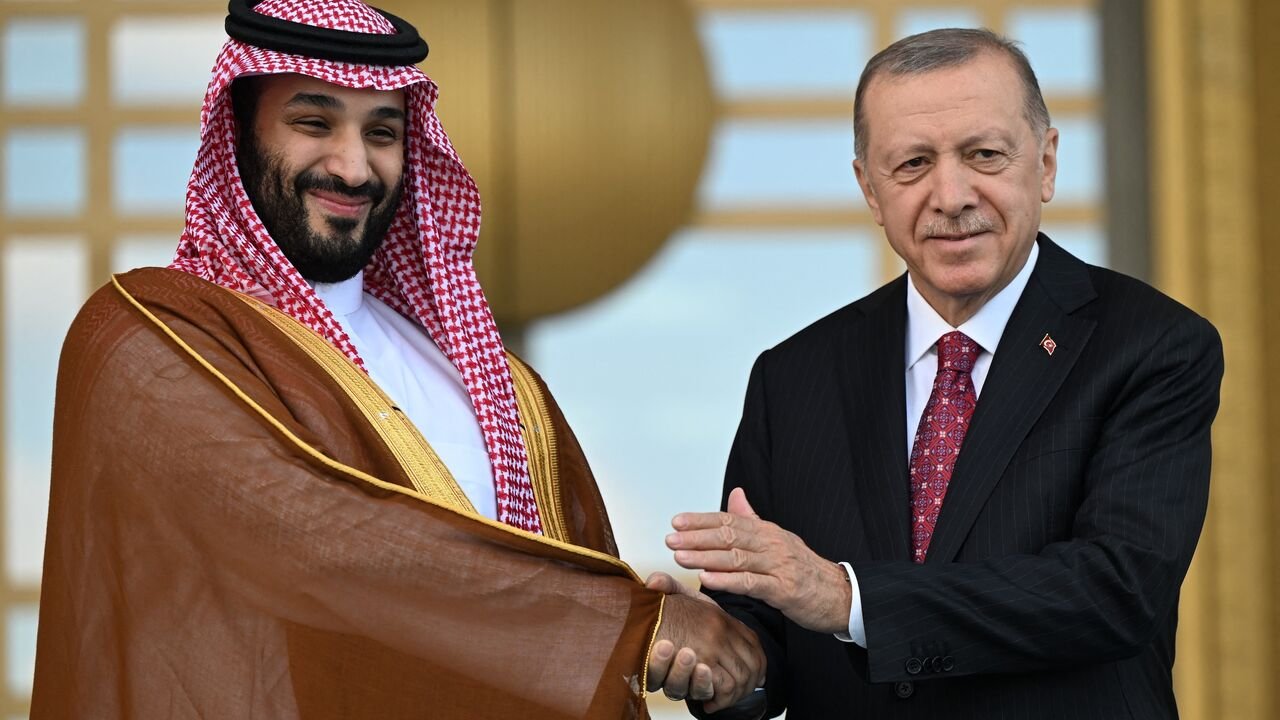

Turkish President to Hold Key Meetings in Saudi Arabia
Turkish President Recep Tayyip Erdogan will visit Saudi Arabia on Friday, August 7, for high-level talks with Saudi Crown Prince Mohammed bin Salman and Pakistani Prime Minister Shehbaz Sharif.
The trip will be a one-day working visit, according to Turkey’s Communications Director Burhanettin Duran.
Duran confirmed that Erdogan is expected to meet both leaders during his stay. However, Turkey has not publicly released a detailed agenda for the meetings.
The visit comes at a critical time for the Middle East.
The Gulf region is facing growing security concerns. Maritime trade routes have also been disrupted by tensions involving Iran, the United States and armed groups operating near major shipping corridors.
The meetings are expected to focus on defence cooperation, regional security and diplomatic efforts to prevent further escalation.
Reuters reported that Turkey, Saudi Arabia and Pakistan are expected to sign a joint defence agreement during the gathering. The report cited two regional sources with direct knowledge of the matter.
However, the full scope and conditions of the reported agreement have not been officially disclosed.
Such an agreement could create a new framework for military cooperation between three influential regional powers.
Turkey has a major defence industry and one of NATO’s largest armed forces. Pakistan has extensive military experience and longstanding security ties with Saudi Arabia.
Saudi Arabia is also expanding regional security partnerships as conflicts threaten oil supplies and commercial shipping.
Shehbaz Sharif Seeks Stronger Saudi Cooperation
Prime Minister Shehbaz Sharif arrived in Saudi Arabia on Thursday for an official visit scheduled from August 6 to August 8.
He is accompanied by a high-level delegation. It includes Deputy Prime Minister and Foreign Minister Ishaq Dar, Field Marshal Asim Munir and other senior officials.
Sharif is scheduled to meet Mohammed bin Salman to discuss bilateral cooperation and regional developments.
Pakistan’s Foreign Office said the visit would strengthen the longstanding partnership between Islamabad and Riyadh.
The discussions are expected to cover trade, investment, defence and security coordination.
Pakistan and Saudi Arabia signed a Strategic Mutual Defence Agreement in September 2025. The latest talks could expand cooperation under that framework.
Sharif’s visit also comes after Pakistan joined a Saudi-led maritime coalition created to protect Red Sea shipping from attacks.
The presence of Field Marshal Asim Munir underlines the security and defence importance of the visit.
Saudi Arabia has remained one of Pakistan’s closest economic and strategic partners.
Riyadh has previously supported Pakistan through investments, deferred oil payments and financial assistance.
Pakistan, meanwhile, has maintained close defence cooperation with Saudi Arabia through military training, security consultations and joint exercises.
The latest discussions could explore additional economic support and stronger coordination during regional emergencies.
US-Iran Mediation Expected to Shape Discussions
The meetings will take place as Pakistan continues efforts to reduce tensions between the United States and Iran.
Islamabad has played a central role in recent mediation efforts.
Pakistan helped facilitate a ceasefire and later supported negotiations aimed at reopening the Strait of Hormuz.
The United States and Iran electronically signed the Islamabad Memorandum of Understanding on June 18. Prime Minister Shehbaz Sharif endorsed the document as a mediator.
The agreement was intended to support a diplomatic settlement and restore movement through the strategic waterway.
However, negotiations later faced problems over maritime security and freedom of navigation.
The role of Iran in inspecting vessels and collecting possible transit fees has remained a major point of disagreement.
Oman has continued indirect discussions because it controls the opposite side of the Strait of Hormuz.
Saudi Arabia and Turkey have also supported diplomatic efforts to prevent the conflict from expanding.
The Erdogan, Mohammed bin Salman and Shehbaz Sharif meetings could therefore provide another platform for regional coordination.
The leaders may discuss ways to protect oil supplies, secure commercial shipping and support a lasting US-Iran settlement.
Pakistan faces a particularly difficult diplomatic balance.
It maintains close defence and economic ties with Saudi Arabia. It also shares a long border with Iran and presents itself as a neutral mediator.
Deeper military cooperation with Riyadh and Ankara could strengthen Pakistan’s regional influence.
However, Islamabad will also seek to avoid being viewed as part of an alliance directed against Tehran.
Erdogan has maintained working relationships with several competing regional powers. His involvement could support wider diplomatic coordination between Saudi Arabia, Pakistan, Iran and other countries.
The visit could become an important moment for regional security if the reported trilateral defence agreement is signed.
Official details are expected after the leaders complete their meetings in Saudi Arabia.

