
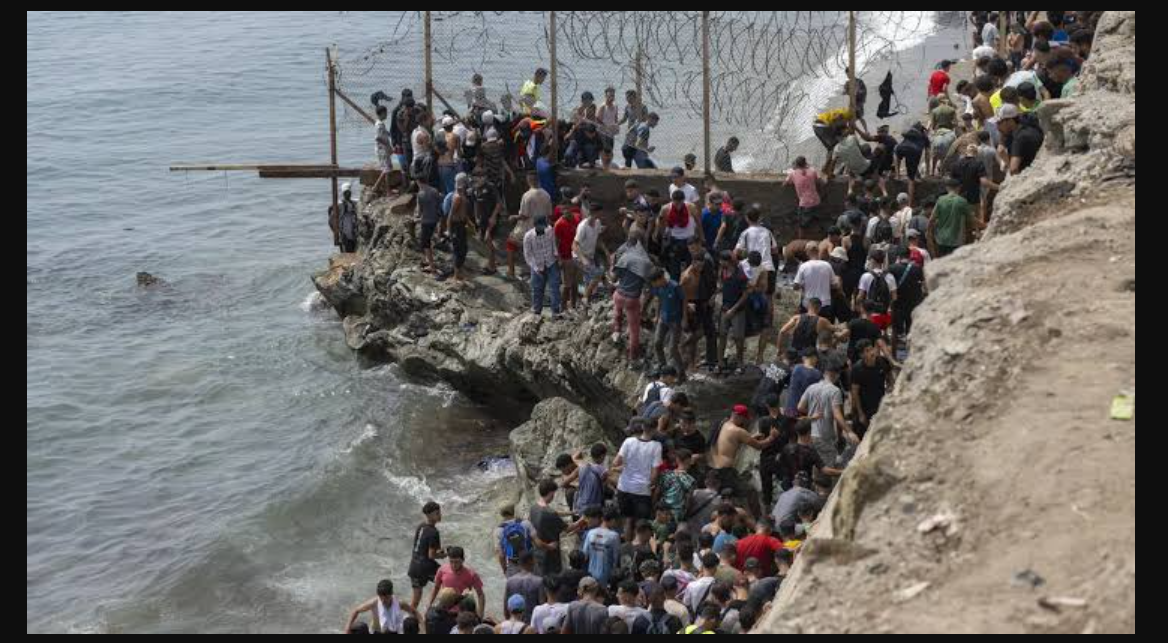

A wave of online disinformation is facing renewed scrutiny after tens of thousands of migrants rushed into Spain’s North African enclave of Ceuta in one of the region’s deadliest border crossings.
According to official Spanish figures, around 72,000 people entered Ceuta from Morocco between July 30 and the following days. Most attempted the dangerous crossing by swimming around the Mediterranean border barrier. Consequently, the incident resulted in significant loss of life.
Spanish authorities said they recovered the bodies of 78 migrants who drowned during the crossing. Meanwhile, Moroccan authorities reported that 11 people died on their side of the border.
Rumors Spread Rapidly Across Social Media
Analysts believe a false claim that “the Ceuta border is open” spread rapidly across social media platforms. As a result, thousands of men, women, and children attempted the risky journey.
A security and intelligence analysis found that an online campaign generated nearly 11 million views from early July. Researchers suggested that the widespread circulation of misleading content significantly contributed to the sudden surge.
Furthermore, an open-source investigation by a technology company concluded “with a high degree of confidence” that the migrant influx “was a deliberately organised operation”.
A social media and security expert said there had been clear signs that such an incident was developing. According to the expert, Facebook and WhatsApp became the primary platforms where rumors, messages, and groups encouraged people to attempt the crossing.
However, the expert noted it remains impossible to determine “who or what ignited the flame”.
Court Ruling Misinterpreted Online
Spanish authorities also pointed to the widespread misinterpretation of a July Supreme Court ruling.
According to the government, online posts falsely claimed that migrants arriving by sea would no longer face immediate return procedures. An Instagram post carrying that interpretation reportedly appeared one day after the ruling.
Human rights observers said many of the messages originated from accounts with little activity or identifiable ownership. Therefore, questions emerged over whether automated systems or mass-distribution algorithms amplified the misinformation.
Legal experts clarified that the court ruling never declared the border “open” to irregular arrivals by sea.
Instead, they explained that migrants intercepted at sea remain subject to return procedures. However, those procedures require certain legal safeguards before enforcement.
A human rights lawyer stressed that such guarantees should always be respected.
Spain Strengthens Border Measures
Following the large-scale crossings, Spanish authorities installed floating barriers between Ceuta and Morocco.
Legal experts believe these barriers could strengthen the legal basis for border return procedures if they are considered official containment infrastructure.
Authorities also recalled that this was not the first time social media activity coincided with increased migration attempts.
A similar incident occurred in 2024. That case resulted in more than 150 prosecutions in Morocco linked to encouraging irregular crossings.
Experts Warn the Threat May Continue
Experts believe the recent crisis may not be over. They pointed to new online posts calling for additional mass crossings during August. Consequently, concerns remain high among security analysts.
One expert warned that social media platforms should respond more quickly to misleading content that encourages dangerous actions.
The expert also cautioned that without stronger moderation, similar incidents remain “very likely” to occur elsewhere in the world.
The Ceuta migrant surge has once again highlighted the growing influence of online disinformation. Moreover, it has raised broader questions about how misinformation can rapidly shape real-world events with devastating human consequences.

