
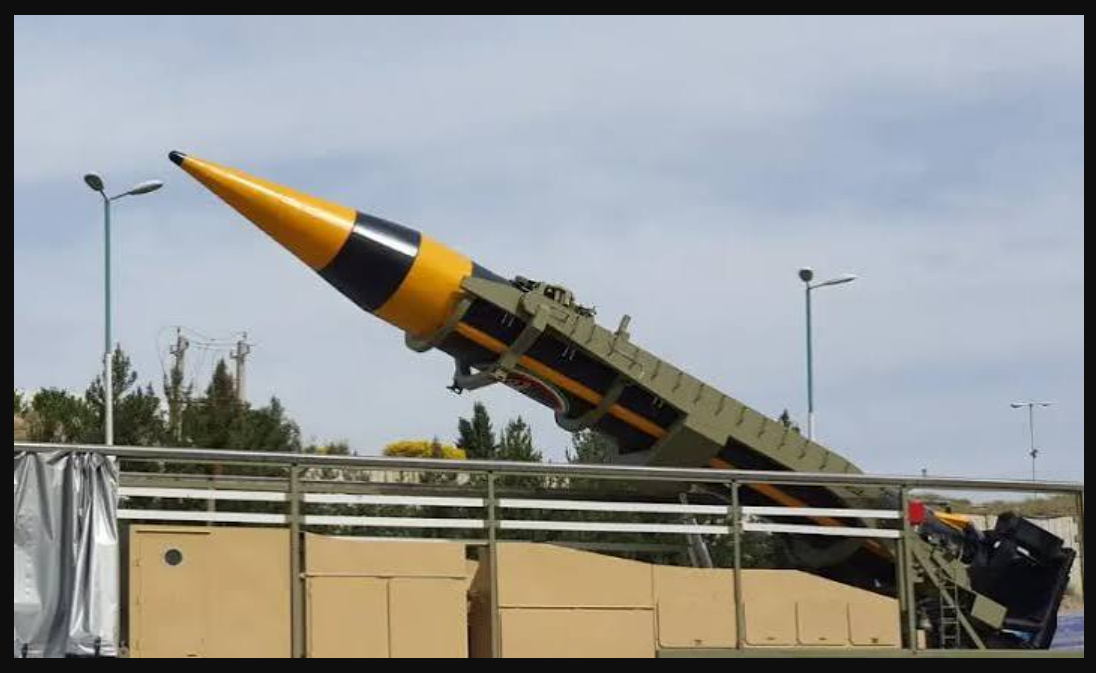

Tehran Claims Regional Attacks Changed Washington’s Strategy
Iran’s military has claimed that its retaliatory operations forced the United States to suspend further strikes and reconsider its strategy.
Army spokesperson Brigadier General Mohammad Akraminia made the claim during a televised interview.
He said the Iranian Army and Islamic Revolutionary Guard Corps carried out coordinated missile and drone attacks.
The operations reportedly targeted American military facilities across several Middle Eastern countries.
Iran has launched attacks against locations hosting US forces in Bahrain, Kuwait and Qatar during the latest escalation.
Tehran described the operations as retaliation for repeated American strikes on Iranian military and coastal infrastructure.
Akraminia said Iran adopted a strategy of retaliatory deterrence.
The objective was to impose major military and economic costs on Washington.
He argued that the campaign showed Iran could respond across the region without accepting a wider American military presence.
The spokesperson also accused Washington of violating an understanding reached in June.
Iran says the dispute intensified after the United States supported an alternative shipping route through the Strait of Hormuz.
Tehran maintains that it has the right to control navigation near its territorial waters.
The United States argues that international shipping must have safe access through the strategic waterway.
Iran Claims Major Damage to US Military Bases
Akraminia claimed Iranian strikes caused extensive damage to important American facilities.
He said installations in Kuwait, Bahrain, Jordan and Iraq’s Kurdistan region were affected.
The Iranian spokesperson specifically claimed that the US Fifth Fleet headquarters in Bahrain had become largely unable to perform its previous operations.
He also alleged that attacks in Iraq’s Kurdistan region reduced the capabilities of American forces and US-backed groups.
Iranian officials have not released independently verified evidence proving the full extent of those claims.
US authorities have also not confirmed that the Fifth Fleet headquarters or other major bases became inoperable.
Independent reporting has confirmed Iranian attacks against American military targets and regional states hosting US forces.
However, publicly available reports have generally described the confirmed damage as more limited than Tehran’s wider claims.
The Pentagon has acknowledged injuries among American personnel during recent Iranian attacks, but it has not accepted Iran’s assessment of widespread operational collapse.
Akraminia said Iran used missiles, aircraft and advanced loitering weapons during the campaign.
He highlighted the Arash-2 attack drone as an important part of Iran’s expanding unmanned weapons capability.
Iran has previously claimed attacks involving Arash-2 drones against major regional military targets.
However, the effectiveness of individual weapons and the damage caused remain difficult to independently assess during active conflict.
US Pause Linked to Diplomacy and Escalation Concerns
The United States halted new strikes after nearly two weeks of continuous military operations.
However, available reporting does not establish that Iranian attacks were the only reason for Washington’s decision.
US officials and advisers reportedly considered several factors.
These included pressure on military supplies, the danger of a wider regional war and the economic impact of disrupted energy routes.
President Donald Trump also wanted to create more space for diplomacy while keeping American forces prepared for further action.
Trump has continued to warn that the United States could restart or expand military operations.
American naval forces also remain active in the region.
The pause therefore does not represent a permanent end to the conflict.
It may instead provide time for negotiations involving Iran, the United States and regional mediators.
The Strait of Hormuz remains central to the confrontation.
The waterway carries a significant share of global energy supplies, making prolonged disruption a major risk for international markets.
The fighting has already affected shipping, fuel prices and security across the Gulf.
Akraminia argued that contradictory statements from Washington showed the United States had reached a strategic deadlock.
He claimed American leaders were divided between escalating the war and seeking a diplomatic settlement.
Iran also maintains that the United States and Israel failed to achieve their broader military objectives.
Those alleged objectives included weakening Iran’s nuclear and missile programmes and reducing its regional influence.
However, these remain statements from the Iranian military rather than independently established conclusions.
The full impact of the conflict on Iran’s military infrastructure, American regional bases and future diplomacy remains unclear.
Both countries continue to present the latest developments as proof that their own strategy is working.
For now, the US bombing pause has reduced direct attacks on Iran.
However, continuing military preparations and unresolved disputes over the Strait of Hormuz mean the confrontation could resume quickly.

