
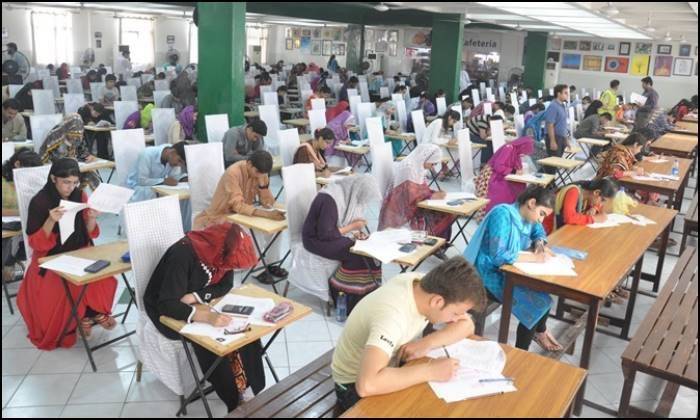

The number of students appearing for the Medical and Dental College Admission Test (MDCAT) has dropped sharply in recent years.
The Pakistan Medical Association (PMA) says the decline reflects growing disinterest in medicine among young Pakistanis.
Official figures from the Pakistan Medical and Dental Council (PMDC) show a clear downward trend.
MDCAT candidates fell from 204,253 in 2022 to around 138,000 in 2026.
MDCAT Registration Drops Over Five Years
The number of MDCAT candidates reached 194,133 in 2021.
It then climbed to 204,253 in 2022. However, the number started falling the following year.
The PMDC recorded 180,534 candidates in 2023. The figure increased slightly to 182,000 in 2024.
However, registrations dropped sharply to 140,071 in 2025.
This year, around 138,000 candidates registered for the medical entrance test.
The PMA said the decline continued despite an extension in the registration period.
After authorities moved the MDCAT to September 20, the PMDC reopened registration from August 17 to 21.
However, only 2,063 additional candidates registered during the extended period.
Why Are Students Losing Interest in Medicine?
The PMA linked the decline to several challenges within Pakistan’s medical sector.
Rising fees at private medical colleges remain a major concern for students and families.
At the same time, young doctors face uncertain financial prospects after completing their degrees.
The association also highlighted delays in house-job stipends and a shortage of paid postgraduate residency positions.
Moreover, violence against healthcare workers has created further concerns among medical professionals.
Doctors also face limited legal protection while working in demanding healthcare environments.
These issues can make medicine appear less attractive compared with other professional fields.
Students Prefer Technology and Emerging Fields
The PMA said many students now prefer careers with stronger financial and international prospects.
Fields such as computer science, artificial intelligence, biotechnology and health data analytics continue to attract young people.
These sectors can offer better starting salaries and wider international opportunities.
As a result, students may increasingly compare the long training path in medicine with faster-growing technology careers.
The trend could also affect Pakistan’s future healthcare workforce if medical education continues to lose applicants.
PMA Opposes Lowering MDCAT Standards
PMA Secretary-General Dr. Abdul Ghafoor Shoro urged health authorities and the PMDC to address the root causes.
He also opposed lowering MDCAT passing standards simply to fill vacant medical seats.
Instead, the association called for stronger reforms across the medical education system.
It demanded fee caps for private medical colleges and timely payment of house-job stipends.
The PMA also called for regular medical officer positions for young doctors.
In addition, it urged authorities to introduce legislation that protects healthcare professionals from violence.
The falling MDCAT numbers now highlight a wider concern for Pakistan’s healthcare system. Unless authorities improve working conditions and career prospects, more students may continue choosing other fields over medicine.
For the latest updates, visit and follow The Truth International website (www.thetruthinternational.com) and subscribe to the YouTube Channel.

