
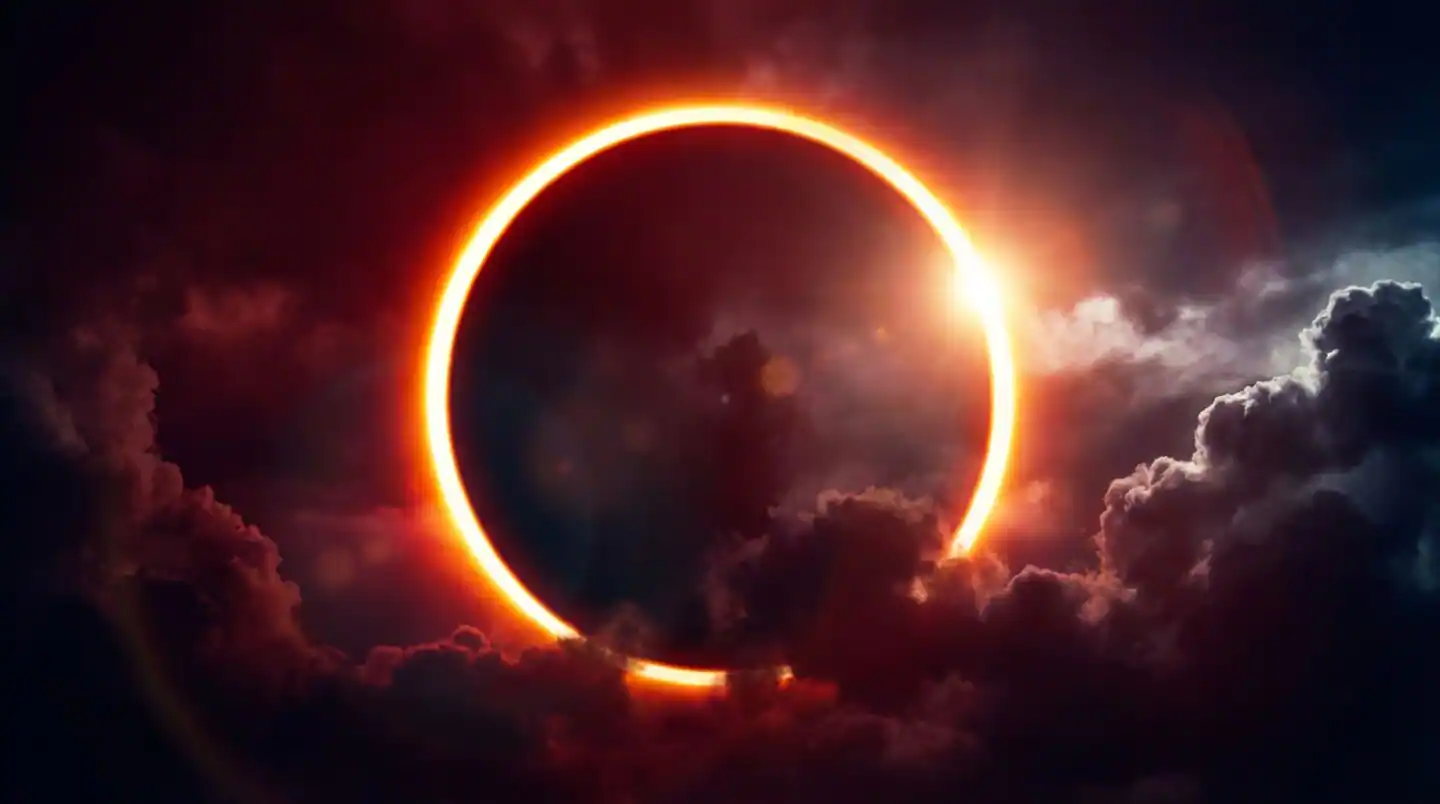

A rare total solar eclipse briefly transformed daylight into darkness across parts of Russia and Iceland on Wednesday. The spectacular event then moved toward mainland Europe, where thousands gathered to witness the phenomenon.
The Moon first covered the Sun over Russia’s remote Arctic region at around 1700 GMT. Only the glowing outer corona remained visible during totality.
The eclipse then travelled across parts of Greenland before reaching Keflavik in Iceland. Total darkness arrived there at 1747 GMT, creating a rare spectacle for observers.
Europe Welcomes Rare Celestial Event
The eclipse later moved toward mainland Europe, which had not experienced a total solar eclipse for two decades. Its narrow path crossed from Spain’s northwestern Atlantic coast toward the Mediterranean.
Spain had not witnessed a total solar eclipse for more than a century. Therefore, excitement built across the country as crowds gathered at viewing locations.
Special eclipse glasses became highly sought-after as people prepared to safely watch the event. Partial phases were also visible across Europe, Canada, northern parts of the United States and northwest Africa.
In Spain, crowds reacted with excitement as the Moon gradually covered the Sun. People applauded and cheered while waiting for the eclipse to reach its peak.
Eclipse Creates Brief Nighttime Effect
Solar eclipses have fascinated people throughout history because they temporarily disrupt normal daylight. During totality, the Moon’s shadow creates an eerie twilight and temperatures can drop.
The total phase lasts only a few minutes, making the experience especially fleeting. Meanwhile, the partial eclipse continues for around one hour and 45 minutes.
Scientists also view eclipses as valuable research opportunities. NASA and the European Space Agency livestreamed the event while researchers studied the Sun’s atmosphere.
Weather remained a concern in northwest Iceland, where rain threatened visibility. However, Spain expected clearer skies, although high temperatures and wildfire risks remained concerns.
The eclipse also boosted tourism expectations in Spain. Authorities anticipated hundreds of thousands of additional visitors, while thousands of police officers prepared for the crowds.

