
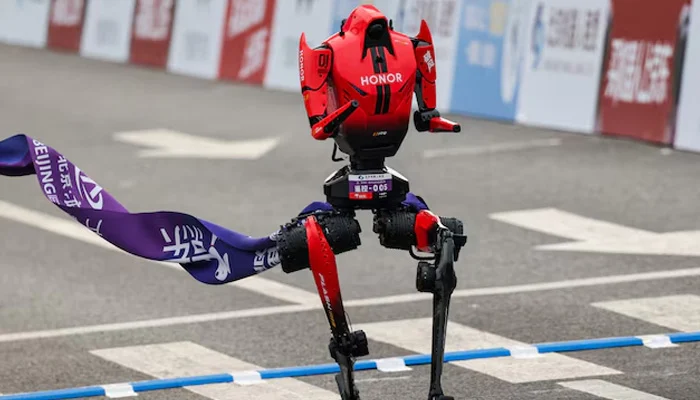

Chinese robotics companies are shifting their focus from impressive physical movements towards developing advanced artificial intelligence. After building humanoid robots capable of running, dancing and performing backflips, manufacturers now want machines to handle complex tasks.
The emerging field of embodied AI aims to help robots understand surroundings and learn unfamiliar activities. Consequently, companies are investing heavily in software that allows machines to adapt without constant human instructions.
Chinese embodied AI companies raised 93.5 billion yuan, approximately $13 billion, during the first half of 2026. According to research firm ITjuzi, this represented five times the investment recorded a year earlier.
Chinese Companies Race to Develop Smarter Robots
The growing competition has attracted major investments from established manufacturers and specialised technology startups. Companies such as X Square, Galaxea and Spirit AI are developing systems that improve robotic intelligence.
Meanwhile, American startups, including Physical Intelligence, Skild AI and Generalist, are advancing similar technologies. Although US developers benefit from stronger AI research and computing resources, Chinese companies enjoy manufacturing advantages.
Chinese manufacturers are also exploring different methods to train robots. Spirit AI employs around 1,000 people to record everyday and industrial activities, while ACE Robotics uses wearable sensors.
Additionally, Ant Group’s robotics division Robbyant uses extensive training material to develop adaptable robotic systems. Other companies rely on computer simulations to prepare machines for industrial assignments.
Training Data Becomes Key to Future Development
However, developing reliable robotic intelligence remains challenging. Unlike chatbots, robots require physical interaction data to learn activities such as gripping objects and handling equipment.
Furthermore, China’s industry faces shortages of advanced computing chips due to US export restrictions. Experts also warn that simulations cannot perfectly reproduce real-world physical interactions.
Nevertheless, companies are testing robots in factories and pharmacies. Industry leaders believe improved AI could eventually transform industrial automation and everyday workplaces.
However, experts caution that widespread commercial adoption may still require several years.
For the latest updates, visit and follow The Truth International website (www.thetruthinternational.com) and subscribe to the YouTube Channel.

