
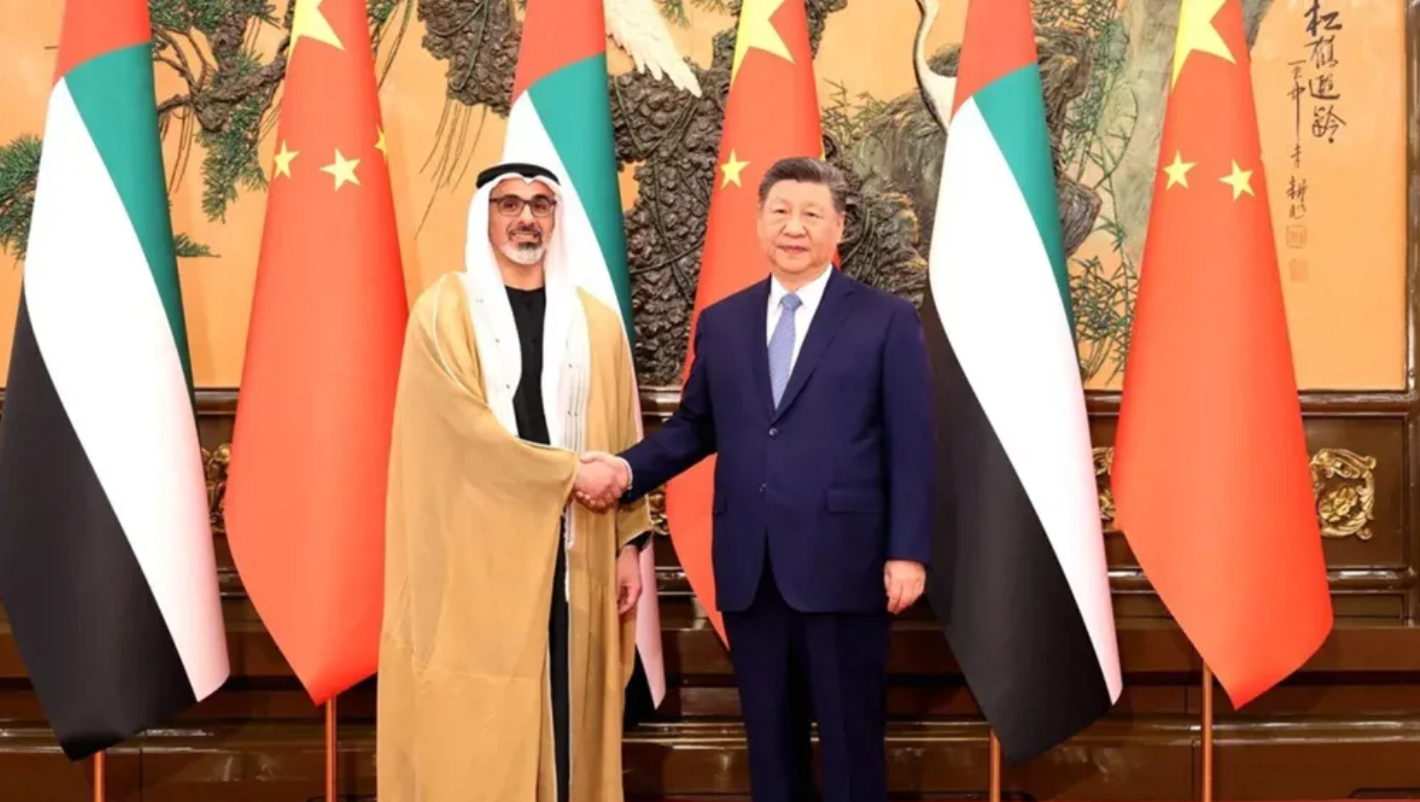

Chinese President Xi Jinping has introduced a four-point proposal aimed at strengthening peace and stability in the Middle East. The plan was presented during a meeting in Beijing with the Crown Prince of Abu Dhabi, Sheikh Khaled bin Mohamed bin Zayed Al Nahyan.
The proposal reflects China’s growing diplomatic engagement in regional affairs. It also highlights Beijing’s emphasis on long-term stability and cooperative security frameworks.
Focus on Peaceful Coexistence
Xi Jinping stressed the importance of peaceful coexistence among nations in the Middle East and Gulf region. He called for building a shared security structure that is comprehensive, cooperative, and sustainable.
Moreover, he emphasized that regional stability depends on mutual trust. Therefore, countries must avoid actions that could escalate tensions or undermine cooperation.
Respect for Sovereignty and Security
A key element of the proposal is respect for national sovereignty. Xi stated that the sovereignty, security, and territorial integrity of all regional states must be fully protected.
In addition, he highlighted the need to safeguard the safety of personnel, institutions, and infrastructure belonging to different countries. This approach aims to reduce conflict risks and improve diplomatic trust.
Strengthening International Law
Xi also underlined the importance of upholding international law. He warned against allowing global affairs to regress into what he described as a “law of the jungle.”
Furthermore, he argued that rules-based international systems are essential for maintaining global order. Therefore, all parties should commit to consistent legal principles in resolving disputes.
Linking Development with Security
The Chinese president stressed that development and security must move together. He urged regional countries to coordinate efforts to create a stable environment for economic growth.
Additionally, he said cooperation is necessary to ensure sustainable progress across the Middle East and Gulf region. This includes improving economic conditions while maintaining security balance.
Expanding China’s Diplomatic Role
The proposal reflects China’s broader effort to position itself as a key diplomatic actor in global conflict resolution. By engaging directly with Gulf leadership, Beijing is signaling its interest in regional stability.
Moreover, the initiative highlights China’s preference for dialogue-based solutions over military confrontation. This approach aligns with its long-standing foreign policy principles.
Conclusion
China’s four-point proposal outlines a structured vision for Middle East peace focused on sovereignty, law, cooperation, and development. While still at the diplomatic stage, the initiative adds another voice to ongoing international efforts aimed at stabilizing the region.

