
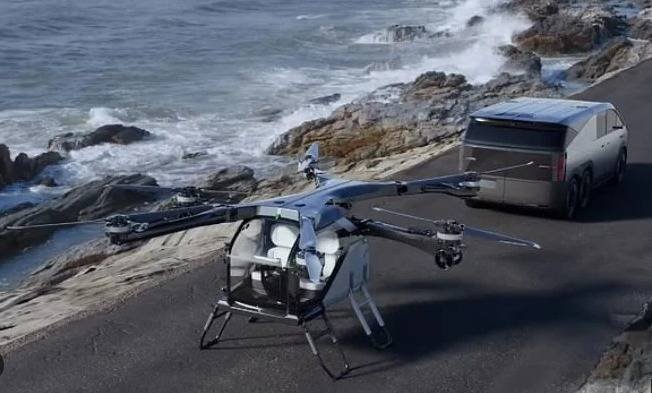

China is moving closer to making flying cars a reality as technology company XPeng prepares to introduce a two-seater electric aircraft in 2027. The futuristic vehicle could offer an alternative to road travel, although its early use will face strict restrictions.
XPeng’s flying vehicle features an unusual design. A six-wheeled ground carrier transports a compact electric aircraft that remains hidden inside its rear compartment.
When passengers are ready to fly, the carrier opens automatically and releases the aircraft. The deployment process takes less than five minutes.
The aircraft uses six battery-powered propellers and can take off or land vertically without a traditional runway. It can carry two people and travel approximately 30 kilometres on a single flight.
The company says the aircraft can reach an altitude of around one kilometre. Users can control it with a joystick or select autonomous flight functions.
However, the advanced technology comes with a substantial price tag. XPeng expects the two-seat aircraft system to cost approximately $300,000.
Company representatives discussed the project during the Web Summit technology conference in Lisbon, Portugal.
XPeng has received more than 7,000 preorders worldwide, with strong interest from China and the Middle East.
The company hopes to begin limited commercial deliveries in 2027, subject to the remaining aviation approvals.
Initially, the aircraft will operate mainly in approved recreational areas, tourism locations and selected emergency service settings. Regular flights above crowded city roads are not yet authorized.
Euronews
XPeng also plans to explore international markets, including Southeast Asia, the Middle East and Europe.
However, safety regulations, charging facilities, limited battery range and air traffic management remain major challenges.
China continues investing in low-altitude aviation technology as part of its wider transportation strategy.
The development suggests that personal flying vehicles are approaching commercial reality, although widespread urban use remains years away.

