
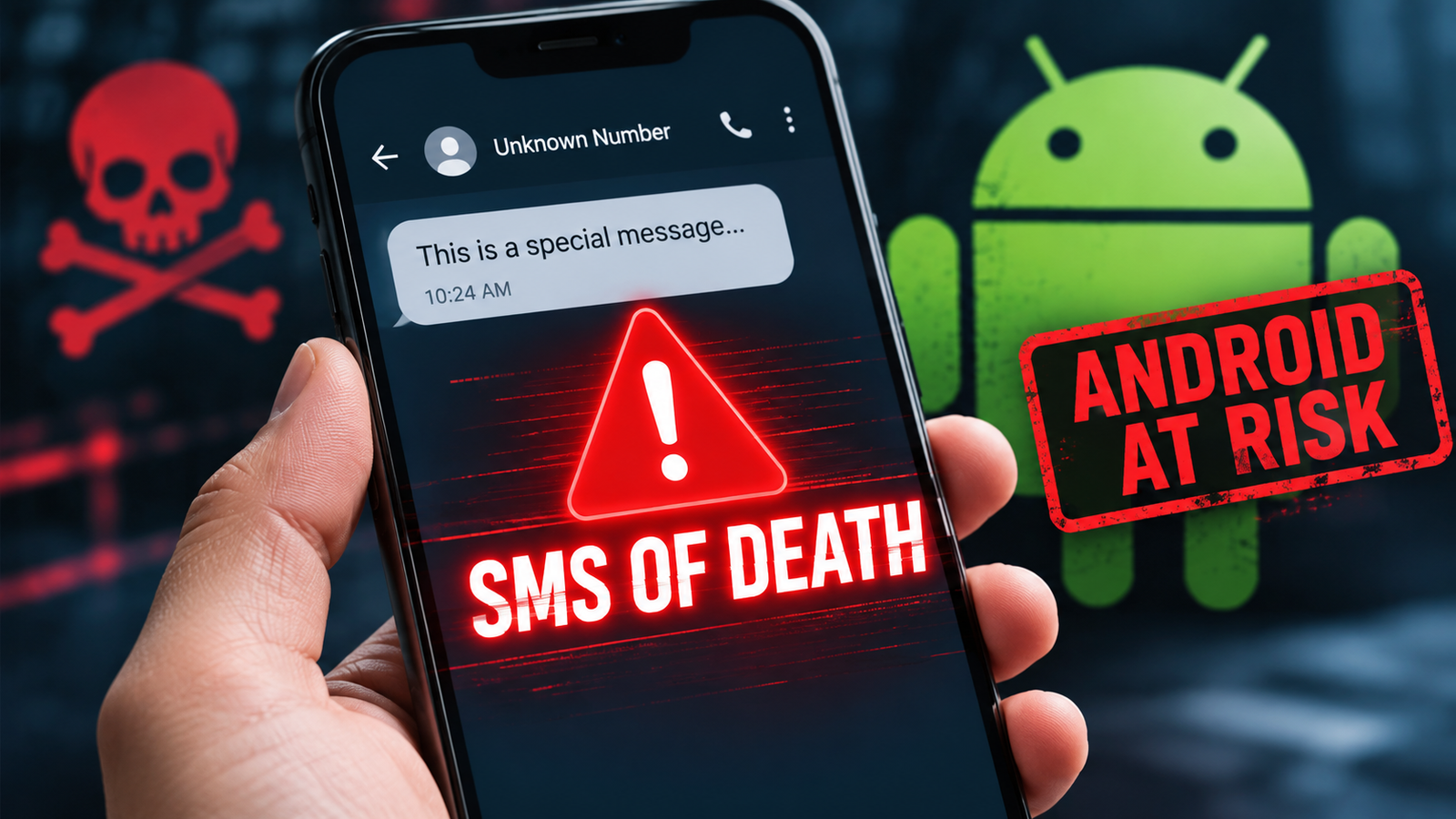

A single specially crafted text message could disrupt an Android phone without the recipient opening it or taking any action. A newly disclosed security vulnerability, known as the “SMS of Death,” raises concerns about smartphone reliability and cellular connectivity.
The flaw, discovered by security researcher Mark Blaszczyk, affects Android’s handling of certain SMS messages. It can crash essential system services, disconnect active calls and potentially leave devices unusable.
Tracked as CVE-2026-58882, the vulnerability affects Android versions starting with Android 12. Although Google has developed a fix, unpatched devices could remain exposed.
What Is the Android SMS of Death Vulnerability?
The “SMS of Death” vulnerability targets Android’s system for processing specific messaging formats. It involves a specially crafted WAP Push SMS message, which can trigger a crash in the phone’s telephony service.
WAP Push allows mobile networks to deliver certain information directly to a device. Unlike ordinary text messages, these messages can undergo automatic background processing without appearing in the user’s inbox.
However, the security flaw allows a malformed message to disrupt this process. Blaszczyk found that the message can crash Android’s telephony service, which manages phone calls and cellular connections.
Consequently, an affected device may disconnect active calls immediately, including calls to emergency services. It may also temporarily lose cellular connectivity while Android attempts to restart the affected service.
The attack requires no interaction from the recipient. Users do not need to open messages, click links or install applications for the vulnerability to trigger.
How Repeated Messages Can Make Phones Unusable
The impact could become more severe when attackers send multiple malicious messages. According to the researcher, repeated messages can trigger additional crashes as Android attempts to process them.
During testing, approximately 20 specially crafted messages were enough to leave a device practically unusable. The resulting disruption could involve repeated crashes or reboot loops.
Furthermore, restarting the phone may not resolve the issue because problematic messages could remain pending. In some cases, recovery may require connecting the device to a computer.
Users might then need specialized Android debugging tools to remove the problematic messages and restore normal operation.
The researcher reproduced the vulnerability on Google Pixel and Samsung Galaxy smartphones. However, the flaw affects Android’s underlying telephony software, meaning devices from other manufacturers may also face exposure.
Importantly, the demonstrated attack disrupts device availability. Researchers have not shown that this vulnerability steals personal information or provides access to private files.
Which Android Phones Are Vulnerable?
The vulnerability affects Android versions beginning with Android 12. However, the actual risk depends on each device’s software version and installed security patches.
The researcher initially reported the issue to Google in May 2026. Although Google’s vulnerability reporting program classified the report as a non-security issue, Android engineers subsequently developed a fix.
According to the researcher’s disclosure, October 2026 security updates include the fix for devices running Android 14 through Android 17.
The vulnerability is also reportedly scheduled for inclusion in Google’s November 2026 Android Security Bulletin. Therefore, users should check their device’s current patch status.
However, security updates do not reach every smartphone simultaneously. Manufacturers and their software support policies determine when eligible devices receive patches.
Devices running Android 12 or Android 13 could remain vulnerable if manufacturers do not provide suitable fixes.
How to Protect Your Android Phone
Installing the appropriate security update remains the most effective protection against the “SMS of Death” vulnerability.
Android users should take the following precautions:
- Check for security updates: Open Settings and navigate to the system or software update section.
- Install available patches: Download and install the latest supported security updates for your device.
- Check the security patch level: Review your phone’s Android security patch date to assess its update status.
- Confirm manufacturer support: Check whether your device still receives regular security updates and vulnerability fixes.
Phones running Android 14 or later should receive the relevant fix through supported security updates. However, users should verify patch availability rather than assuming their devices already have protection.
For older smartphones that no longer receive security updates, manufacturers may not provide a straightforward solution.
Why Avoiding Suspicious Messages May Not Be Enough
Traditional cybersecurity advice often encourages users to avoid suspicious links, attachments and unknown downloads. However, this vulnerability presents a different challenge because the attack does not require user interaction.
Simply ignoring an incoming message may not prevent the exploit if the device automatically processes it. Therefore, ordinary caution cannot replace the appropriate security patch.
The “SMS of Death” vulnerability highlights how flaws in background system processes can affect smartphone availability. Ultimately, keeping Android devices updated remains essential for reducing the risk of unexpected crashes and cellular service disruptions.
For the latest updates, visit and follow The Truth International website (www.thetruthinternational.com) and subscribe to the YouTube Channel.

