
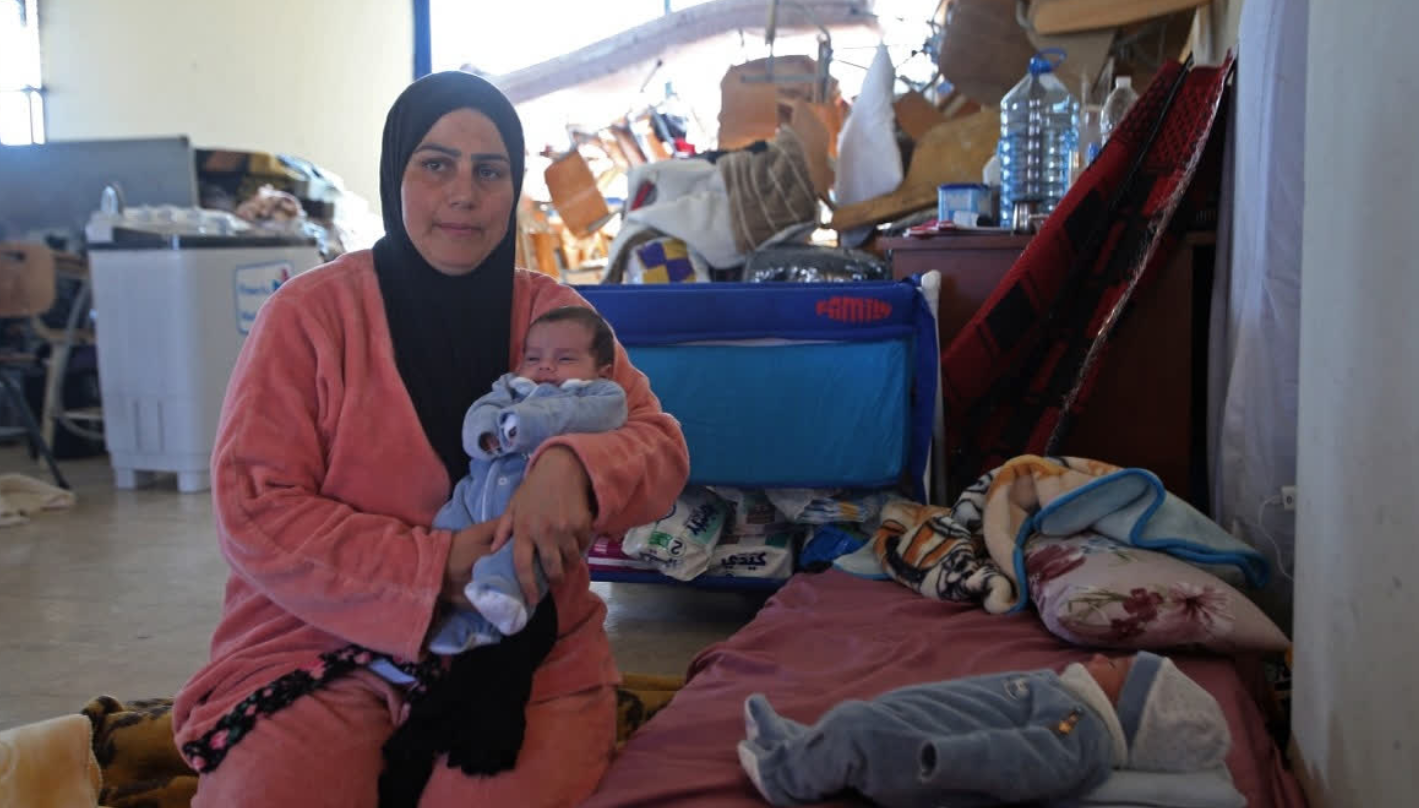

In Lebanon, the joy of childbirth now unfolds under extreme hardship. Many mothers are giving birth in overcrowded shelters. These conditions emerged after conflict displaced thousands of families.
Among them is Mariam Zein, a 26-year-old mother. She cradles her 11-week-old son on a mattress in a shared shelter near Beirut. Her life changed suddenly when war forced her family to flee.
“I was really excited when I was in my ninth month of pregnancy… I never thought he’d be born and there’d be war,” she said.
Displacement Disrupts Motherhood
Zein now lives in a converted training institute with her family. Basic items surround her, including nappies and baby formula. Clothes hang on improvised lines in tight spaces.
“I haven’t been able to enjoy my son —my first child… to see him getting bigger in his own bed, in his own home.” “I was very sad, and I’m still sad,” she said.
She fled her home when fighting between Israel and Hezbollah escalated on March 2. Since then, she has not returned. She also remains unsure whether her house still stands.
Overcrowded Shelters and Growing Needs
Authorities report that more than one million people have been displaced. Additionally, over 2,450 lives have been lost in the conflict. A temporary ceasefire has brought some relief, but uncertainty remains.
Shelters across Beirut host thousands of displaced individuals. One such center houses around 500 people, including pregnant women and newborns. However, space and privacy remain limited.
Zein stopped breastfeeding due to lack of privacy. Meanwhile, she struggles to afford baby formula. Her son is also quickly outgrowing his clothes.
“Whatever happens I just want my son near me,” she said.
Rising Challenges for Pregnant Women
According to the United Nations Population Fund, around 620,000 displaced women and girls face increasing risks. Among them, nearly 13,500 are pregnant.
Furthermore, about 1,500 women are expected to give birth within the next month. These numbers highlight the urgency of medical support.
Mobile health clinics now operate in affected areas. Doctors provide check-ups and basic care to pregnant women. However, gaps in healthcare access remain significant.
A medical expert explained the situation clearly. “We’re not just worried about physical health but also their mental health,” she said.
“They don’t know if they can go home, they don’t have their medication, they’re not being properly followed.”
Living Conditions Add to the Strain
In another shelter in Beirut, Ghada Issa prepares to give birth soon. She lives with her family in a cramped tent. Even daily tasks, such as using shared toilets, have become difficult.
“This place, this environment, is not for pregnant women,” she said.
Despite the challenges, her family tries to create comfort. Her husband arranged a makeshift bed for her. Beneath it, small donated items wait for their newborn.
“I haven’t got my head around the idea of having a baby here,” she said.
“I’m still hoping that one day they’ll tell me, let’s go to the village, and I’ll have the baby at home.”
Families Struggle to Rebuild Hope
In Sidon, another mother cares for her newborn twins. Ghada Fadel fled her village while pregnant. Soon after, her home was destroyed.
“After we left the house, they (Israel) bombed it. The house is gone” she said.
Now, she raises her babies in a classroom turned shelter. Despite everything, she holds onto hope.
“I was hoping to give birth and come home,” she said.
“Every mum hopes to take her kids home… no matter the circumstances”.
Conclusion
The humanitarian crisis in Lebanon continues to affect the most vulnerable. Mothers and newborns face daily struggles in overcrowded shelters.
While aid efforts provide some support, challenges remain widespread. Yet, amid uncertainty, families continue to hold onto hope for a safer future.

