
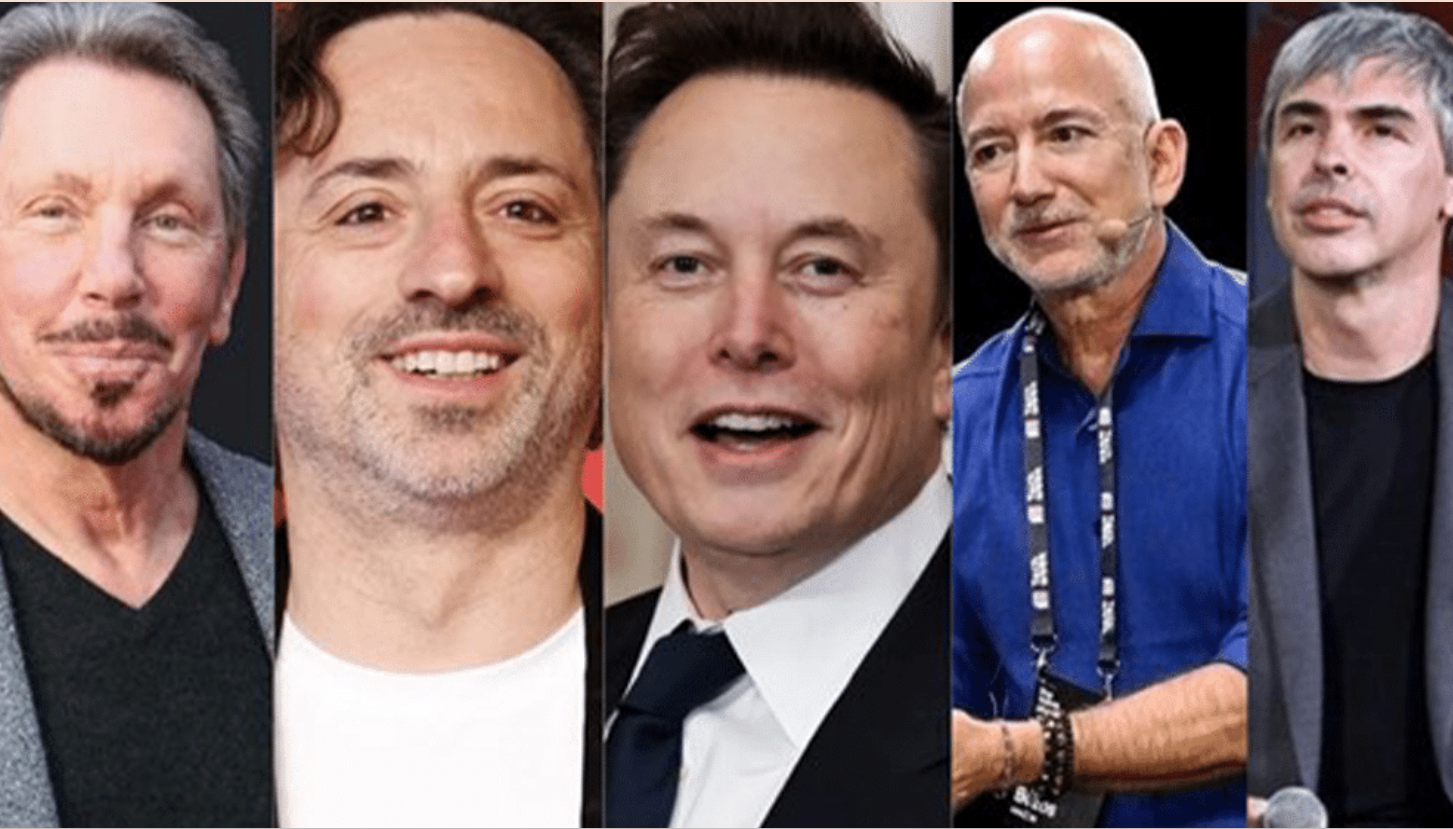

A major wealth analysis has raised fresh questions about philanthropy among America’s richest individuals. Despite holding massive fortunes, many top billionaires contribute only a small fraction of their wealth to charitable causes.
The data, based on lifetime giving estimates, shows a clear gap between wealth accumulation and public donations. Moreover, the findings highlight a strong imbalance in global philanthropy patterns.
While some billionaires donate billions, others contribute relatively little compared to their net worth. As a result, discussions around responsibility and wealth distribution continue to intensify.
Tech Billionaires Dominate Wealth, But Lag in Donations
Technology founders dominate global wealth rankings, yet many of them are not leading philanthropists. Figures such as Elon Musk, Larry Page, Jeff Bezos, Sergey Brin, and Mark Zuckerberg collectively control enormous fortunes.
However, their lifetime charitable contributions remain comparatively small. For example, some have donated less than 1 percent of their total net worth.
Even billionaires with assets exceeding hundreds of billions show limited giving patterns. Consequently, their philanthropic impact appears modest relative to their wealth creation.
In contrast, a few individuals stand out for significantly higher donation levels.
Warren Buffett Leads in Long-Term Philanthropy
One of the most notable exceptions is Warren Buffett, who has donated more than $68 billion over his lifetime. This accounts for nearly one-third of his total wealth.
Buffett remains the only billionaire among the group who has given away at least 10 percent of his fortune on a consistent basis. Moreover, he continues to make large annual contributions even after stepping down from his corporate leadership role.
His approach to wealth distribution places him among the most generous philanthropists in modern history.
Other Major Global Donors
Several other prominent figures also stand out for their charitable contributions. Bill Gates and Melinda French Gates have collectively donated more than $52 billion.
Their philanthropic efforts focus heavily on global health, poverty reduction, and education initiatives.
Similarly, Michael Bloomberg has directed billions toward climate change, public health, and education programs worldwide.
These contributions demonstrate that large-scale philanthropy often comes from sustained long-term commitments rather than occasional donations.
MacKenzie Scott’s Rapid and Quiet Giving Model
MacKenzie Scott has also emerged as a major philanthropic figure in recent years. She has donated hundreds of millions of dollars in short periods, often without public announcements.
In one example, she contributed at least $760 million to historically Black colleges and universities within just three months.
Her approach emphasizes fast, unrestricted giving with minimal publicity. Consequently, her model differs significantly from traditional philanthropic strategies.
Wealth Concentration vs Charitable Distribution
The data highlights a striking contrast between wealth concentration and charitable distribution. Many of the world’s richest individuals rank low in lifetime giving percentages.
For instance, several billionaires have donated less than 1 percent of their net worth. Meanwhile, others have given away significantly larger portions of their fortunes.
Interestingly, individuals who did not directly found their wealth often give more aggressively. In many cases, they also impose fewer restrictions on how funds are used.
How Philanthropy Rankings Are Measured
Philanthropy rankings are based on actual donations delivered to charitable causes. Importantly, they do not include pledged money or funds held in private foundations.
They also exclude assets stored in donor-advised funds that have not yet reached beneficiaries. Therefore, the rankings reflect real, completed charitable contributions rather than promises.
This method provides a more accurate picture of actual philanthropic impact.
A Growing Debate on Wealth Responsibility
The contrast between extreme wealth and limited giving continues to spark global debate. Many observers question whether billionaires should contribute more to social causes.
At the same time, others argue that philanthropy remains a personal choice. However, rising inequality has increased pressure on ultra-wealthy individuals.
As wealth continues to grow at the top, expectations around charitable responsibility are also evolving.
Conclusion: A Divided Picture of Modern Philanthropy
The data presents a divided picture of billionaire philanthropy in the United States. While a few individuals donate billions, many others contribute only a small fraction of their wealth.
This imbalance continues to shape discussions about fairness, responsibility, and global inequality. Ultimately, the gap between wealth and giving remains one of the most debated issues in modern economics.

