
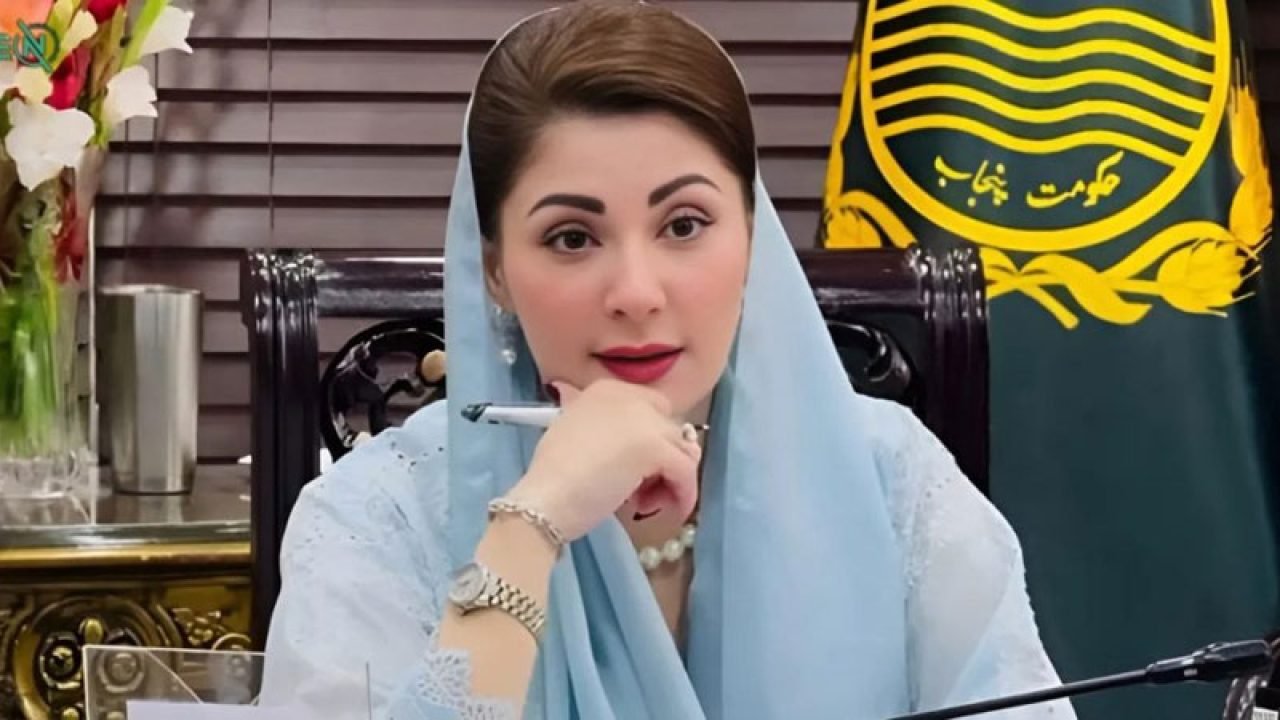

Punjab Chief Minister Maryam Nawaz Sharif has formally approved a new curriculum for government schools, introducing changes aimed at reducing academic pressure and modernising classroom learning.
The new curriculum will reduce the textbook burden by 25% and discourage rote learning, according to a briefing presented during a special education reforms meeting in Lahore.
The meeting reviewed curriculum changes for English, Mathematics, Social Studies, Urdu and Early Childhood Education.
New Textbooks to Include QR Learning
Under the revised curriculum, every textbook will feature a QR code.
Students will be able to scan the code and access video lessons related to the topic they are studying.
The initiative is intended to combine traditional textbooks with digital learning and make lessons more interactive.
The curriculum also aims to reduce unnecessary academic content and strengthen students’ understanding rather than relying heavily on memorisation.
Punjab Plans AI Curriculum From Grades 1 to 12
Maryam Nawaz has also directed authorities to prepare an artificial intelligence curriculum from Grade 1 to Grade 12.
She called for the development of laboratories alongside the AI curriculum so students can gain practical exposure to emerging technologies.
Punjab has already developed an AI curriculum framework through PECTAA. The framework covers areas including data science, machine learning, robotics and ethical AI.
The chief minister also directed officials to complete the printing of the new textbooks before March.
Mental Health Training Planned for Teachers
The meeting approved the introduction of mental health training for teachers in Punjab.
Officials also reviewed a proposal to appoint visiting psychologist faculty in every district.
Maryam Nawaz further directed authorities to provide online counselling facilities for students.
The measures are intended to provide students with greater access to mental health and emotional support within the education system.
Punjab Moves to End Corporal Punishment
The meeting also reached a consensus on legislation aimed at eliminating corporal punishment in schools.
Officials discussed establishing “discipline corners” in classrooms as an alternative to physical punishment.
Maryam Nawaz said physical punishment could leave a lifelong impact on children and stressed the need for stronger measures to prevent it.
Punjab had already taken steps against corporal punishment in schools, including a 2025 directive prohibiting teachers from carrying or using sticks on school premises.
Saturdays Reserved for Teacher Training
The government also agreed to designate Saturdays for teacher training across Punjab.
Textbook authors will conduct the training themselves to help teachers understand the revised curriculum and teaching approach.
The move is intended to ensure that teachers understand the new material before its implementation in classrooms.
Meanwhile, the government plans to continue strengthening digital literacy across schools.
Focus on Primary Education
Maryam Nawaz emphasised the importance of strengthening primary education and building a strong academic foundation from the early grades.
Recent curriculum reforms in Punjab have also focused on making primary education more concept-based, practical and less dependent on memorisation.
The chief minister said Punjab had sufficient resources but stressed the need to prevent their wastage.
She also highlighted progress in English-language training, saying 35,000 teachers across 31 tehsils in 12 districts had completed the training.
The new curriculum therefore combines shorter and lighter textbooks with digital resources, AI education, teacher training and student counselling.
The government has yet to provide a complete implementation schedule for all components, but textbook printing is expected to be completed before March.
For the latest updates, visit and follow The Truth International website (www.thetruthinternational.com) and subscribe to the YouTube Channel.

