

When Divorce Becomes a Measure of Family Honour
A celebrity controversy can begin with a few sentences, but sometimes the discussion it creates goes far beyond the person who said them. Saba Faisal’s recent remarks about divorce have become one such conversation, bringing questions about marriage, family honour, women’s choices and changing social attitudes into the spotlight.
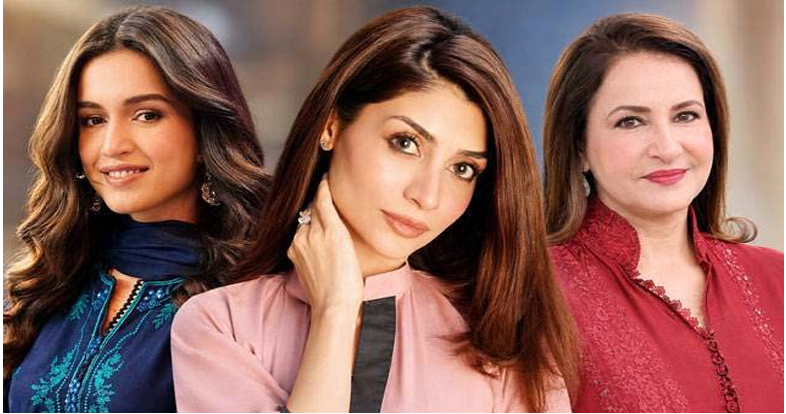
During a recent interview, veteran actor Saba Faisal reflected on how families once responded when a daughter went through a divorce. She described an older culture in which divorce could bring prolonged grief and embarrassment to the family. According to her, parents, particularly fathers, once found it difficult to face society after their daughter’s marriage ended. She contrasted that experience with what she sees as a more casual attitude today, where a divorced woman may speak about her separation and continue with her life.
Her comments quickly travelled across social media, where audiences interpreted them in very different ways. For some, Faisal was pointing toward a genuine change in how society views marriage. They understood her concern as being about the growing acceptance of divorce rather than about condemning divorced women.
For others, however, the language surrounding shame and family honour raised a much more uncomfortable question: why should a woman’s divorce become a source of humiliation for her parents?
Hira Khan Challenges the Conversation
Actress Hira Khan was among those who publicly challenged Faisal’s remarks. In an Instagram Story, Khan argued that accepting a woman’s decision to leave a marriage can be preferable to remaining in a situation that could put her life or safety at risk.
Her response shifted the discussion away from social embarrassment and towards individual dignity and choice. Khan also argued that women should not be policed or condemned simply because they choose to leave a marriage.
The intensity of her response showed how differently generations can approach the same subject. For one side, divorce may represent the breakdown of something that families spent years building. For another, it may represent the end of a relationship that was no longer safe, healthy or sustainable.
Neither experience can automatically explain every divorce. Every marriage has circumstances that outsiders may never fully know.
Zoya Nasir Calls the Narrative “Dangerous”
Zoya Nasir also joined the debate, describing the narrative surrounding Faisal’s comments as “dangerous and twisted.” Her reaction added another celebrity voice to an already heated discussion.
The disagreement is significant because it reveals an important distinction between two ideas that are often treated as the same: accepting divorce and celebrating divorce.
A person can believe that marriage is serious while also believing that divorce should not destroy a person’s dignity. Similarly, acknowledging that some marriages end does not necessarily mean encouraging people to walk away from relationships without consideration.
That distinction was largely missing from the social media conversation, where complicated questions were quickly reduced to opposing sides.
The Daughter at the Centre of the Debate
The controversy became even more personal when Saba Faisal’s daughter, Sadia Faisal, appeared to respond to Hira Khan. Her reaction demonstrated how quickly a public discussion about social attitudes can become connected to individual families.
This is perhaps one of the most difficult aspects of celebrity culture. A public figure may speak about an issue in general terms, but audiences often attach those statements to real people, relationships and experiences.
Divorce is particularly sensitive because it rarely affects only two individuals. Parents, children, siblings and extended families can all experience its consequences. At the same time, the person who is divorced remains the one who must ultimately rebuild a life after the relationship ends.
That is where the question of judgment becomes important.
Has Society Changed, or Has the Language Changed?
Saba Faisal’s remarks point towards a visible change in how divorce is discussed. Social media has made it easier for people to see divorced women continuing their careers, travelling, remarrying, raising children and building new lives.
What earlier generations may have considered private family matters can now become public conversations within hours.
But greater visibility does not necessarily mean that divorce has become emotionally easier.
A woman may appear perfectly fine online while privately dealing with grief, financial pressure, family expectations or uncertainty about the future. A photograph from a holiday cannot tell the complete story of what happened inside a marriage.
This is where the controversy becomes bigger than Saba Faisal, Hira Khan or Zoya Nasir. It reflects a society negotiating between traditional ideas of marriage and newer ideas about individual choice.
For decades, women were often expected to preserve marriages at almost any cost. The fear of being labelled divorced could influence decisions that were deeply personal. Today, younger generations are increasingly questioning whether social approval should determine whether someone remains in an unhappy marriage.
Yet the opposite extreme also deserves thought. Treating every separation as effortless or insignificant can ignore the emotional and practical consequences that divorce often brings.
The real conversation, therefore, may not be about whether divorce should be “normalised.” It may be about whether people can acknowledge the seriousness of divorce without turning it into a lifelong social punishment.
And this question does not stop at marriage.
Women in the public eye are judged not only for whom they marry or whether they stay married, but also for when they become mothers, how they look after pregnancy and how their bodies change with time.
That becomes clear in another recent celebrity conversation surrounding Mahira Khan.
From Marriage Choices to Motherhood and the Female Body
If Saba Faisal’s controversy raised questions about how women are judged for their decisions within marriage, Mahira Khan’s recent pregnancy announcement opened another conversation about how society looks at women as they grow older and enter different stages of life.
In September 2026, Mahira Khan announced that she was expecting her second child at 41. She shared a photograph showing her baby bump while attending the Toronto International Film Festival, accompanying the announcement with a reflection on trusting Allah’s plan. The news was met with widespread attention because Mahira is one of Pakistan’s most recognisable actors, but it also highlighted something beyond celebrity excitement: the way society continues to attach expectations to women’s age, marriage and motherhood.
Motherhood Has Never Been Just a Private Choice
For many women, deciding whether and when to have children is deeply personal. Yet public figures often find that such decisions become part of public conversation.
Mahira’s pregnancy at 41 immediately became a topic of discussion because it challenged familiar expectations about the age at which women are expected to become mothers. Her announcement also arrived after her second marriage, making it another example of how the timelines of celebrity women are constantly examined.
The attention surrounding her pregnancy was not simply about becoming a mother. It was also about age, marriage and the idea that women are somehow expected to complete certain milestones according to a particular schedule.
A woman who marries later can face questions about children. A woman who has children early can face questions about her career. A woman who chooses not to have children can face another set of questions entirely.
The common thread is that the decision rarely remains entirely hers.
The Invisible Timeline Women Are Expected to Follow
Society often creates an unwritten timeline for women: education, marriage, children, career and family responsibilities are expected to happen in a certain order and within certain years.
Celebrity culture makes this timeline even more visible.
When a famous woman becomes pregnant, gets divorced, remarries or returns to work after having children, audiences often feel entitled to analyse the decision. Her age becomes a headline. Her appearance becomes a discussion. Her personal choices become entertainment.
Mahira’s announcement also showed how differently the same life event can be viewed depending on the person experiencing it.
For some, the news was simply a joyful announcement from an actor entering a new chapter of her life. For others, her age and previous marriage became part of the discussion.
That difference matters because it reveals how quickly women’s personal milestones can become public measurements of whether they are “on time.”
When the Body Becomes Public Property
The same scrutiny becomes even more visible when the conversation moves from motherhood to appearance.
Katrina Kaif recently faced online body-shaming after appearing publicly with husband Vicky Kaushal during Ganesh Chaturthi celebrations in Mumbai. Social media users commented on her postpartum weight, while others pushed back against the criticism and defended her. A post supporting Katrina was also liked by actor Hrithik Roshan.
The incident is a familiar example of the impossible standard placed on women after pregnancy.
A woman’s body changes during pregnancy. It changes after childbirth. Recovery does not follow a fixed timetable, and neither does every woman’s experience.
Yet celebrity women are frequently expected to return to their previous appearance almost immediately.
The contradiction is striking. Society celebrates motherhood while often criticising the physical changes that motherhood can bring.
The Pressure to “Bounce Back”
The phrase “bounce back” has become common in celebrity culture, particularly when discussing women after childbirth. It suggests that a woman’s body should quickly return to the shape it had before pregnancy.
For actresses, the pressure can be even greater because appearance is closely connected to their professional image.
But expecting a new mother to immediately look exactly as she did before pregnancy turns recovery into another performance.
Katrina’s experience illustrates how quickly a normal physical change can become a public debate. She did not need to announce anything about her body for people to start discussing it. A photograph was enough.
That is the larger problem with social media scrutiny: the person being discussed does not need to participate in the conversation for millions of people to have an opinion about her.
Three Stories, One Larger Pattern
At first glance, Saba Faisal’s divorce controversy, Mahira Khan’s pregnancy announcement and Katrina Kaif’s body-shaming controversy appear unrelated.
One concerns marriage. Another concerns motherhood. The third concerns appearance.
But beneath the headlines, they all involve the same question: who gets to decide what a woman’s life should look like?
Saba’s comments brought attention to expectations around how a woman should behave after divorce. Mahira’s pregnancy highlighted expectations around when a woman should become a mother. Katrina’s body-shaming controversy exposed expectations about how a woman should look after becoming one.
Different subjects, similar scrutiny.
The public often evaluates women through milestones. Is she married? Is she still married? Does she have children? How old is she? Has she returned to work? Has she “maintained” herself?
Men in the entertainment industry are not completely free from scrutiny, but women frequently face a more detailed examination of their personal lives and physical appearance.
The Celebrity Woman Has Two Audiences
There is another complication: celebrities exist between private life and public career.
Their work depends partly on public attention, but their personal lives do not automatically become public property.
An actor can share a pregnancy announcement without inviting commentary on her age. A celebrity can appear after childbirth without asking people to assess her weight. A woman can speak about divorce without inviting strangers to decide whether her family should feel ashamed.
The boundary between public interest and personal judgment has become increasingly blurred.
Social media has made that boundary even thinner. A celebrity’s photograph can move from Instagram to news pages to thousands of comments within minutes.
The original context can disappear, while the judgment remains.
Perhaps the Real Issue Is Control
What connects these stories most strongly is control.
Who controls the story of a divorced woman: her family, society or the woman herself?
Who decides when motherhood should happen?
Who decides what a new mother’s body should look like?
These questions are not unique to celebrities. Celebrity stories simply make the pressure easier to see because millions of people participate in the conversation.
The attention surrounding Saba Faisal, Mahira Khan and Katrina Kaif therefore reflects something larger than entertainment news. It reveals how society continues to create expectations around women’s choices while simultaneously debating whether those expectations are changing.
The difference today is that women have more visible platforms to answer back.
They can challenge criticism, share their own experiences and refuse to accept traditional definitions of what their lives should look like.
But visibility alone does not remove judgment.
It simply makes the judgment easier to see.
Beyond the Judgment
The stories of Saba Faisal, Mahira Khan and Katrina Kaif may belong to different corners of showbiz, but together they reveal a familiar pattern. Women are still frequently judged through marriage, motherhood, age and appearance.
Saba Faisal’s remarks opened a debate about whether divorce should remain associated with family grief and social shame. Hira Khan and Zoya Nasir challenged that perspective, bringing questions of dignity, safety and personal choice into the discussion.
Mahira Khan’s pregnancy showed another side of the conversation: how quickly a woman’s age and personal timeline can become public discussion. Katrina Kaif’s body-shaming controversy then demonstrated how motherhood can bring another layer of scrutiny, particularly when it comes to physical appearance.
Perhaps the bigger lesson is not that society should stop discussing celebrities altogether. Public figures will always attract attention. The question is what happens after that attention begins to turn into judgment.
A woman’s divorce does not define her. Her age does not determine her worth. Pregnancy does not make her body public property. And choosing a different path from society’s expectations does not make her life less valid.
Beyond the headlines, these controversies offer a chance to reconsider the standards women are constantly asked to meet—and whether those standards were ever fair to begin with.
For the latest updates, visit and follow The Truth International website (www.thetruthinternational.com) and subscribe to the YouTube Channel.

