
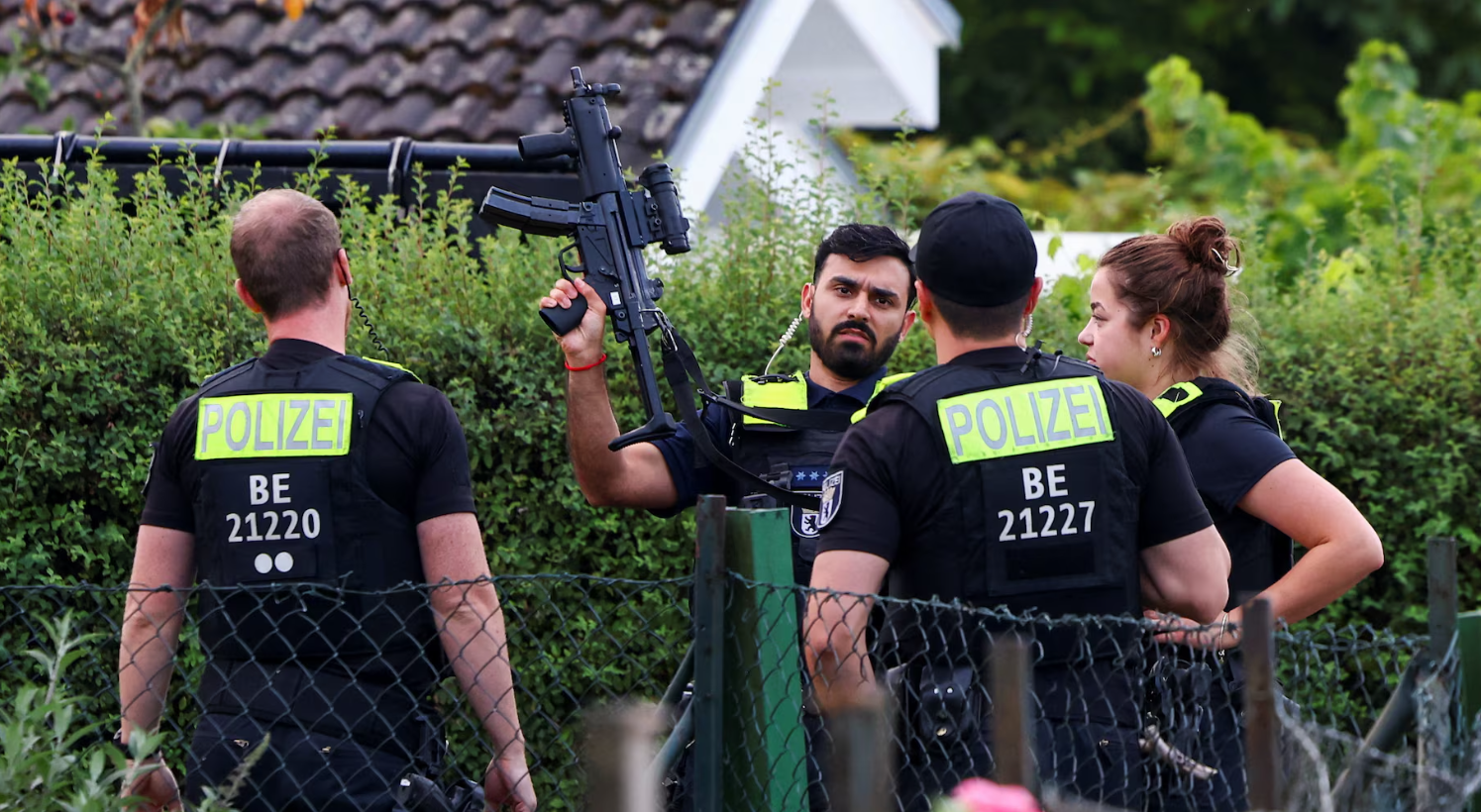

German police shot dead the main suspect in the Berlin Pride attack on Sunday. The operation came one day after the deadly vehicle ramming near the city’s annual LGBTQ celebrations.
Authorities said the 21-year-old suspect allegedly drove a minivan into pedestrians near Tiergarten Park on Saturday night. The incident happened close to the Brandenburg Gate, where thousands had gathered for Christopher Street Day.
The attack claimed one life and left 29 others injured. Officials also said several victims suffered injuries from a bladed weapon allegedly used by the suspect during the incident.
The suspect was later located in an allotment garden complex in Berlin’s Spandau district. However, the encounter quickly turned violent.
Police Open Fire After Armed Confrontation
According to police, officers found the suspect around 6pm on Sunday.
Authorities stated that he charged towards officers while carrying a bladed weapon. Police then opened fire during the confrontation.
Despite immediate efforts by emergency responders to save him, the suspect died at the scene.
Residents near the location reported hearing multiple gunshots. They also said police instructed them to remain inside their garden huts until the operation ended.
Suspect Had Previous Extremism-Related Record
Earlier on Sunday, police identified the suspect as Abdul B., aged 21, and released his photograph while searching for him.
Interior Minister Alexander Dobrindt said the suspect was a German citizen of Lebanese heritage. He was born in Germany in 2005.
The minister also revealed that the suspect had previously come to the attention of authorities because of numerous criminal offences and signs of radicalisation.
Security officials stated that he had recently been released from juvenile detention, only two months before the attack.
Authorities further confirmed that the suspect had previously been convicted of preparing a serious act of violence that endangered the state.
Officials also said he was known to Germany’s domestic intelligence services and was listed among individuals considered potentially dangerous.
German Leaders Vow Firm Response
Ahead of a memorial service at St Mary’s Church in Berlin, Chancellor Friedrich Merz promised a strong response.
He urged citizens not to give in to fear after the attack.
“We will defend the freedom, openness, and liberal spirit of our lives and our society with everything we can do,” he said.
His remarks came as Germany mourned the victims and increased security across the capital.
Thousands Gather to Honour Victims
Thousands of people gathered near the Brandenburg Gate to remember those affected.
Many participants carried rainbow flags, while others held signs reading “Hatred kills.”
Several mourners placed flowers and lit candles in Tiergarten Park. Others embraced and observed moments of silence.
The emotional vigil reflected widespread grief following the deadly attack.
Political Debate Intensifies
The incident has renewed calls for stronger action against violent extremism.
Political leaders from different parties demanded tougher security measures and stricter enforcement against radical individuals.
Green Party politician Omid Nouripour called for firm action against “murderous Islamism.”
Meanwhile, regional CDU leader Daniel Peters urged stronger measures against supporters of Daesh.
Interior Minister Alexander Dobrindt also addressed reports that the suspect had received a suspended sentence. He said, “It would certainly have been advisable to place this individual in custody”.
Attack Adds Pressure on German Government
The attack comes at a politically sensitive time for Chancellor Merz’s coalition government.
His administration is already facing criticism over security and governance issues.
Regional elections are also approaching, making immigration and public safety major political issues.
The Alternative for Germany (AfD) quickly reacted to the incident.
Party co-leader Tino Chrupalla wrote, “We will not allow religious extremists to divide our country with violence and intolerance!”
Authorities continue investigating the attack while examining the suspect’s background, extremist links and possible motives.

