
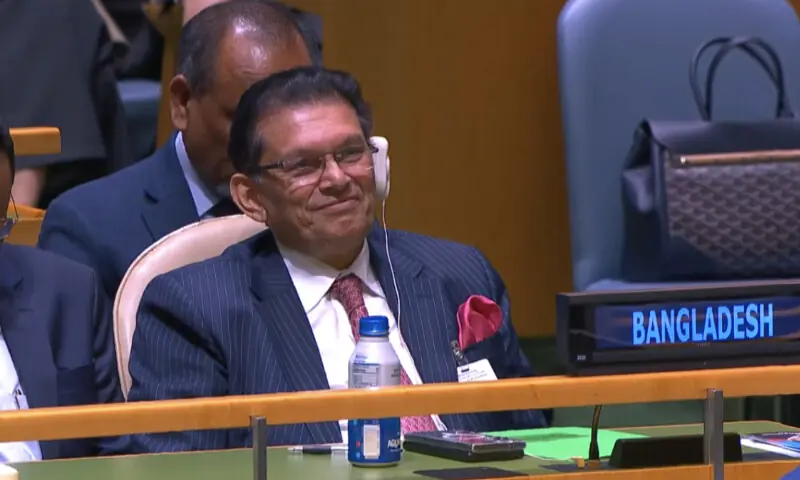

UNITED NATIONS: Bangladesh’s Foreign Minister Khalilur Rahman was elected president of the 81st session of the United Nations General Assembly on Tuesday, securing a closely contested victory over Cyprus’s candidate, Andreas S. Kakouris.
Rahman received 99 votes from the 193-member assembly, while Kakouris secured 91 votes. No member state abstained from the ballot. The winning candidate required at least 96 votes to obtain the necessary majority.
The election of the General Assembly president is held annually, with each UN member state casting one vote. Although the position rotates among regional groups under a long-standing geographical arrangement, candidates must still secure majority support through a secret ballot unless members agree otherwise.
For the 81st session, the Asia-Pacific Group was entitled to nominate candidates, resulting in a competitive race that highlighted the importance of diplomatic outreach and coalition-building within the United Nations.
Rahman will formally assume office at the opening of the 81st UN General Assembly session in September 2026 and will serve a one-year term. As president, he will oversee plenary meetings, facilitate negotiations, manage debates, and help coordinate discussions on key international issues.
The relatively narrow margin of victory reflects an increasingly competitive environment within the General Assembly, where regional alliances and diplomatic engagement continue to play a significant role. Furthermore, the election underscores Bangladesh’s growing influence in multilateral diplomacy and international institutions.
While the presidency does not carry executive authority or the power to set binding policies, the officeholder plays an important role in shaping discussions on global peace and security, sustainable development, climate action, and United Nations reform.
Meanwhile, Pakistan’s Deputy Prime Minister and Foreign Minister Ishaq Dar extended his congratulations to Rahman on his election, acknowledging the significance of the achievement.
The outcome is widely viewed as a diplomatic milestone for Bangladesh and an opportunity for the country to contribute to consensus-building on major global challenges during its tenure at the United Nations.

