
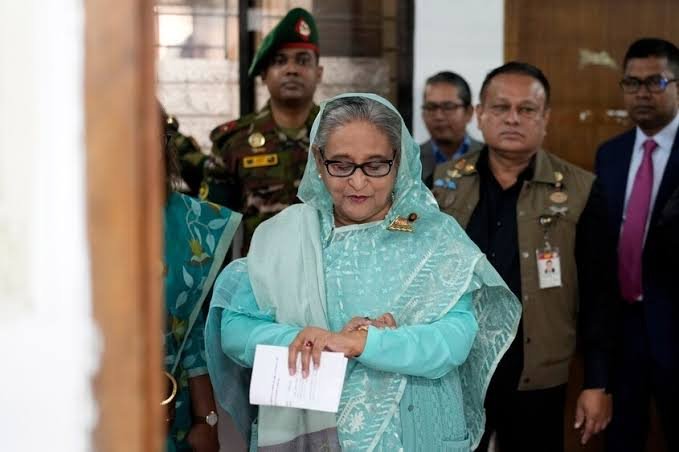

Dhaka Says Conditions Not Right for Prime Minister’s India Trip
Bangladesh has said Prime Minister Tarique Rahman will not visit India until New Delhi takes further steps toward extraditing former prime minister Sheikh Hasina.
The announcement signals continued tension between the neighbouring countries following the political upheaval that removed Hasina from power in 2024.
Hasina fled to India after deadly anti-government protests ended her administration.
She has remained in India since leaving Bangladesh.
Bangladesh has repeatedly asked Indian authorities to extradite the former prime minister.
Hasina has been convicted of crimes against humanity in Bangladesh and faces the death penalty.
Speaking to reporters on Sunday, foreign ministry official A.K.M. Shahidul Karim rejected speculation that Prime Minister Tarique Rahman could travel to India next week.
Karim said Bangladesh believes the appropriate political and diplomatic environment must first be created before such a high-level visit can take place.
He said Dhaka had urged India to accelerate efforts to extradite Sheikh Hasina and other individuals wanted by Bangladesh.
India has previously said the extradition request remains under examination.
Hasina’s Presence in India Continues to Strain Bilateral Relations
Relations between India and Bangladesh have remained difficult since Hasina’s government was removed during the 2024 uprising.
Dhaka has repeatedly raised concerns about her continued stay in India.
Bangladeshi officials have also criticised Hasina’s public comments and media appearances while living outside the country.
Karim said recent diplomatic efforts surrounding a possible visit by Rahman had been negatively affected by Hasina’s continued media interactions.
He described the issue as particularly sensitive because she has already been convicted in Bangladesh.
Indian and Bangladeshi officials have reportedly remained in contact in recent weeks about the possibility of a visit by Rahman.
India’s High Commissioner to Bangladesh, Dinesh Trivedi, also met the Bangladeshi prime minister last week.
That meeting increased speculation that both sides could be moving toward improved diplomatic engagement.
However, Bangladesh has now made clear that the extradition issue remains a major obstacle.
Dhaka wants visible progress from New Delhi before Rahman makes an official visit.
Hasina has meanwhile indicated that she intends to return to Bangladesh in December.
She has said she would return even if doing so resulted in imprisonment.
Her statements have added another layer of uncertainty to relations between the two countries.
Rahman Pursues ‘Bangladesh First’ Foreign Policy
Tarique Rahman became prime minister in February.
Since taking office, he has travelled to Malaysia and China.
His decision not to make India his first overseas destination marked a departure from a longstanding diplomatic pattern followed by previous Bangladeshi leaders.
The development reflects the changed political relationship between Dhaka and New Delhi following Hasina’s removal.
Karim said the government would pursue what he described as a “Bangladesh First” foreign policy.
He said the approach would focus on national sovereignty and non-interference.
At the same time, Bangladesh intends to maintain mutually beneficial relations with India and other international partners.
Dhaka has indicated that it remains open to improving ties with New Delhi.
However, officials say the extradition of Hasina and other wanted individuals remains central to creating the conditions necessary for a prime ministerial visit.
The dispute is therefore likely to remain one of the most important issues shaping Bangladesh-India relations in the coming months.

