
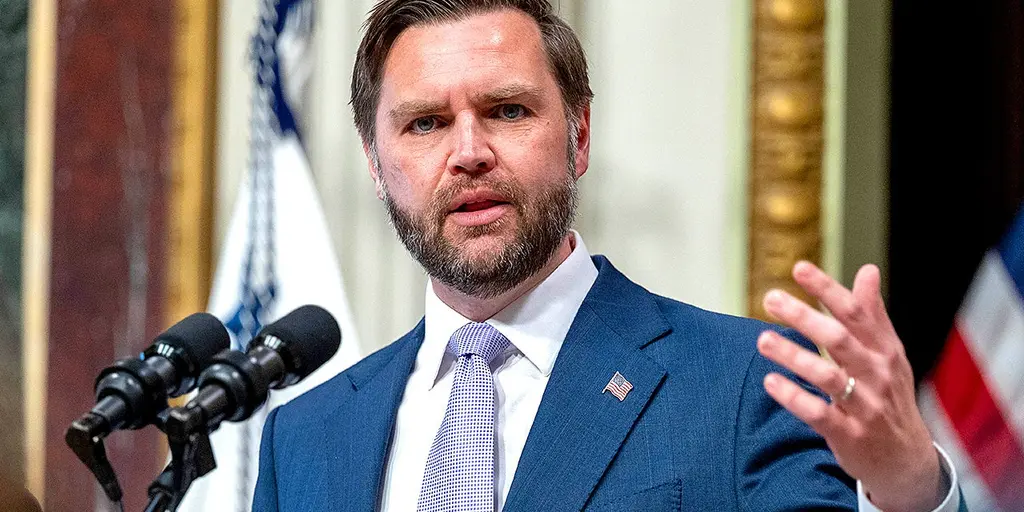

US Vice President JD Vance has avoided publicly endorsing President Donald Trump’s decision to strike Iran, despite growing pressure to defend the military operation.
Speaking alongside Trump at a White House press conference on Friday, Vance declined to confirm whether he would have authorised the February strikes. Instead, he maintained that the decision belonged to the president.
Vance said the military action against Iran was Trump’s decision, adding that his responsibility was to support the country’s president. His response highlighted growing political tensions surrounding the Iran conflict and its consequences for Republicans.
Why Did Vance Refuse to Fully Endorse Trump’s Iran Strikes?
During the press conference, Vance avoided directly answering whether he considered the February military strikes necessary. He also stopped short of saying he would authorise the same operation if given the opportunity.
“The reason we lost is the war,” Vance wrote. “The president himself said so last night. If you’d like to argue it was worth it, that losing the Senate for the next 6 years was worth it, then do so. Argue it was a worthwhile cost to pay.”
His comments followed a blunt assessment of Republican election losses. Vance had blamed the Iran conflict for the party’s historic setbacks during the midterm elections.
The remarks attracted attention because they appeared to differ from Trump’s position. They also raised questions about Vance’s political standing as he considers a possible presidential campaign in 2028.
Trump responded that he was not unhappy with Vance’s assessment. However, he argued that the vice president had omitted an important point about the military operation.
According to Trump, Vance should have acknowledged that the strikes were necessary and that he would authorise them again.
“People that work for me, they have a right to their opinion,” Trump said. “But I say, I know the Iranians, and, frankly, they’re crazy.”
What Did Vance Say About Iran’s Nuclear Threat?
When reporters questioned whether the war justified Republican electoral losses, Vance again avoided directly endorsing the operation.
Instead, he defended the broader objective of preventing Iran from developing nuclear weapons.
“What I’ve said is the goal of keeping Iran from getting a nuclear weapon is absolutely what we need to be doing,” Vance said.
He described Iran as the biggest state sponsor of terrorism. Furthermore, he warned that Iranian possession of nuclear weapons could create serious international security risks.
“If they had a nuclear weapon, they would use it as leverage, or, God forbid, they would attack and kill thousands, hundreds of thousands, potentially, of innocent people.”
Vance then reiterated that the president held responsibility for making military decisions.
“And I think the president is the one who makes the decision, and the president has said he would do it again. And my view is that my goal is and my job is to support the president of the United States.”
How Has the Iran Conflict Affected Vance’s Political Position?
Vance has previously expressed opposition to the war and supported diplomatic efforts to resolve tensions with Tehran.
He also served as Washington’s main representative during peace negotiations. Those efforts produced a provisional truce during the summer, although the arrangement eventually collapsed.
More recently, Vance reportedly sent personal correspondence to hardliners in Tehran. The communication aimed to restart negotiations between the two sides.
However, Trump subsequently cancelled the engagements following Vance’s public assessment of the election results. He also instructed the vice president to concentrate on domestic policy.
“We don’t need a deal with Iran,” Trump wrote on social media, announcing his direction to Vance. “Those days have long since passed.”
The development marked another setback for diplomatic efforts involving the vice president. Meanwhile, Vance’s comments continued highlighting differences in how the administration approaches the conflict.
Trump Defends His Iran Policy After Diplomatic Tour
The disagreement unfolded shortly after Trump returned from a four-day diplomatic visit to Asia.
The trip concluded with an unprecedented trilateral meeting involving Chinese President Xi Jinping and Russian President Vladimir Putin.
Trump attracted criticism following his meetings with both leaders and their warm exchanges. He hugged Xi after arriving in China and referred to Putin as “my friend.”
However, White House officials defended the diplomatic engagements as an example of mature statesmanship. They argued that Trump’s ability to maintain relationships with international adversaries demonstrated American global strength.
Vance remained in Washington during the president’s overseas visit. Nevertheless, he publicly supported Trump’s diplomatic mission.
During Friday’s press conference, he joked that remaining behind while Trump travelled was similar to the 1990 family comedy film Home Alone.
“It’s amazing what’s possible when you give diplomacy a real chance,” he wrote on social media on Thursday.
What Comes Next for Vance and Trump’s Iran Policy?
Vance’s latest remarks have highlighted the political challenges surrounding the administration’s approach to Iran.
While he supports preventing Tehran from obtaining nuclear weapons, he has avoided personally endorsing Trump’s decision to launch military strikes.
Moreover, his criticism of the war’s electoral consequences has introduced another political dimension to the disagreement.
Trump, meanwhile, continues defending the military operation and maintaining that he would make the same decision again.
The contrasting positions leave questions about the administration’s future approach to Iran, particularly regarding military action and diplomatic negotiations.
For the latest updates, visit and follow The Truth International website (www.thetruthinternational.com) and subscribe to the YouTube Channel.

