
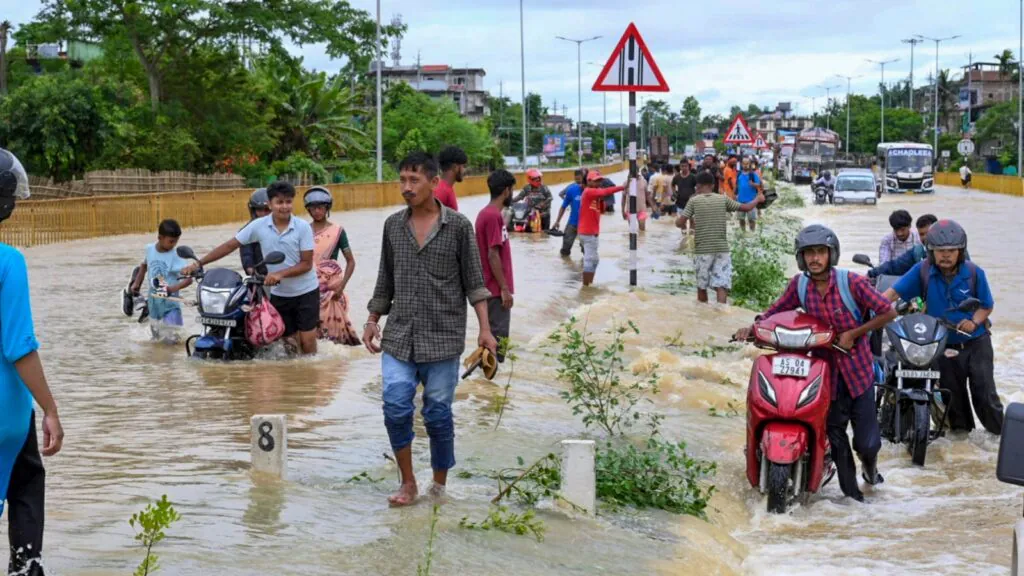

Extreme Rainfall Submerges More Than 1,800 Villages
Severe monsoon floods have killed at least 41 people in India’s northeastern state of Assam.
The disaster has affected more than 900,000 residents across over 1,800 villages in 25 districts.
Thousands of livestock have also been swept away by powerful floodwaters.
Assam Chief Minister Himanta Biswa Sarma described the destruction as unprecedented. He said several communities had not experienced flooding on this scale in recent history.
Authorities said upstream cloudbursts combined with intense local rainfall to trigger the crisis.
Some affected areas recorded rainfall around 436 percent above normal levels.
Rivers, streams and drainage systems overflowed rapidly, leaving homes, farmland and roads underwater.
Large areas remain inaccessible as floodwaters continue to disrupt transport and communication networks.
Nearly 30,000 People Shelter in Relief Camps
The Assam government has established more than 148 relief camps across the state.
Nearly 30,000 displaced people are currently staying in temporary shelters.
Emergency teams are distributing food, drinking water, medicines and other essential supplies.
More than 300,000 kilograms of rice and relief materials have already been delivered to the worst-affected districts.
The Indian Air Force, National Disaster Response Force and State Disaster Response Force are supporting rescue operations.
Teams are working continuously to evacuate stranded families by air and boat.
More than 50 small boats have been deployed in shallow areas where larger rescue vessels cannot operate.
The armed forces have also delivered supplies by air to isolated communities cut off by the flooding.
Authorities are using payload drones to improve the delivery of relief materials.
The drones are helping emergency workers reach remote locations where damaged roads and deep water have blocked ground access.
Government agencies are also assessing losses to homes, farmland, livestock and public infrastructure.
A central government team is expected to evaluate the damage and determine the assistance required for rehabilitation.
Climate Risks Intensify Monsoon Destruction
Floods and landslides occur regularly across India during the annual monsoon season.
The rainfall is essential for agriculture, water supplies and industry. However, extreme downpours can also cause deadly disasters.
Experts warn that climate change and rapid urbanisation are increasing the frequency and severity of weather emergencies.
Poor drainage, construction in vulnerable areas and changing rainfall patterns can make flooding more destructive.
The wider region has also suffered major losses during the current monsoon spell.
At least 19 people were recently killed in flash floods and landslides across Nagaland and Indian-administered Kashmir.
Authorities in Assam are now preparing long-term rehabilitation plans for affected families.
The state government also plans to improve coordination with neighbouring regions to reduce future risks from upstream cloudbursts.

