
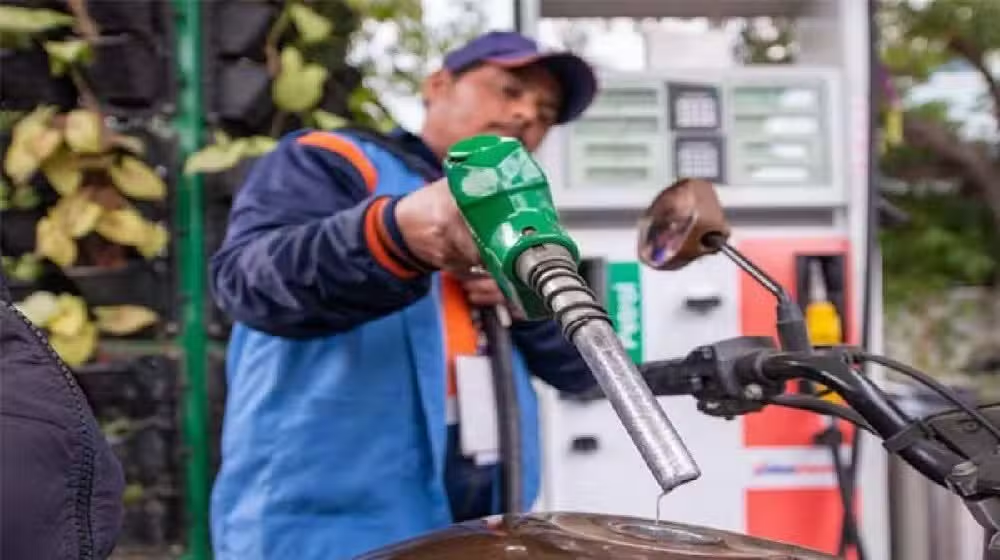

The federal government has announced another increase in petrol and high-speed diesel (HSD) prices, citing fluctuations in global oil markets following renewed hostilities in the Persian Gulf.
Under the latest revision, petrol has become Rs6.39 more expensive per litre, while high-speed diesel has increased by Rs7.83 per litre. The revised prices will come into effect from July 23.
The latest adjustment reflects the government’s policy of passing international price changes to consumers as global energy markets remain volatile.
New Petrol and Diesel Prices
Following the latest revision, the price of petrol has increased to Rs327.12 per litre.
Meanwhile, the price of high-speed diesel now stands at Rs375.04 per litre.
The Petroleum Division confirmed that the revised rates will be effective from Thursday, July 23.
Global Oil Market Volatility Behind the Increase
The latest increase comes as international oil prices continue to fluctuate due to renewed tensions in the Persian Gulf.
Rising geopolitical uncertainty has affected global crude oil markets. Consequently, Pakistan has adjusted domestic petroleum prices to reflect changing international costs.
Earlier, the government announced that petroleum prices would now be reviewed on a daily basis instead of weekly.
Daily Fuel Pricing Policy Introduced
Petroleum Minister Ali Pervaiz Malik recently announced that fuel prices would now be determined daily.
According to the minister, the federal cabinet and the prime minister decided to assign the Oil and Gas Regulatory Authority (OGRA) the responsibility of setting daily petroleum prices based on international market trends.
Previously, the government revised fuel prices every week after shifting from the fortnightly pricing mechanism.
The new policy aims to respond more quickly to rapid changes in global oil prices.
Petrol Dealers Delay Nationwide Strike
Meanwhile, the All Pakistan Petroleum Pump Owners Association postponed its planned nationwide strike for two weeks.
The decision came after successful negotiations with the petroleum minister.
Earlier, the association had announced a countrywide strike after talks with the government over the daily pricing mechanism failed.
However, despite the temporary suspension of the protest, the All Pakistan Dealers Association has rejected the daily pricing policy and said it will consider a future protest strategy.
Fuel Prices Have Changed Significantly in Recent Months
Petrol and diesel prices have witnessed sharp fluctuations in recent months.
The price of high-speed diesel had reached Rs520.35 per litre on April 3. Before that, it began rising from Rs281 per litre after the US-Iran conflict escalated on February 28.
Similarly, petrol climbed to Rs458.41 per litre on April 3 after increasing from Rs266 per litre during the first week of March.
Although prices later declined, the latest increase indicates that global market uncertainty continues to influence domestic fuel rates.
Why Fuel Prices Matter
Petrol remains the primary fuel for motorcycles, private vehicles, rickshaws, and small transport. Therefore, any increase directly affects middle-income and lower-income households.
High-speed diesel also plays a vital role in Pakistan’s economy. It powers heavy transport vehicles, agricultural machinery, large generators, and several industrial operations.
As a result, higher diesel prices often increase transportation costs and can influence the prices of goods across the country.
Moreover, petrol and diesel remain the government’s largest petroleum revenue sources. Monthly sales range between 700,000 and 800,000 tonnes, while kerosene demand remains comparatively low at around 10,000 tonnes per month.
The latest price revision highlights how developments in international energy markets continue to shape fuel costs for consumers across Pakistan.

