
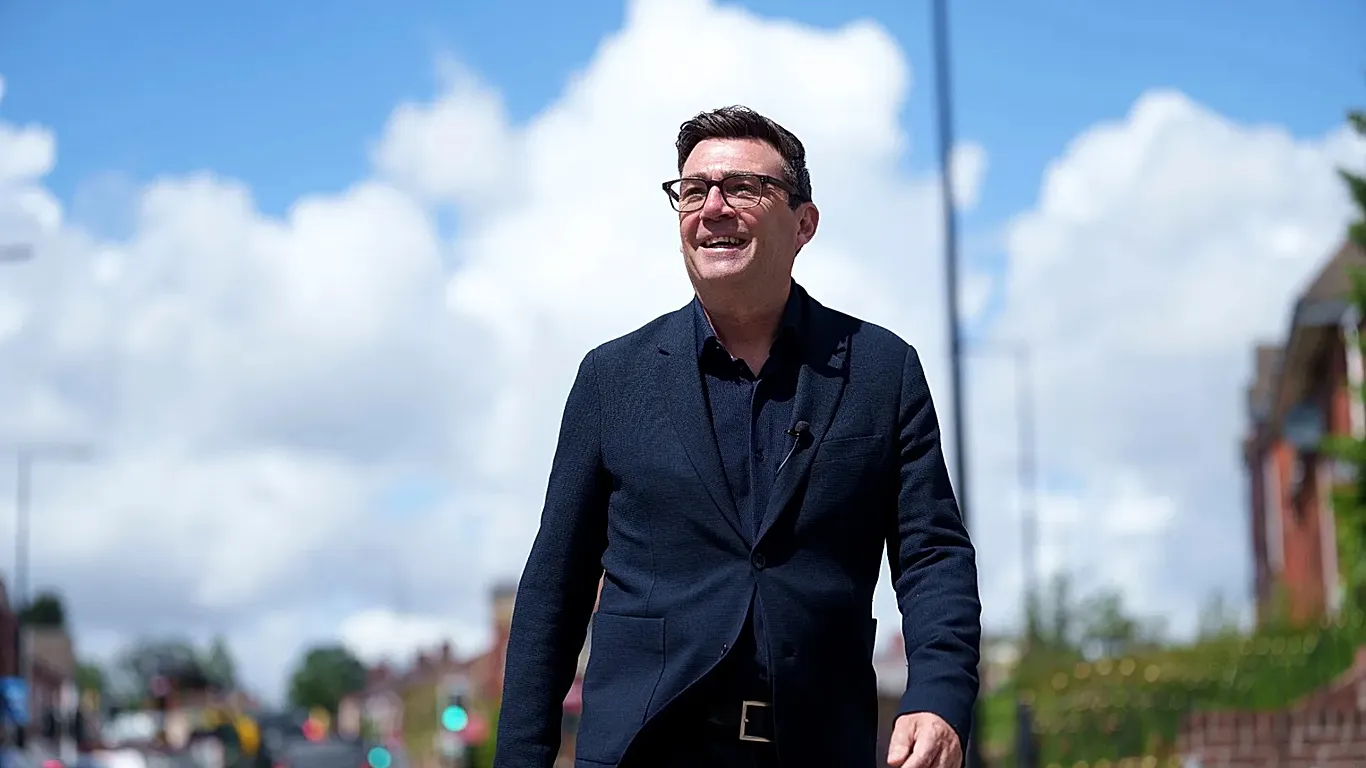

Andy Burnham became Britain’s new prime minister today after King Charles III invited him to form a government. The 56-year-old Labour leader succeeds Keir Starmer. Starmer resigned a few days ago, just two years after leading the party to a landslide election victory. Burnham becomes Britain’s sixth prime minister since 2016. He will inherit a government facing economic and political challenges.
Burnham promises fresh leadership
Burnham will deliver his first speech outside 10 Downing Street after Starmer formally leaves office. He is expected to outline plans to restore confidence in government and bring greater political stability. Moreover, he has pledged to introduce a different approach to governing after years of political uncertainty.
In an interview with The Times, Burnham said previous policies had failed to deliver the desired results. Therefore, he intends to focus on economic growth, regional development and early investment. He will also announce senior cabinet appointments, including a replacement for Finance Minister Rachel Reeves.
Economic challenges dominate agenda
The former mayor of Greater Manchester takes office as Britain faces slow economic growth, rising borrowing costs and increasing welfare spending. Additionally, irregular migration and public frustration over living costs continue to shape the political landscape.
Burnham also faces external pressures, including volatile energy prices linked to the US-Iran conflict and global economic uncertainty. Nevertheless, he has promised early measures to ease household financial pressures and strengthen public services. Officials said the leadership transition will conclude after Burnham’s audience with King Charles III and his first address as prime minister outside Downing Street.

