
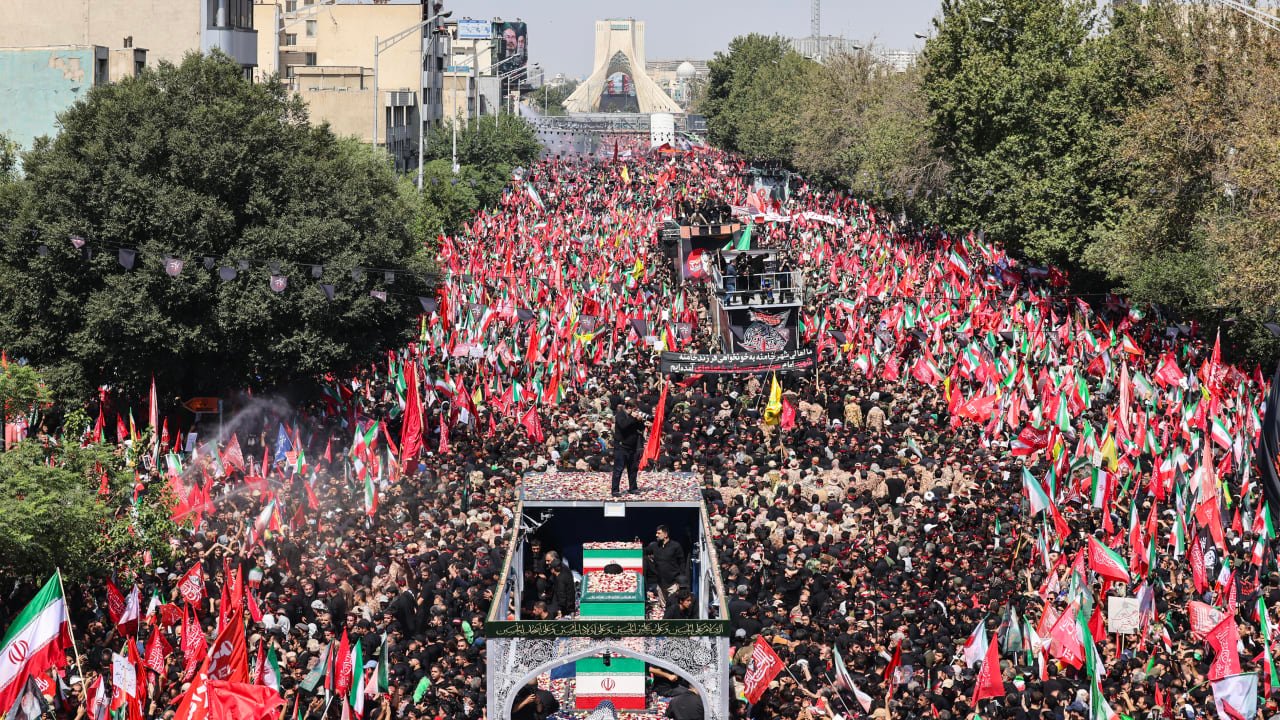

TEHRAN: Iran continued the funeral ceremonies for former Supreme Leader Ali Khamenei on Monday as large crowds gathered in Tehran alongside senior officials, foreign delegations and representatives from regional groups to pay their respects.
Iranian media reported that representatives of Kataib Hezbollah attended the third day of ceremonies, while former President Mahmoud Ahmadinejad also appeared among mourners. Thousands of participants carried red flags, widely regarded in Shia tradition as symbols associated with calls for justice and revenge.
The coffins of Khamenei and four members of his family were transported through Tehran on a ceremonial vehicle as mourners lined the streets. Authorities deployed water sprays to help people cope with the summer heat during the procession.
Security remains at highest level
Iranian military officials said the armed forces remain on full alert throughout the week-long ceremonies. A military spokesperson warned that any attack on Iran during the funeral period would receive what he described as a stronger response than previous confrontations.
State media showed large crowds gathering at Tehran’s Grand Mosalla, while transport authorities reported millions of metro journeys as mourners traveled to attend the ceremonies. Officials have also arranged transportation, accommodation and other services to facilitate public participation.
Meanwhile, funeral events are scheduled to continue in several Iranian and Iraqi cities before the final burial in Mashhad later this week.
Leadership transition draws attention
The absence of Iran’s new Supreme Leader, Mojtaba Khamenei, remained a major focus during the ceremonies. Several media reports suggested heightened security concerns contributed to his decision not to appear publicly, although Iranian authorities have not officially commented.
State television instead broadcast images of other members of the Khamenei family participating in prayers alongside senior officials, including Islamic Revolutionary Guard Corps Commander Ahmad Vahidi, who made one of his first public appearances since the conflict began earlier this year.
As the ceremonies continue, analysts say the funeral has become both a national memorial and a significant political event, reflecting Iran’s leadership transition while unfolding against the backdrop of ongoing regional tensions and diplomatic uncertainty.

