
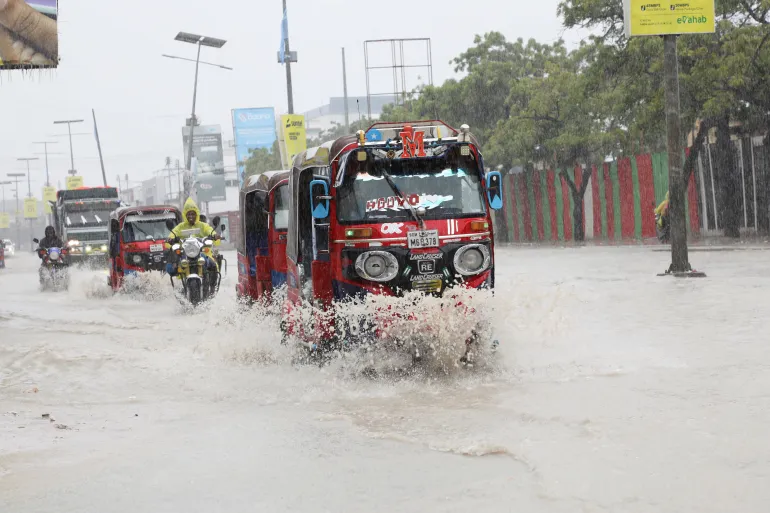

Floods, drought and disease threaten vulnerable countries across Asia and Africa
GENEVA: The International Rescue Committee (IRC) has warned that a rapidly strengthening El Niño weather pattern could bring severe flooding, drought, disease outbreaks, and food insecurity to some of the world’s most vulnerable countries in the coming months.
The humanitarian organization identified Kenya, Uganda, Somalia, Bangladesh, Pakistan, and Afghanistan among the nations facing the highest risk, noting that many are already struggling with conflict, displacement, and existing humanitarian emergencies.
Bob Kitchen, the IRC’s Vice President for Emergencies, said several crises are converging simultaneously, leaving fragile communities with little capacity to withstand another major shock.
Meanwhile, the US Climate Prediction Center reported that El Niño is strengthening quickly, with an 81 percent probability of becoming one of the strongest events recorded since 1950. Forecasters expect the phenomenon to reach peak intensity between October and December.
The World Meteorological Organization also confirmed that El Niño conditions have already developed and are likely to intensify during the coming months.
Governments prepare as food security concerns grow
Authorities in Kenya have activated national disaster response plans ahead of expected heavy seasonal rainfall, while Somalia continues to experience flooding in parts of Mogadishu.
In Bangladesh, flooding and landslides have displaced thousands of Rohingya refugees living in camps around Cox’s Bazar.
Pakistan also faces heightened climate risks, with forecasts indicating below-average rainfall across many regions while northern mountainous areas remain vulnerable to glacial lake outburst floods.
The World Bank has warned that El Niño could significantly reduce rice production across parts of South Asia and East Africa, increasing pressure on food supplies and household incomes.
Aid organizations are urging governments and international donors to invest in disaster preparedness, strengthen early warning systems, and expand humanitarian assistance before conditions deteriorate further, emphasizing that preventive action now could reduce the human and economic costs of future climate-related disasters.

