
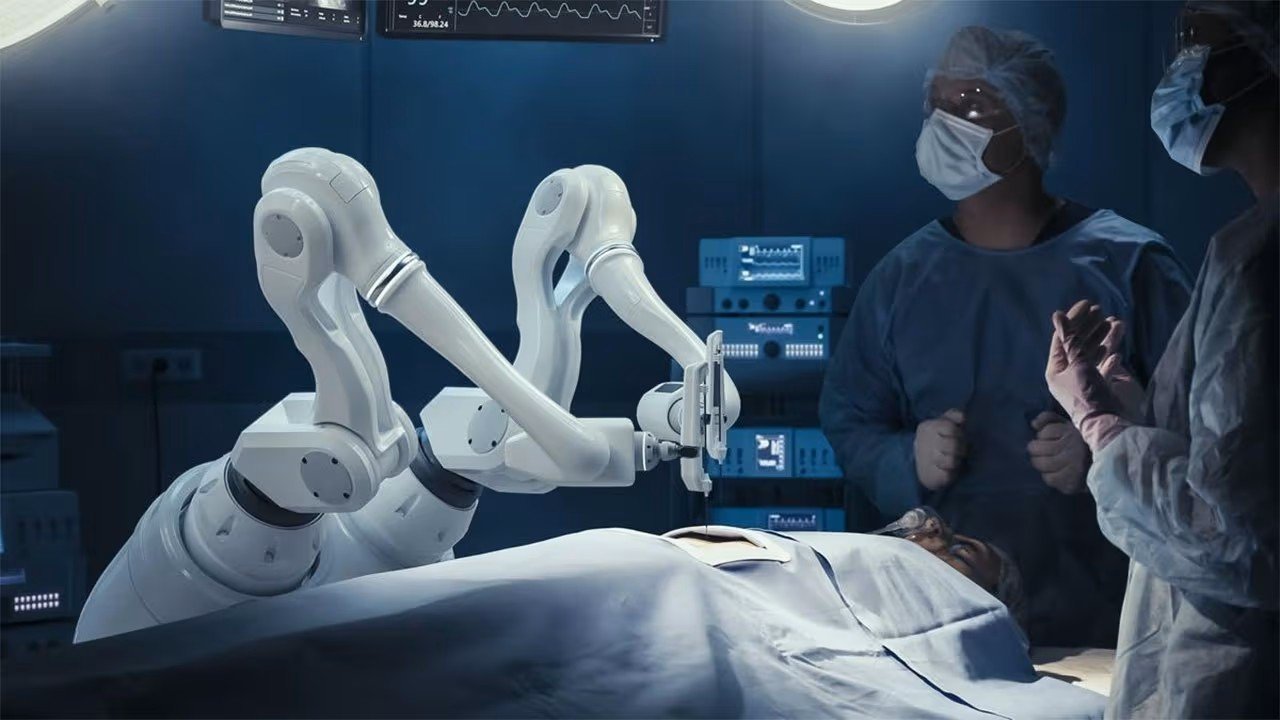

A 48-year-old father of two has undergone the world’s first brain tumour operation in which artificial intelligence provided live guidance to surgeons during the procedure.
Rhys Hibbert, from Bedfordshire, underwent the pioneering surgery at University College London Hospital. Doctors said the tumour was threatening his vision and could have caused permanent damage if left untreated.
The experimental AI system analysed live footage from the operation and helped surgeons identify areas where critical nerves and blood vessels were likely to be located.
Tumour Threatened Patient’s Vision
Hibbert was diagnosed with an 11mm non-cancerous tumour on his pituitary gland after collapsing and suffering a seizure during a walk.
The tumour was located close to the optic nerves and carotid arteries. Its growth began affecting his peripheral vision and caused severe fatigue, dizziness and problems with walking.
Doctors used an endoscope inserted through his nose to reach the base of his skull and remove the tumour.
Because the tumour was surrounded by sensitive structures, surgeons had to remove it while avoiding potentially serious damage.
AI Provided a Real-Time Second Opinion
The specially developed AI system displayed information on a separate screen during the operation.
It tracked surgical instruments and highlighted areas where important blood vessels and nerves were likely to be present. The technology was trained using hundreds of videos from previous pituitary tumour operations.
Professor Hani Marcus, who was involved in the surgery, said the system could act as an “expert second pair of eyes” for surgeons.
The AI does not make decisions independently. Surgeons remain in full control and decide whether to follow its guidance.
Researchers at University College London developed the system with support from the National Institute for Health and Care Research and Google.
The team is now preparing for a larger clinical trial to further assess the technology.
Patient Says Surgery Changed His Life
Hibbert reported major improvements following the operation.
He said his vision became much clearer after surgery and continued to improve during his recovery. He also said his energy had returned and previous symptoms had disappeared.
“It’s given me my life back,” he said.
Health Innovation Minister James Frith welcomed the breakthrough but stressed that AI in healthcare must be introduced with appropriate safety measures.
The pioneering operation could mark an important step toward using real-time AI assistance in complex surgery, giving doctors additional information while keeping human surgeons in control.

