
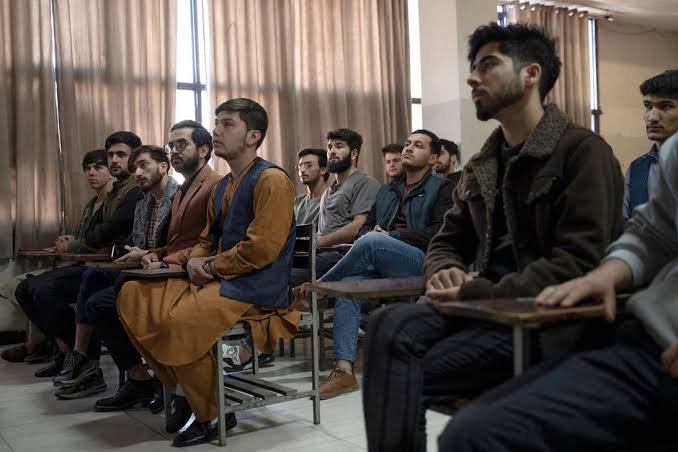

Students Report Major Changes After New Campus Restrictions
A new smartphone ban at universities across Afghanistan has divided students, with some saying the restriction has improved concentration while others argue it has made studying considerably more difficult.
The restrictions were introduced after Taliban Supreme Leader Hibatullah Akhundzada ordered government officials to stop using smartphones in June 2026. A nationwide order covering civilian and military officials had already taken effect from June 16.
The policy was subsequently extended into universities, where students in several major cities have been told not to bring smartphones onto campuses.
An AFP report found the restrictions being enforced in Kabul, Herat, Kandahar and Mazar-i-Sharif, with students describing different experiences under the new rules.
At one university in Kabul, a 29-year-old student said staff members visited classrooms to inform students that smartphones would no longer be permitted inside the institution.
In the western city of Herat, notices displayed at a university and its dormitories warned students that anyone found carrying a smartphone on campus could face legal action, according to AFP.
Students interviewed for the report said they had not been given a detailed explanation for the restriction.
However, Kandahar University spokesman Nazir Ahmad Qadari said the measure was intended to encourage students to concentrate on lectures, academic studies and practical work.
Students Say Ban Limits Research, E-Books and AI Tools
Opponents of the restriction say smartphones have become an important part of university education, particularly for students who cannot afford laptops.
Students previously used their phones to search for academic information, access course materials, read electronic books and record classroom presentations for later study.
A 21-year-old student in Herat told AFP that his smartphone had been useful for studying a significant part of his syllabus.
When explanations during lectures were unclear, students could previously photograph slides or material written on classroom boards and review the information later.
A journalism student in Mazar-i-Sharif similarly argued that studying effectively had become more difficult without access to smartphones.
Students in Kabul also said the restriction had removed convenient access to artificial intelligence tools and digital reference material.
While laptops are not covered by the ban, their higher cost means they are beyond the reach of many Afghan university students.
This leaves some students dependent on printed books and physical notes for material they previously carried digitally on a smartphone.
The issue reflects a wider debate over technology in education.
UNESCO reported in March 2026 that 114 education systems, representing 58 percent of countries worldwide, have introduced national restrictions or bans on mobile phones in schools.
However, those policies mainly concern school-level education rather than universities.
UNESCO says concerns over smartphones include classroom distraction and student wellbeing, but it also stresses that outright bans do not remove the need for students to develop digital literacy and learn how to use technology responsibly.
Freelancers and Working Students Fear Losing Opportunities
The university restriction also presents challenges for students who rely on smartphones for work.
One Kabul student interviewed by AFP said he works as a freelance translator and needs regular access to email and WhatsApp to communicate with clients.
Being disconnected during lectures could mean missing time-sensitive messages and losing potential work, he said.
Students at some institutions can reportedly leave smartphones at designated storage facilities near university entrances.
However, even the relatively small storage fee can become an additional expense for students already facing financial difficulties.
Some students have instead purchased basic mobile phones that are allowed on campus and can be used for calls.
A 28-year-old Kabul student said he bought a simple phone after the restriction was introduced but complained that the change created an additional expense while limiting his access to modern technology.
The broader smartphone restrictions in Afghanistan have already affected government operations.
Reuters reported in June that some government employees said administrative work had been disrupted because official communication had previously depended heavily on smartphones, WhatsApp and email.
Rights advocates have also warned that smartphones are important tools for accessing education, information and private communication.
Some Students Say Grades and Concentration Have Improved
Despite criticism, some Afghan students believe the university ban is producing positive results.
Medical student Sanaullah Yousufzai in Kandahar said removing smartphones from classrooms had reduced interruptions and improved interaction between teachers and students.
He said students were now able to concentrate more closely on lectures because calls and phone notifications were no longer disrupting classes.
However, Yousufzai also expressed concern about emergency communication, particularly if students urgently need to contact their families.
Another Kandahar student, 22-year-old journalism student Mohammad Hakim Haqmal, said his academic score had improved from 75 percent to 80 percent following the restriction.
He argued that while students previously used smartphones for legitimate academic research, many also spent considerable time on social media.
According to Haqmal, students began studying more seriously after losing access to smartphones on campus, contributing to improved academic results.
The contrasting experiences highlight the challenge facing universities as they attempt to balance concentration with access to modern educational technology.
Globally, UNESCO says policymakers are increasingly restricting phones because of concerns over distraction, but it warns that education systems must also prepare students to function effectively in an increasingly digital world.
For Afghan university students, however, the debate now goes beyond classroom distraction.
For some, the smartphone ban means better concentration and fewer interruptions. For others, it has removed an affordable tool for research, communication, employment and access to digital learning resources.

