
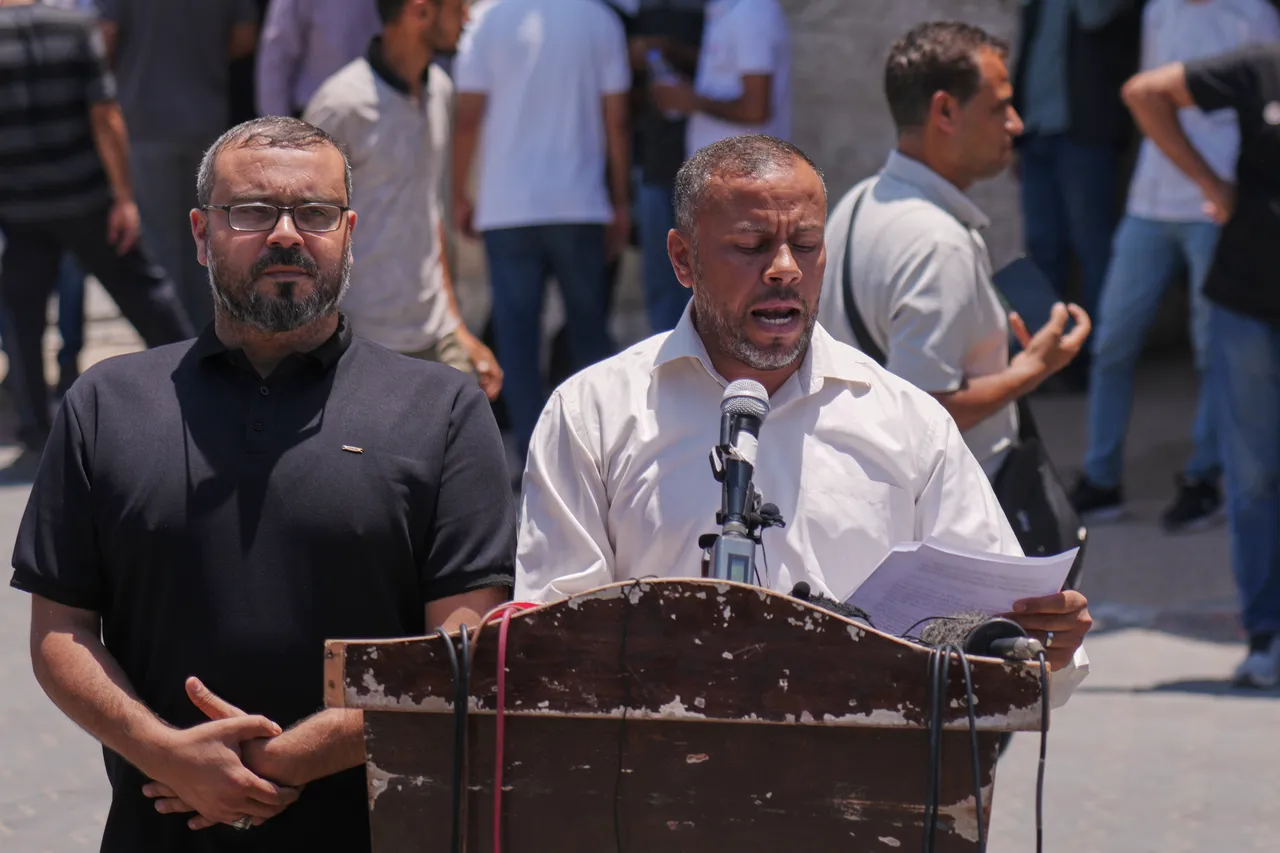

A major political shift is happening in Palestine. The United Nations recently welcomed a new decision by Hamas. The resistance group will dissolve its Government of Emergency Committee. Consequently, a newly formed national body will now take over administrative duties in Gaza. This crucial move could significantly support the ongoing ceasefire agreement.
UN spokesperson Stephane Dujarric addressed the media regarding this transition on Monday.
“We’ve taken note of Hamas’ announcement concerning the dissolution of the Government of Emergency Committee and the transfer of administrative responsibilities to the National Committee for the Administration of Gaza,” Dujarric stated.
The global body views this change as a positive step toward peace.
“We welcome any step that contributes to the implementation of the ceasefire agreement and advances the objectives reflected in relevant Security Council resolutions, including the full implementation of the ceasefire, the protection of civilians, and the unhindered provision of humanitarian aid,” he said.
Furthermore, the UN wants to see a more cohesive leadership structure. Dujarric added that “we continue to support efforts towards unified Palestinian governance under the Palestinian Authority.”
The Role of the New Civil Administration
Gaza’s government announced the committee’s dissolution early Monday. The acting chairman also resigned from his post. Officials say this change will ease the transfer of local governance. The National Committee for the Administration of Gaza (NCAG) will now handle daily operations. This transition follows a specific roadmap that Palestinian factions previously agreed upon.
The NCAG operates as a non-political body. It specifically manages day-to-day civil affairs for the territory. Palestinian national figures compose this new committee. The group has operated from Cairo since mid-January. However, members have not yet started their physical duties inside Gaza.
Humanitarian Aid Faces Strict Borders
Meanwhile, the humanitarian situation in the enclave remains incredibly desperate. Dujarric pointed to “immense needs” on the ground. He also stressed that aid efforts were “limited” because Israel keeps vital crossings shut. Only the Karem Abu Salem crossing remains open. Furthermore, Israeli authorities place heavy “restrictions on specific types of supplies.”
Recent logistics data highlights a very worrying trend.
“Data from the UN 2720 Mechanism shows a decline in the overall volume of supplies that we and our partners have been able to bring in last month, less than 42,000 pallets, down from about 46,600 in May,” Dujarric noted.
The delivery process faces major delays at the border. The UN spokesperson also reported that “only 42% of the supplies from Egypt and 65% of the supplies from Ashdod port, already approved in principle,” were offloaded last week at Karem Abu Salem crossing.
The Peace Plan and Current Reality
This administrative shift links back to broader peace efforts. On 29 September 2025, Trump announced a 20-point plan to end the genocide in Gaza. This plan includes the release of Israeli hostages and a partial Israeli military withdrawal. It also requires a technocratic government, an international stabilization force, and the disarmament of Hamas.
The first phase of the peace plan started on 10 October 2025. Hamas states that it fulfilled all initial obligations. In contrast, Israel has failed to implement its commitments. Instead, the military has continued its daily attacks on the population.
Israel also restricts agreed quantities of food, medicines, and medical supplies. They block temporary shelters and prefabricated housing from entering the area. Currently, about 2.4 million Palestinians live in dire humanitarian conditions. This population includes 1.5 million internally displaced people.
The human toll of this conflict remains staggering. Israel has killed more than 73,000 people in Gaza since October 2023. Additionally, military actions have injured over 173,000 others during this deadly crisis.

