

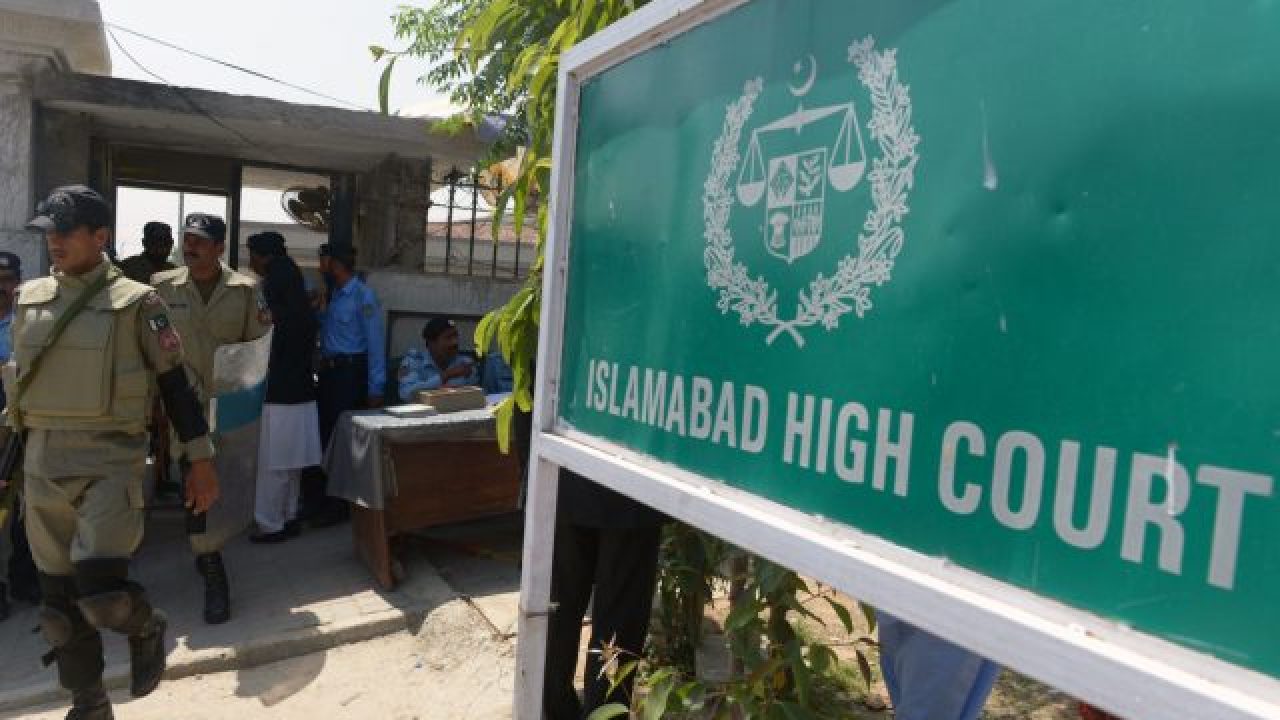

ISLAMABAD: The Islamabad High Court (IHC) today resumed hearing of Affidavit Leaked contempt case against former Gilgit-Baltistan chief justice Rana Shamim, Jang Group owner Mir Shakeelur Rehman and journalists Ansar Abbasi and Aamir Ghauri. The contempt case is related to a news report about an affidavit that accused former chief justice of Pakistan Saqib Nisar of trying to delay the release from prison of top PML-N leadership before 2018 elections.
A few days ago, Islamabad High Court has set Jan 7, 2022 date to announce its decision to indict Rana Shamim and others in this contempt case.
In last hearing, Rana Shamim had opened his original affidavit in the court and in the IHC, more than a month after it was mentioned in the report published in The News. IHC Chief Justice Athar Minallah had asked Shamim if the document was the former judge’s affidavit and whether he had sealed it himself to which Shamim replied in the affirmative.
In the leaked affidavit, Shamim allegedly stated that former Chief Justice Saqib Nisar, during his visit to GB, made a call to an IHC judge and asked him to ensure that former prime minister Nawaz Sharif and his daughter Maryam Nawaz were not released on bail before July 25, 2018 general elections. The affidavit was published as part of an investigative report by The News on Nov 15.
IHC chief justice Athar Minallah had subsequently taken notice of the report and later issued show-cause notices to Abbasi, Rehman, Ghouri as well as Shamim under the Contempt of Court Ordinance.
In a written order issued last month, the IHC chief justice had appointed Attorney General Khalid Jawed Khan as prosecutor in the contempt of court case.
Shamim, his counsel Lateef Afridi, AG Khan, Ghauri and Abbasi are present during today’s hearing.
During hearing, Justice Minallah noted that the court believed in the freedom of expression. IHC chief justice said that a “narrative” was being built regarding a bench of the high court comprising him, Justice Mohsin Akhtar Kayani and Justice Mian Gul Hassan Aurangzeb, that judges made decisions under pressure.
