

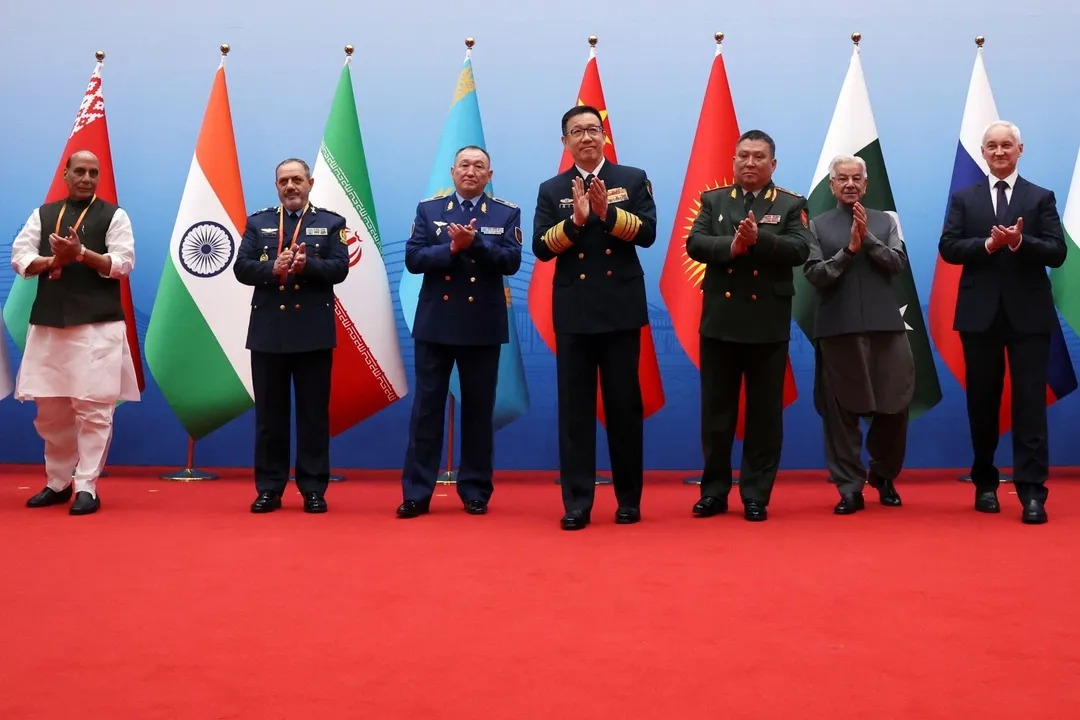

Indian and Pakistani troops are taking part in a rare side-by-side military drill in Iran, but analysts say the cooperation is strictly procedural. The exercise — Sahand 2025, a Shanghai Cooperation Organisation (SCO) counterterrorism drill — has put the two nuclear-armed rivals on the same field despite frozen diplomatic relations and persistent hostility.
The joint anti-terror drill began earlier this week in Iran’s East Azerbaijan province and concludes on Friday. All 10 SCO member states — Iran, China, Russia, India, Pakistan, Kazakhstan, Kyrgyzstan, Tajikistan, Uzbekistan, and Belarus — are participating.
However, experts on both sides of the border stress that neither country is seeking rapprochement. Instead, the SCO’s calendar, rules and obligations make participation unavoidable.
A Mandatory Presence, Not a Sign of Better Ties
Pakistani diplomat Asif Durrani said Pakistan’s presence is simply part of SCO obligations, noting there will be no real bilateral interaction. Security scholar Anum A. Khan echoed this, calling the drill a routine requirement of membership rather than a sign of improving relations.
Indian experts offer a similar assessment. While the exercise allows a degree of military familiarisation, it does not change the political reality. Professor Swaran Singh said the drills hold symbolic value because terrorism remains the main point of contention between India and Pakistan — but they still do not indicate any diplomatic shift.
Former Indian ambassador Talmiz Ahmad added that India views the SCO through a broader regional lens — especially for accessing Central Asia and enhancing counterterrorism preparedness.
Why Both Countries Still Value the SCO
Despite tensions, both states continue participating in SCO activities, especially those focusing on counterterrorism. Analysts note that since joining in 2018, Pakistan has improved ties with Russia and Central Asia through SCO involvement.
Indian analysts say the drills also help New Delhi maintain strategic relations with Iran and gain exposure to regional military tactics.
However, experts agree these exercises cannot reduce mistrust. South Asia security scholar Christopher Clary stated that no number of multinational drills can bridge the deep political divide between India and Pakistan.
Former Pakistani ambassador Maleeha Lodhi said there is no indication of any thaw, and both countries continue to operate in “parallel worlds” even when present in the same multilateral forum.
Ultimately, Sahand 2025 highlights a rigid truth: India and Pakistan may share space in regional platforms like the SCO, but cooperation remains limited to protocol, not politics.
