

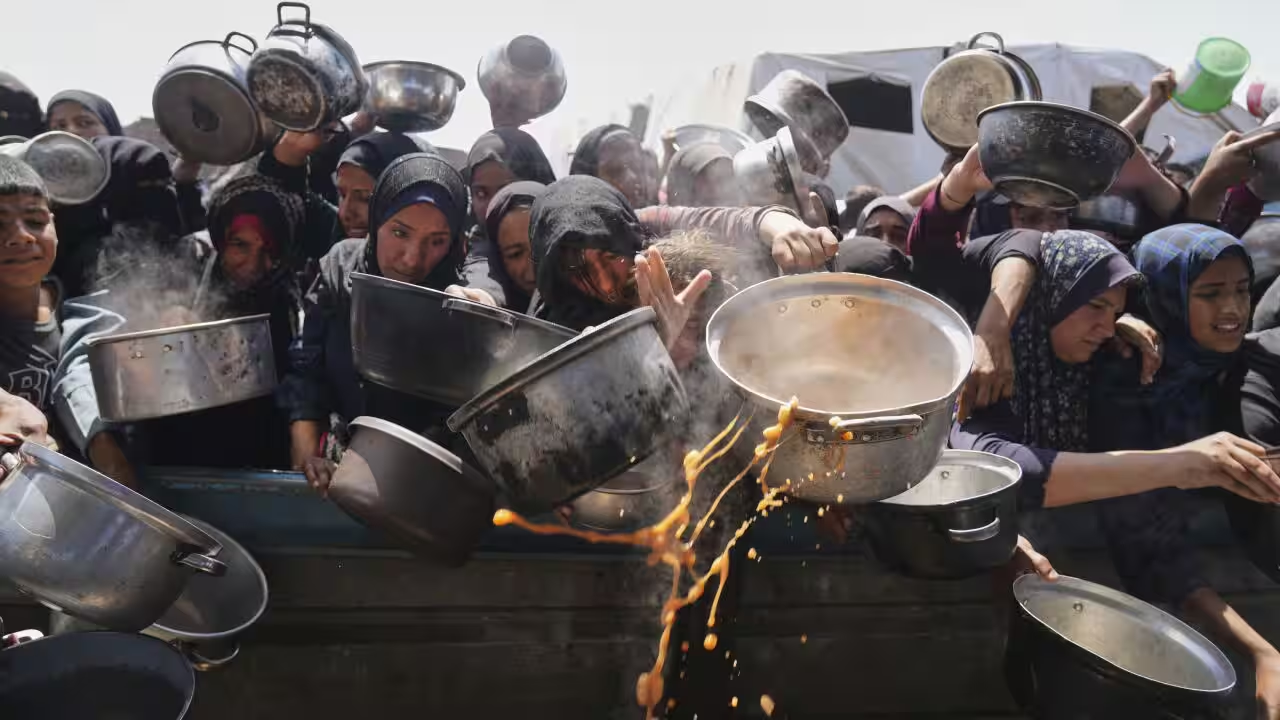

U.S. President Donald Trump on Monday placed urgent emphasis on addressing the humanitarian crisis in Gaza, declaring that his “number one priority” is ensuring that food reaches the starving population. Speaking at a press conference alongside British Prime Minister Keir Starmer at his Turnberry golf resort, Trump underscored the severity of the situation, stating bluntly, “You have a lot of starving people,” and noted that now is not the time to comment on long-term political issues such as Palestinian statehood.
The president revealed that the United States has already allocated $60 million in humanitarian assistance and pressed other countries to increase their contributions. Trump mentioned he had spoken with European Commission President Ursula von der Leyen, who assured him that European nations would be ramping up their support “very substantially.” He also planned to raise the issue directly with Starmer during their bilateral meeting.
“We’re giving a lot of money and a lot of food, and other nations are now stepping up,” Trump said. “It’s a mess. They have to get food and safety right now.”
Prime Minister Starmer echoed Trump’s sentiments, calling the situation in Gaza “an absolute catastrophe” and noting that the British public is appalled by the scenes of human suffering. “It’s a humanitarian crisis, right?” he said. “It’s an absolute catastrophe.”
When asked about the push from French President Emmanuel Macron for Palestinian statehood, Trump declined to take a position, saying the immediate focus should remain on urgent humanitarian relief.
Trump also reiterated his frustration with Hamas for not agreeing to the release of more hostages, both alive and dead. He said he had spoken with Israeli Prime Minister Benjamin Netanyahu, advising that Israel may need to consider a different approach. “I told Bibi that you have to maybe do it a different way,” he said, though he did not elaborate.
On the question of a possible ceasefire, Trump responded affirmatively but vaguely: “Yeah, a ceasefire is possible, but you have to get it, you have to end it.” He provided no further details on how such an agreement could be achieved.
Meanwhile, the humanitarian toll in Gaza continues to mount. According to the Gaza health ministry, at least 14 people, including children, died in the past 24 hours due to starvation and malnutrition. The total death toll from hunger in Gaza has now reached 147, with 89 of those victims being children—most of them lost in recent weeks.
Though Israel recently announced new steps to facilitate humanitarian aid—including daily pauses in military operations in specific areas and the creation of new corridors for aid convoys—U.N. agencies say the measures fall short of what is needed to prevent famine-like conditions. Israel had shut down all aid and supply routes into Gaza in early March, reopening them in May with heavy restrictions.
Israel continues to defend its actions, with Prime Minister Netanyahu stating on Sunday, “There is no policy of starvation in Gaza, and there is no starvation in Gaza,” calling such accusations a “bald-faced lie.” Israeli officials argue that the restrictions are necessary to prevent aid from being misused by Hamas militants and maintain that the responsibility for civilian suffering lies with the group’s leadership.
The crisis continues to evolve as diplomatic efforts seek a path forward. Hamas has reportedly submitted its response to a U.S.-backed ceasefire proposal in Doha, while Israel temporarily pulled back from negotiations. Trump, while refraining from offering detailed solutions, suggested he knows what direction he would take if he were leading Israeli policy, though he added, “I don’t think it’s appropriate that I say it.”
The international community watches closely as conditions in Gaza deteriorate further, with urgent humanitarian needs overshadowing long-term political considerations.
