

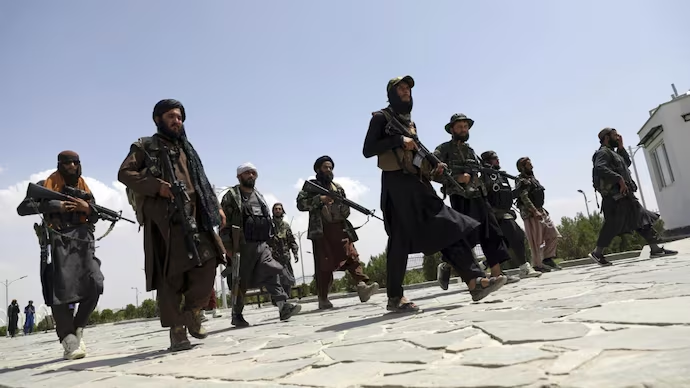

In a major development aimed at addressing cross-border militancy and improving bilateral ties, the Afghan government has agreed to take concrete steps against the Tehreek-e-Taliban Pakistan (TTP). The breakthrough came during high-level discussions held in Kabul between Pakistan’s Interior Minister Mohsin Naqvi and his Afghan counterpart, Sirajuddin Haqqani.
Sources familiar with the matter revealed that the meeting, which spanned over two hours, was both intense and focused, covering a broad spectrum of security-related issues, with particular emphasis on the threat posed by the outlawed TTP.
Pakistan has long accused the TTP of launching deadly attacks from safe havens inside Afghanistan, and this concern was strongly reiterated by Minister Naqvi and his delegation during the talks.
The Pakistani side conveyed its deep frustration over the continued TTP-linked violence. “We are tired of carrying the coffins of our martyrs,” one Pakistani official reportedly said during the meeting, urging Kabul to take urgent and effective measures against the militants. The Pakistani delegation appealed to Afghan officials to not allow their soil to be used against Pakistan, stressing, “Do not please your and our enemies.”
Responding to these concerns, Afghan officials, led by Minister Haqqani, assured Pakistan that steps were already being taken to address the issue.
Most notably, the Afghan side confirmed that a phased process of disarming TTP militants has already been initiated. In addition, they committed to relocating TTP members away from the Pakistan-Afghanistan border to more remote regions, including Ghazni province.
Haqqani acknowledged the urgency of the situation but cautioned that full implementation would require time. “We are ready to work with you, but this process will take time,” he stated.
In another significant revelation, the Afghan delegation shared that several individuals affiliated with the TTP—particularly Afghan nationals—have already been arrested in connection with attacks on Pakistani soil. According to the Afghan interior ministry, a large number of arrests have been made as part of efforts to crack down on the group’s activities.
This understanding between the two neighbors marks a potentially game-changing moment in their often-fraught relationship. If fully implemented, the disarmament and relocation of TTP militants could pave the way for greater regional stability and enhance trust between Islamabad and Kabul, both of whom face growing domestic and international pressure to collaborate on counterterrorism.
