
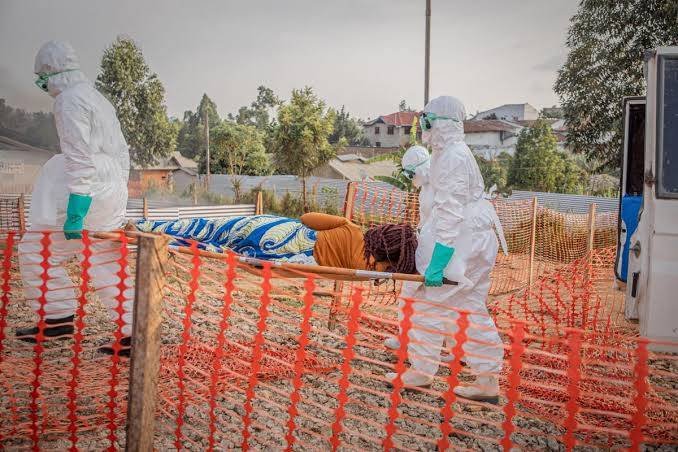

The Ebola outbreak in the Democratic Republic of Congo (DRC) has claimed 600 lives, according to official data published by the World Health Organization (WHO) on Thursday. This tragic milestone comes just three days after the official death toll topped 500.
The UN health agency confirmed 1,759 positive cases in the DRC since the country declared the outbreak in mid-May. Meanwhile, the virus has crossed borders into neighboring Uganda, resulting in two deaths. Out of 20 total confirmed cases in Uganda, 17 patients have successfully recovered.
Bundibugyo Strain Lacks Approved Vaccines
The current outbreak has hit four provinces in the northeastern DRC, with the primary epicenter centered in the mineral-rich Ituri province. The region faces significant operational challenges, as armed groups frequently disrupt medical response teams.
-
High Fatality Rate: Data from Congolese health authorities reveals a stark 34% case fatality rate among infected patients.
-
The Viral Threat: The rare Bundibugyo Ebola virus species is driving this specific outbreak. Unlike the more common Zaire strain, medical teams currently have no approved vaccines or targeted treatments for Bundibugyo.
-
Current Metrics: While 285 patients in the DRC have recovered, medical teams are currently investigating 304 suspected cases of the viral hemorrhagic fever.
Clinical Trials Begin on Potential Treatments
Ebola spreads rapidly through close personal contact and direct exposure to infected bodily fluids. To combat the lack of tools against the Bundibugyo strain, international researchers launched clinical trials in the DRC on July 2.
The human trials are evaluating two distinct experimental therapies to measure their effectiveness against the virus. Specifically, scientists are testing the monoclonal antibody cocktail MBP134 and the antiviral drug remdesivir. The clinical study will monitor the performance of these drugs both individually and as a combined treatment.

