
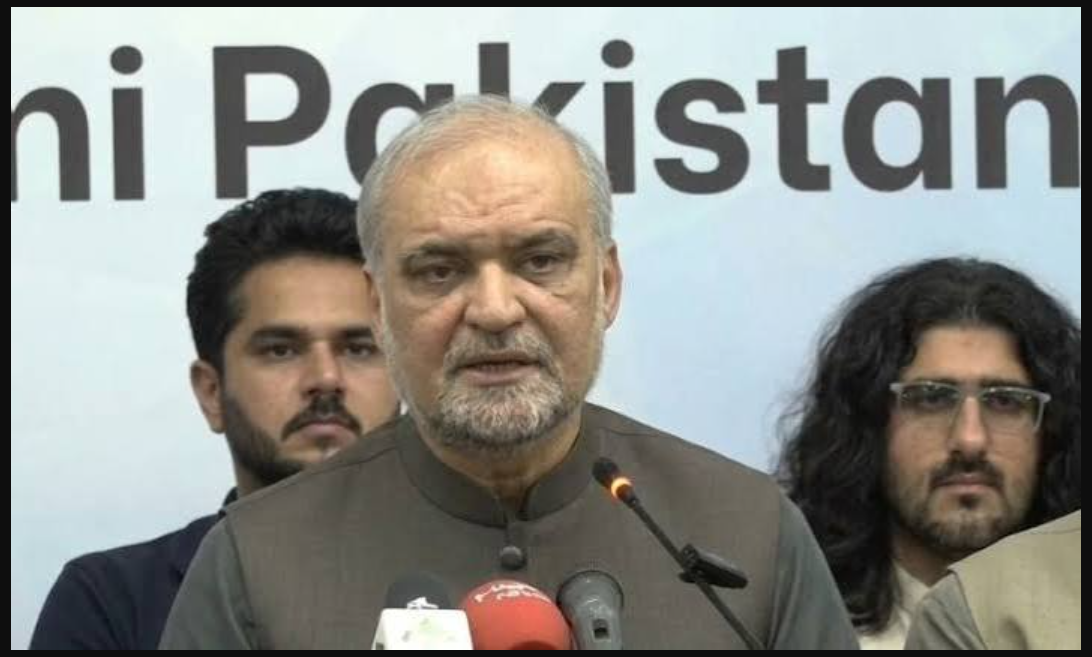

Jamaat-e-Islami (JI) has launched a nationwide signature campaign against the petroleum levy, targeting 20 million signatures.
JI chief Hafiz Naeemur Rehman said the campaign would seek public support for lower fuel prices and reduced government spending. He made the announcement while addressing the media at the party’s Mansoorah office in Lahore.
The development comes as JI keeps pressure on the government over petrol prices and the petroleum levy. The party had earlier paused its Islamabad march following talks with Prime Minister Shehbaz Sharif.
JI Demands Petroleum Levy Abolition
Hafiz Naeem called on the government to reduce petrol prices and abolish the petroleum levy. He also demanded cuts in state expenditures.
He said middle-class families were facing growing pressure from electricity, gas and petrol bills. “When petrol prices rise, the prices of everything else go up,” he said.
According to Hafiz Naeem, JI will continue its protest march if the government does not accept its demands. He said the party is awaiting Prime Minister Shehbaz Sharif’s return before resuming discussions.
“If the issue is not addressed in our meeting with the prime minister, we will have no choice but to continue our march,” he said.
The JI chief said the signature campaign would seek support from 20 million people. He added that the scale of public backing would carry weight internationally.
What Does JI Want?
The campaign includes several economic demands linked to fuel prices and government spending.
JI is seeking the complete abolition of the petroleum levy and lower petrol prices. It is also calling for a review of agreements with independent power producers (IPPs).
The party wants the review to identify potential savings. It has further demanded cheaper flour and reductions in government expenditure.
Hafiz Naeem said JI had not abandoned its campaign despite criticism and fluctuations surrounding the movement.
He pointed to the party’s Lahore rally as evidence of continued mobilisation. He added that further gatherings were planned across several cities.
These include Buner, Charsadda, Sialkot, Sahiwal, Sargodha, Vehari, Bahawalpur, Larkana, Mirpurkhas and Karachi.
He said workers in Karak, Abbottabad and Mansehra were also calling for rallies. “We have not backed down from our demands for even a single day,” he said.
JI Links Petrol Prices to Petroleum Levy
Hafiz Naeem said reducing petrol prices would require action on the petroleum levy.
He described the levy as a major part of the financial burden on consumers. He claimed consumers were paying Rs135 in taxes and levies on every litre of petrol.
According to his breakdown, this includes Rs80 in petroleum levy and Rs5 in climate support levy. He said the government has broad authority over these charges.
JI has consistently made abolition of the petroleum levy a central demand of its ongoing campaign. The party has said its protest will continue if the government fails to provide the requested relief.
Hafiz Naeem Challenges IMF Argument
The JI chief rejected the government’s argument that its options were restricted by the International Monetary Fund programme.
He said JI had examined the relevant IMF documents. According to him, those documents did not require Pakistan to collect the petroleum levy at a specific level.
He argued that the IMF’s requirement focused on Pakistan meeting its overall fiscal targets. He also pointed to alternative measures, including reductions in development spending and government expenditure.
“Why does the government not talk about those measures?” he asked.
Hafiz Naeem also called for greater transparency in ongoing discussions with IMF representatives in Pakistan.
He said the public should know which commitments were under discussion. He further questioned whether any proposed commitments could affect Pakistan’s economic independence and sovereignty.
The JI chief separately called for a reduction in the policy interest rate. He argued that a lower rate could ease pressure on consumers and businesses.
JI Calls for Cuts in Government Spending
Hafiz Naeem criticised government spending while ordinary citizens face rising costs.
He cited the reported purchase of an aircraft costing Rs11 billion. According to him, such spending reflected a government approach that places financial pressure on the public.
He called for senior officials to use smaller official vehicles. His proposal covers bureaucrats, commissioners, assistant commissioners and federal secretaries.
He suggested that officials should use 1,300cc vehicles instead of larger cars.
The JI chief also questioned the continued allocation of development funds through parliamentarians. He argued that politically motivated spending should be reduced.
However, he said funding for major and necessary development projects should remain protected.
He further called on the federal government to eliminate departments whose functions were devolved to provinces under the 18th Amendment.
JI Questions Scope of Fuel Relief Package
Hafiz Naeem also questioned the government’s fuel relief package.
He said Prime Minister Shehbaz Sharif had told him that around 1.8 million people had registered for the programme. He suggested the figure could have since increased to about 2.5 million.
However, he argued that the package covers only a limited section of vehicle owners.
According to Hafiz Naeem, eligibility largely covers motorcycles and vehicles with engines of up to 800cc. He said Pakistan has tens of millions of motorcycles and millions of other vehicles.
“Relief packages are limited measures. The policy itself should be right, and fundamentally the price should be reduced,” he said.
He rejected the argument that abolishing the petroleum levy would benefit expensive vehicle owners equally.
Instead, he proposed a differentiated pricing system for larger vehicles. Under his proposal, owners of vehicles above 2,000cc would pay a higher petrol price.
He argued that such a system could encourage smaller vehicles and reduce fuel consumption. He further linked the proposal to a lower import bill and additional government revenue.
Hafiz Naeem Criticises Opposition Parties
The JI chief also questioned the response of Pakistan’s opposition parties to the petroleum levy.
He asked why major opposition parties had not launched significant protests when the levy became part of the federal budget.
Hafiz Naeem said parties that receive millions of votes should raise issues affecting ordinary citizens. He argued that political parties instead focus heavily on leadership disputes and internal political matters.
He alleged that government and opposition parties face pressure from financial backers and influential business interests.
According to his claims, this includes interests connected with the petroleum, flour, sugar, land and banking sectors.
He argued that political financing and patronage discourage parties from challenging powerful interests.
Hafiz Naeem said these dynamics have contributed to a political system dominated by landlords, wealthy business figures and political families.
He also criticised what he described as excessive reliance on political rhetoric, personality-based politics and political cults.
According to him, issues such as employment, education and concerns facing young people receive insufficient attention.
JI Keeps Protest Campaign Alive
The latest signature campaign adds another phase to JI’s broader protest over the petroleum levy.
The party previously launched nationwide protests, sit-ins and a march toward Islamabad. It later paused the Islamabad march following Prime Minister Shehbaz Sharif’s request for more time for discussions.
However, JI leadership has repeatedly said the protest movement remains active. The party has continued to demand abolition of the petroleum levy and broader economic relief.
The new 20 million-signature campaign now shifts part of the party’s focus toward gathering nationwide public support. Its next move will depend on the government’s response to JI’s demands and the outcome of further discussions.
For the latest updates, visit and follow The Truth International website (www.thetruthinternational.com) and subscribe to the YouTube Channel.

