
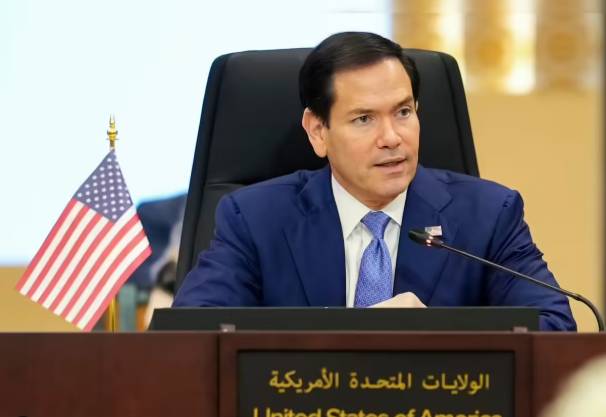

US Secretary of State Marco Rubio warned that Iranian fees in the Strait of Hormuz could trigger global maritime chaos. Therefore, while addressing a Gulf Cooperation Council meeting in Bahrain on Thursday, Rubio emphasized that international waterways do not belong to individual nation-states. He stated that accepting commercial tolls would allow similar disruptions to spread like a contagion. Consequently, this system could destabilize international trade networks.
Meanwhile, Rubio’s tour marks his first official visit to the Gulf since Washington and Tehran established a sixty-day ceasefire. Although he wants a lasting peace agreement, the top American diplomat stressed that the United States will not accept a deal at any price. Furthermore, he reassured regional partners in Kuwait and Bahrain that any final agreement would safeguard the security and economic stability of Gulf nations.
Iran Demands Control Over Strait
Concurrently, Iran’s Revolutionary Guards issued a stern statement threatening vessels that cross the Strait of Hormuz without prior authorization. This is because Tehran intends to institute maritime service fees by asserting geographic jurisdiction over the strategic corridor. However, this narrow waterway handles twenty percent of global oil and liquefied natural gas shipments. As a result, the United States strongly opposes the plan and maintains that the waterway must remain free and accessible.
Indeed, the escalating diplomatic friction follows an intense military campaign code-named Operation Epic Fury. NATO Secretary-General Mark Rutte confirmed alliance support during the offensive, noting that hundreds of American aircraft utilized bases in Italy. In response, Iran quickly condemned the admission and accused NATO of active complicity in an unlawful war.

