
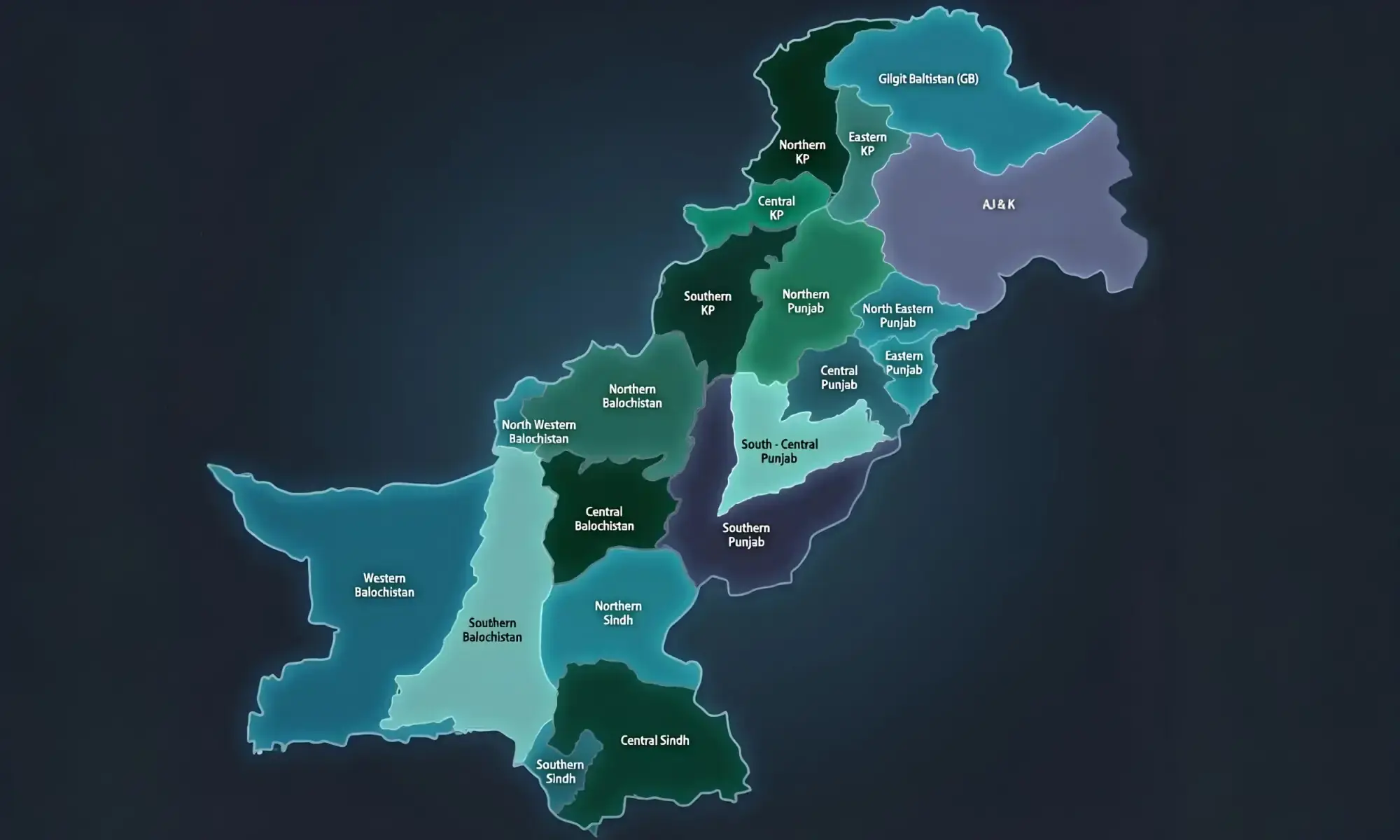

As demands for new provinces return to the national spotlight, one question refuses to disappear: does Pakistan need smaller provinces, or a government system that finally works for everyone?
A Debate That Refuses to Die
Pakistan’s political map has remained largely unchanged for decades. Yet its population, cities and administrative needs have transformed dramatically. Millions of people now live in expanding urban centres, while many remote districts continue to struggle with limited public services. Schools, hospitals, roads and government offices often remain far from the communities that need them most.
This growing gap has renewed calls for creating new provinces and smaller administrative units. Supporters argue that Pakistan’s existing provincial structure is too centralised to manage the country’s expanding population and regional demands. They believe smaller provinces could bring decision-making closer to citizens and improve the distribution of development funds.
The debate gained fresh momentum in 2026 after Interior Minister Mohsin Naqvi repeatedly called for administrative restructuring. On November 13, he floated another proposal: holding a referendum to understand public opinion on creating new provinces or administrative units. He also said political parties would be consulted before any decision.
The proposal has added a new dimension to an already sensitive national issue. It raises questions about public consent, constitutional requirements and the future balance of power between the federation and its provinces.
However, the central question remains unresolved. Would dividing existing provinces improve governance, or would it simply create more political offices and administrative expenses?
When Population Growth Challenges Old Boundaries
Population growth sits at the centre of Pakistan’s debate over new provinces. The country’s 2023 digital census recorded a population of approximately 241.5 million. That figure highlighted the enormous administrative challenge facing a federation that still operates through four provinces.
Punjab carries the largest share of the national population. Sindh also faces intense pressure from urban growth, particularly in Karachi. Meanwhile, large geographical areas in Balochistan and Khyber Pakhtunkhwa present their own challenges. Distance, difficult terrain and uneven infrastructure can make public service delivery expensive and slow.
These differences have strengthened arguments for smaller administrative units. Supporters say a government based closer to local communities could understand regional problems more effectively. Smaller provinces, they argue, could give neglected areas greater political representation and a stronger voice in development decisions.
Census figures are important because they help determine representation and resource distribution. They also reveal how quickly population patterns are changing. However, population alone cannot decide where new provincial boundaries should be drawn. Geography, economic capacity, public opinion, administrative needs and constitutional requirements also matter.
The debate is therefore not simply about dividing large populations. It is about deciding whether Pakistan’s current administrative structure can respond to the needs of a country that has changed considerably since its provincial boundaries were established.
From South Punjab to Hazara: The Demands Behind the Debate
The demand for new provinces is not a recent political invention. Several regions have called for separate administrative identities for years, arguing that their development needs receive insufficient attention from provincial capitals.
South Punjab remains one of the most prominent examples. Political representatives and regional groups have repeatedly demanded a separate province, pointing to economic disparities and limited access to decision-making. Multan, Bahawalpur and Dera Ghazi Khan remain central to discussions about the region’s future administrative structure.
The demand has also received parliamentary attention. In May 2012, the National Assembly passed a resolution supporting the creation of a province named Janoobi Punjab. The proposal called for the Punjab Assembly to begin the constitutional process.
Bahawalpur has a separate historical dimension. Supporters of its restoration argue that the region once had a distinct political identity and deserves its own provincial status. Some political proposals have therefore called for two separate units: South Punjab and Bahawalpur.
In Khyber Pakhtunkhwa, the demand for a Hazara province has also remained active. Supporters argue that the region’s geography and administrative needs justify a separate provincial setup. The KP Assembly passed a resolution supporting the demand in 2014.
These proposals reflect a broader concern: people in several regions believe that decisions affecting their lives are made too far away. Whether the solution lies in new provinces or stronger local governments remains a major point of disagreement.
The Political Question Behind the Population Numbers
Census figures can influence how political power is distributed, making the new-provinces debate particularly sensitive. Any change to provincial boundaries could affect parliamentary representation, provincial assemblies and the distribution of national resources.
This is why the issue cannot be treated as a simple administrative exercise. Every proposed province would raise questions about its capital, financial resources, government departments and political representation. It would also require decisions about the division of existing assets, employees and infrastructure.
The National Finance Commission Award adds another layer of complexity. It determines how federal resources are shared between the federation and provinces. Creating additional provinces could require a fresh discussion about how funds are distributed and how each new unit would meet its financial responsibilities.
For supporters, these challenges should not prevent reform. They argue that the country must examine whether its existing structure serves citizens effectively. For opponents, however, changing provincial boundaries without broad agreement could deepen political divisions.
The argument has moved beyond population statistics. It now concerns the kind of federation Pakistan wants to build: one with more provincial governments, or one that gives meaningful authority to communities through stronger institutions at every level.
The Constitution: The Biggest Hurdle in Creating New Provinces
Political announcements can bring the issue into public debate, but creating new provinces requires much more than government approval. Pakistan’s Constitution sets out a specific procedure for changing provincial boundaries. This makes the process legally demanding and politically sensitive.
Article 239(4) is particularly important. It states that a constitutional amendment changing the limits of a province must receive approval from that province’s assembly. The bill must secure at least a two-thirds majority of the assembly’s total membership before it can be presented for presidential assent.
This requirement gives the affected provincial assembly a decisive role in the process. It also means that a federal government cannot simply announce a new province and redraw the map on its own.
The amendment must also pass through the constitutional process at the national level. A two-thirds majority in Parliament is required for constitutional amendments. Political parties therefore need to build broad agreement before any proposal can move forward.
Legal experts have also highlighted the wider constitutional implications. Creating new provinces could require changes to several constitutional provisions covering representation, financial arrangements, administrative responsibilities and the structure of the federation.
This is where the debate becomes complicated. A proposal may enjoy public support in one region but face resistance from the provincial government responsible for approving the change. Without political consensus, even a popular demand could remain stuck for years.
Sindh’s Resistance Exposes the Political Divide
Sindh has emerged as one of the strongest points of disagreement in the new-provinces debate. While some political leaders support creating additional administrative units across Pakistan, the division of Sindh remains unacceptable to major political forces in the province.
On November 12, 2026, Sindh Chief Minister Murad Ali Shah said the Pakistan People’s Party had no objection to creating new provinces in other parts of the country if their residents wanted them. However, he firmly rejected dividing Sindh.
He argued that the province’s boundaries could not be changed without the consent of its people. He also stressed that a referendum could not override the Constitution and that the final decision would remain with the relevant assemblies.
The statement highlighted an important distinction within the debate. Supporting new provinces in principle does not mean accepting the division of every existing province.
The Sindh United Party has also rejected proposals to divide the province. Its leadership has described such moves as threats to Sindh’s historical identity, geographical unity and provincial autonomy. JUI-F leaders have similarly raised concerns about protecting the province’s resources and constitutional rights.
For opponents, the issue goes beyond administrative convenience. They fear that dividing a province could create disputes over land, water, natural resources and political representation. They also argue that governments should first improve existing institutions rather than create additional layers of administration.
These objections show why national political agreement will be essential. A referendum may measure public opinion, but it cannot automatically resolve constitutional and territorial disagreements.
Will More Provinces Mean More Financial Pressure?
One of the biggest questions surrounding new provinces is whether Pakistan can afford them.
Every new province would require a functioning government structure. This could include a chief minister, governor, provincial assembly, cabinet, secretariat, departments and administrative offices. It would also need funds for salaries, infrastructure, policing and public services.
Supporters argue that these expenses could eventually be justified if smaller provinces deliver better services and reduce administrative delays. They believe regional governments could focus on local development instead of competing for attention within large provincial systems.
However, critics warn that creating additional governments without a sustainable financial plan could increase pressure on the national budget. Pakistan already faces economic challenges, including debt repayments, limited fiscal space and growing development needs.
The National Finance Commission (NFC) Award is central to this discussion. It provides the framework for distributing federal resources between the federation and provinces. Any expansion in the number of provinces would raise questions about how the existing financial formula should be adjusted.
New provinces would need sufficient revenue to operate independently. They would also need access to infrastructure, public institutions and development funds. Without a clear financial arrangement, administrative restructuring could create new disputes rather than solve existing problems.
The challenge is therefore not simply deciding how many provinces Pakistan should have. It is determining whether each proposed unit would be financially sustainable and capable of providing essential services.
Smaller Provinces or Stronger Local Governments?
Not everyone believes that creating new provinces is the answer to Pakistan’s governance problems.
Some analysts argue that the country’s biggest weakness lies in the limited authority given to local governments. Even within existing provinces, many districts struggle to make decisions about their own development priorities.
Article 140A of the Constitution requires provinces to establish local government systems and devolve political, administrative and financial responsibility to elected local representatives. However, local governments have often remained dependent on provincial administrations for funds and authority.
This creates a difficult situation. People may live hundreds of kilometres away from provincial capitals, yet major decisions about municipal services and development remain concentrated there.
Strengthening local governments could offer another route to decentralisation. Elected district and municipal representatives could receive greater control over sanitation, water supply, local roads, waste management and primary healthcare.
A stronger local government system could also make public officials more accountable to residents. Citizens would have a more direct opportunity to raise concerns and monitor development projects.
An August 2026 proposal for a National Commission on Administrative Reforms and Decentralisation also brought this idea into the discussion. The suggested commission would review population, geographical size, accessibility, economic capacity and administrative needs after every national census.
Such a mechanism could help Pakistan evaluate whether existing boundaries still serve the population effectively. It could also ensure that decisions are based on evidence rather than political pressure.
Ultimately, the country may need both administrative restructuring and stronger local institutions. Creating new provinces without empowering districts could simply transfer centralisation from one level of government to another.
The Census Must Guide the Debate, Not Decide It Alone
Pakistan’s census provides an essential starting point for discussions about administrative reform. It reveals population growth, migration patterns and the changing needs of different regions.
However, census figures cannot independently determine the number or boundaries of provinces. A region with a large population may have different economic and geographical challenges from a sparsely populated area. Both require careful planning.
Any serious proposal must consider population density, distance from administrative centres, infrastructure, employment opportunities, revenue potential and access to public services. It must also examine whether a new province would reduce inequality or create fresh disputes over resources.
Public opinion is equally important. Residents of the proposed regions must have a meaningful opportunity to express their views. Their concerns should not be reduced to political slogans or election promises.
The real purpose of using census data should be to identify where the existing system is failing and what changes could improve people’s lives. Without that evidence-based approach, Pakistan risks turning an important governance debate into another contest over political power.
The Real Test: Will a New Map Deliver a Better Pakistan?
Pakistan’s debate over new provinces has reached an important stage. Calls for administrative restructuring, proposals for a nationwide referendum and growing concerns about population pressure have brought the issue back into national politics.
However, changing provincial boundaries cannot guarantee better governance on its own. The country needs a clear plan for distributing resources, strengthening institutions and ensuring that every region receives fair opportunities.
The proposed creation of 12 provinces remains an idea under discussion, not an approved government decision. Any move towards restructuring would require public consultation, political agreement and constitutional amendments.
The census can provide the foundation for this discussion, but the ultimate objective must remain better public services and equal development. Pakistan does not simply need more provincial capitals. It needs institutions that respond to citizens, regardless of where they live.
Whether the country chooses new provinces, empowered districts or stronger local governments, the success of reform will depend on one basic question:
Will ordinary people finally experience a meaningful improvement in their daily lives?
For the latest updates, visit and follow The Truth International website (www.thetruthinternational.com) and subscribe to the YouTube Channel.

