
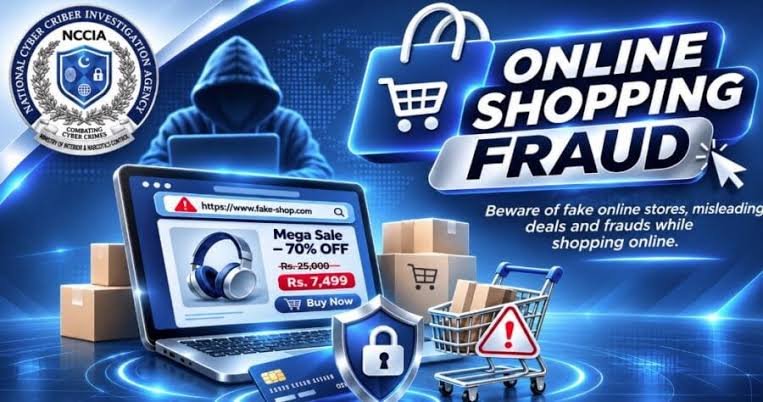

Online shoppers in Pakistan are being urged to remain cautious as cybercriminals use fake shopping websites, misleading discounts and fraudulent payment requests to steal money and personal information.
The National Cyber Crime Investigation Agency (NCCIA) has warned consumers about online shopping fraud, particularly scams involving unfamiliar websites and social media sellers.
Fraudsters often attract customers through advertisements offering expensive products at unusually low prices. These promotions can appear genuine, making it difficult for unsuspecting buyers to identify fraudulent sellers.
The agency has advised shoppers to verify online stores before placing orders. It has also warned against trusting offers that appear too good to be true.
One common technique involves creating fake websites that resemble established online shopping platforms. Criminals use familiar logos, attractive product photographs and promotional messages to gain customers’ confidence.
After selecting a product, shoppers may be directed to a suspicious payment page. This can expose their banking information, card details or other sensitive data.
Some scammers also impersonate delivery companies. They send messages claiming that a parcel has been delayed because of an incorrect address or an unpaid delivery charge.
These messages often contain links to fraudulent websites. Customers who follow the links may be asked to enter personal information or make additional payments.
Cybersecurity authorities have emphasized the importance of checking a seller’s reputation before completing a purchase.
Buyers should examine customer reviews, verify website addresses and read refund and return policies carefully.
Consumers should also avoid sending advance payments to unknown individuals through unverified payment channels.
Using reputable shopping platforms and secure payment methods can reduce the risk of financial fraud.
The Pakistan Telecommunication Authority has separately warned that cybercriminals use fake calls, messages and websites to steal account information.
The regulator has advised citizens never to share passwords, banking PINs or one-time verification codes with unknown individuals.
The growing popularity of online shopping has created new opportunities for businesses across Pakistan. However, it has also provided criminals with additional ways to target customers.
Fraudulent sellers may disappear after receiving payments, leaving buyers without their products or a reliable way to recover their money.
Authorities encourage victims to preserve transaction records, screenshots and relevant messages when reporting suspected online fraud.
Consumers can report cybercrime complaints to the NCCIA through its official complaint channels, including helpline 1799.
The warnings highlight the importance of staying alert during online shopping, particularly when attractive discounts create pressure to make quick purchases.
Before placing your next order, one simple question could protect your savings: Is the seller genuine, or is the offer designed to steal your money?

