
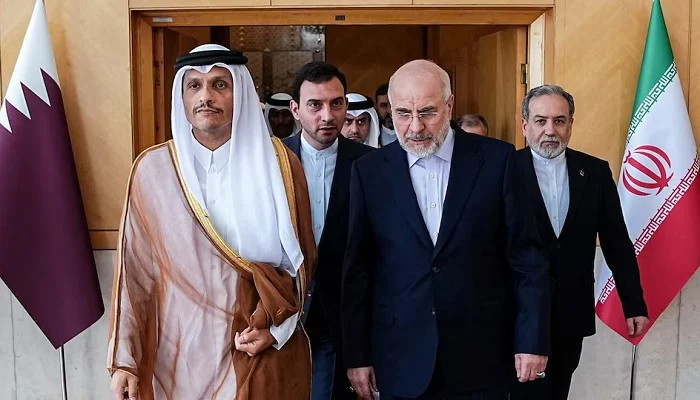

Iran has agreed to prepare a list of conditions for restoring normal shipping through the Strait of Hormuz. The development came after Qatar renewed diplomatic efforts to reopen the vital waterway. Qatari Prime Minister and Foreign Minister Sheikh Mohammed bin Abdulrahman Al Thani visited Tehran on Thursday.
During the visit, he stressed the importance of maintaining freedom of navigation under international law.
Qatar and Pakistan previously helped broker a memorandum of understanding in June. The agreement supported a ceasefire and established a framework for discussions over shipping through the strait.
The waterway connects the Persian Gulf with the Gulf of Oman. Before the war, it carried around 20% of global oil supplies.
Tehran Links Shipping to Its Conditions
Mohsen Rezaei, secretary of Iran’s Supreme National Security Council, said Tehran was preparing conditions requested by mediators.
He also said Iran had reached an understanding with Oman over a possible shipping corridor through the strait.
Under the proposed arrangement, parts of the corridor would pass through Omani waters, while other sections would remain within Iranian waters.
Rezaei said vessels could use a designated central channel if the United States accepted Iran’s conditions.
However, Tehran has previously demanded measures including an end to restrictions on Iranian ports, compensation and sanctions relief.
It remains unclear whether Iran will modify those demands to make them acceptable to Washington.
US Says Shipping Lanes Are Open
Diplomatic efforts continue as direct communication between Iran and the United States remains limited. Iran has maintained that the June memorandum should provide the basis for renewed negotiations. However, the agreement later collapsed because both sides interpreted shipping arrangements differently.
Meanwhile, US military officials say international shipping lanes remain open. Admiral Brad Cooper, commander of US Central Command, said American forces had cleared sea mines from the waterway.
He claimed US forces had helped around 1,500 commercial vessels carrying nearly 750 million barrels of crude oil pass through the strait.
Despite those claims, shipping activity remains significantly below normal levels. Many vessels have avoided the route because of concerns over Iranian threats. The International Maritime Organisation has reported 70 incidents in the Strait of Hormuz since the war began. Those incidents have reportedly resulted in 19 seafarer deaths.
The latest diplomatic push could therefore determine whether commercial traffic gradually returns to normal through one of the world’s most important energy routes.

