

Iran has accused US President Donald Trump of weakening diplomatic trust after his reported remarks about the Islamabad Memorandum of Understanding (MoU). Tehran says the comments expose the weakness of Washington’s diplomatic commitments and raise concerns about its approach to international obligations.
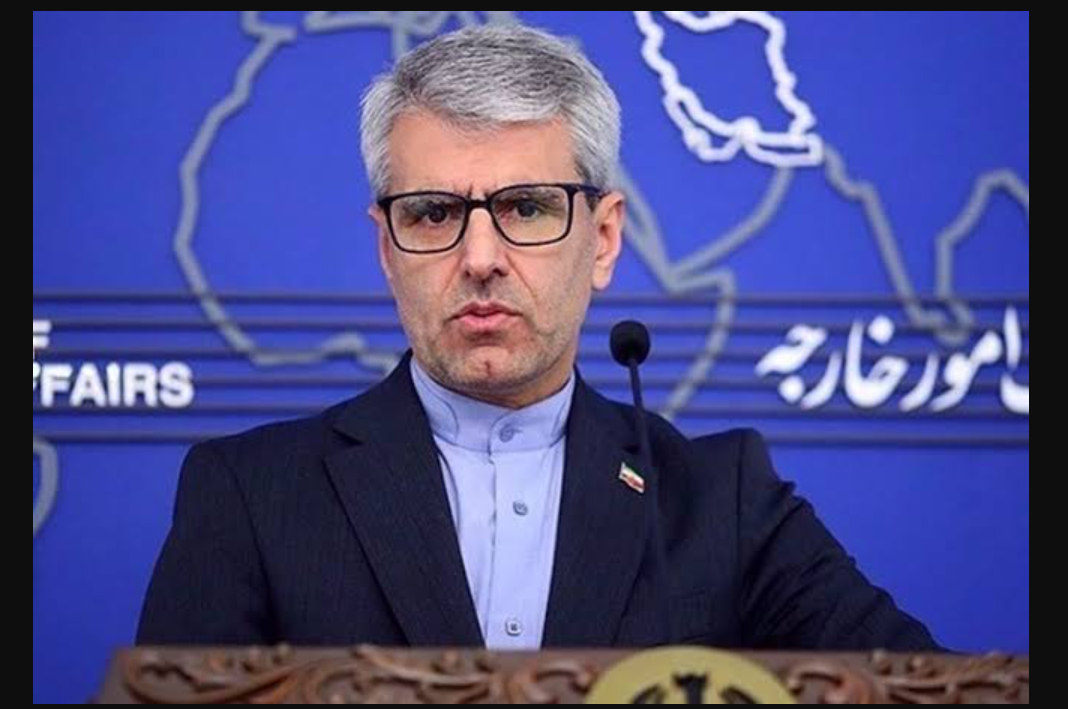
Iranian Foreign Ministry spokesperson Esmaeil Baghaei criticised the remarks in a post on X on Wednesday, October 28. He argued that the United States could not dismiss diplomatic commitments whenever they became inconvenient.
Iran Says Trump’s Remarks Undermine Diplomatic Trust
Reacting to Trump’s reported statement that he never believed in the Islamabad MoU and considered it a waste of time, Baghaei said, “Washington’s contempt for diplomacy is once again laid bare.”
He described the remarks as evidence of what he called the “hollowness of their diplomatic commitments”. Moreover, he accused Washington of repeatedly abandoning its commitments when they no longer suited its interests.
“For Iran, this is nothing new,” Baghaei said, alleging that the United States treats international obligations as disposable when circumstances change.
The Iranian spokesperson also criticised European countries and other supporters of Washington. He argued that there was “absolutely no justification” for continuing to defend US actions or shielding the country from accountability.
Tehran Calls for Accountability Over Broken Commitments
Baghaei accused Washington’s supporters of “whitewashing US misconduct” and insisted that the United States should answer for its actions.
Emphasising the importance of international law, he said, “Broken commitments cannot be excused, international law cannot be applied selectively, and no amount of political spin can absolve Washington of accountability,”
His remarks reflect Tehran’s criticism of what it considers inconsistent US diplomatic conduct. However, the supplied report does not provide further details about the Islamabad MoU or the specific provisions under dispute.
US Estimate Puts Iran War Costs Above $47 Billion
Separately, Pentagon data reportedly puts the cost of the US military campaign against Iran at more than $47 billion. The estimate exceeds the $37.5 billion figure cited by Defence Secretary Pete Hegseth in July.
The reported total includes operational expenses and projected costs for replacing military assets and ammunition. More than $29 billion would be needed to replace munitions used during the conflict.
Additionally, over $6 billion would be required to replace military equipment and platform losses, including aircraft and drones. The figures reportedly do not clearly account for the substantial cost of repairing US bases damaged by Iranian missile and drone attacks.
The Pentagon had not publicly released the latest estimate and did not immediately respond to a request for comment.
Rising War Costs Add to Political Pressure on Trump
The reported increase in military spending comes as Republicans face political pressure ahead of the November 3 elections. The vote will determine control of Congress for the next two years.
Meanwhile, the conflict’s impact on global energy prices has weighed on support for Republican candidates and affected Trump’s approval ratings. Republicans currently hold narrow majorities in both chambers of Congress.
Trump launched the war jointly with Israel in February, initially predicting a short conflict. His strategy focused on using expensive precision missiles to weaken Iranian defences before relying on less costly weapons, including gravity bombs and air-launched JDAMs.
However, an April ceasefire reportedly gave Iran time to recover underground storage facilities and restore some defences, missiles and drones. Trump subsequently imposed a naval blockade aimed at cutting Iran’s oil export revenue.
He has also left open the possibility of renewed military operations after the midterm elections. US officials have reportedly said the Pentagon is preparing for a return to intensive fighting if ordered.
The latest reported cost estimate highlights the financial burden of the conflict, while Baghaei’s comments underline the diplomatic tensions surrounding US commitments and international accountability.
For the latest updates, visit and follow The Truth International website (www.thetruthinternational.com) and subscribe to the YouTube Channel.

