

Nameer Khan Says Film Leaves a Lasting Emotional Impact
Pakistani celebrities Nameer Khan and Rabia Anum Obaid have praised Diljit Dosanjh’s latest film, Main Vaapas Aaunga, highlighting its emotional storytelling and treatment of a sensitive historical subject.
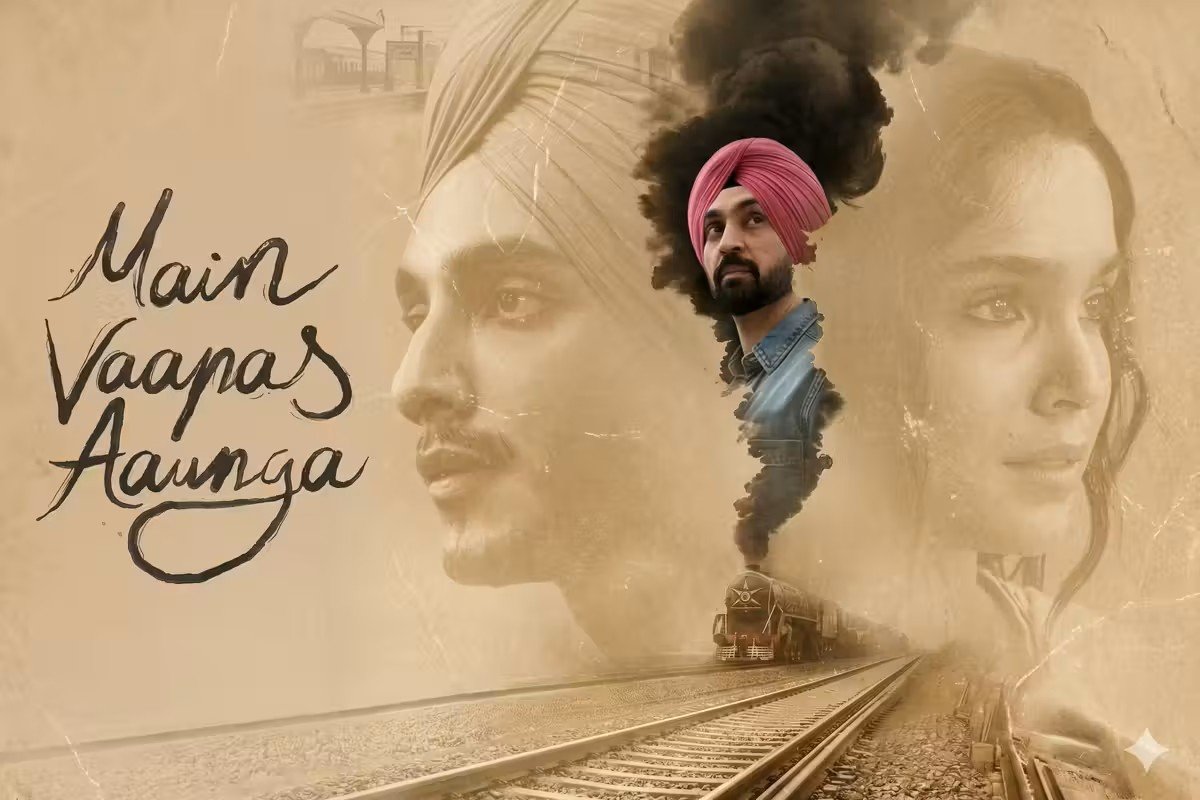
The Imtiaz Ali-directed film stars Diljit Dosanjh, Naseeruddin Shah, Vedang Raina and Sharvari. It explores love, separation, memory and belonging against the backdrop of the 1947 Partition.
Pakistani actor and model Nameer Khan shared his reaction after watching the film.
Khan focused particularly on its emotional impact, suggesting that certain stories can reach deeply buried feelings that viewers may not even realise they are carrying.
His response indicated that the film stayed with him beyond the viewing experience and encouraged reflection on memory, loss and emotional wounds. Pakistani entertainment pages also reported both Khan and Rabia Anum sharing appreciative reactions to the film.
The emotional tone is central to Main Vaapas Aaunga.
The film follows themes of longing and displacement created by Partition, while connecting characters across different generations.
One part of the story involves an elderly man who wishes to reconnect with a home and memories left behind across the border. Reviews have described the film as a story built around love, nostalgia and the lasting impact of migration.
Rabia Anum Praises Film for Avoiding Political Propaganda
Television host Rabia Anum Obaid also shared a positive reaction after watching the film.
She particularly praised what she viewed as the film’s avoidance of political propaganda.
Her comment was significant because Main Vaapas Aaunga deals with Partition, a subject that has frequently produced politically charged films and television dramas in both India and Pakistan.
Rabia described the film’s approach as notable given the current political environment between the two countries.
Her observation represents her personal assessment of the movie rather than an objective determination that the film contains no political messaging.
The film instead places much of its emphasis on personal relationships and the emotional consequences of borders and migration.
A widely discussed scene involving Diljit Dosanjh’s character and an elderly man highlights that approach.
During a video call, the elderly character recognises a woman in an old photograph and becomes visibly emotional.
The sequence connects the present with memories formed decades earlier and reinforces the film’s themes of separation and unresolved longing.
Director Imtiaz Ali has built the story around the human consequences of Partition rather than treating the historical event only as a political conflict. Published coverage of the film similarly describes it as a tale of love and longing rooted in Partition-era migration.
Diljit, Naseeruddin Shah Lead Imtiaz Ali’s Emotional Drama
Main Vaapas Aaunga brings together Diljit Dosanjh and veteran actor Naseeruddin Shah alongside younger stars Vedang Raina and Sharvari.
The film is directed by Imtiaz Ali and written by Ali and Nayanika Mahtani.
Its music is composed by A.R. Rahman, with lyrics by Irshad Kamil.
The film was released theatrically in June 2026.
It initially received a relatively modest response but later gained momentum through audience recommendations and positive word of mouth. Recent coverage has highlighted growing appreciation for its performances and emotional themes.
Naseeruddin Shah’s performance has also attracted attention because his character carries much of the story’s memory and emotional weight.
Diljit, meanwhile, plays an important role in connecting that past with the present.
Vedang Raina and Sharvari portray characters connected to the earlier generation and the Partition-era portion of the story.
The positive reactions from Nameer Khan and Rabia Anum Obaid show that the film’s emotional themes are also finding an audience across the border.
For viewers responding to the film, its biggest strength appears to be its attempt to tell a story about people separated by history while keeping human emotion at the centre.

