
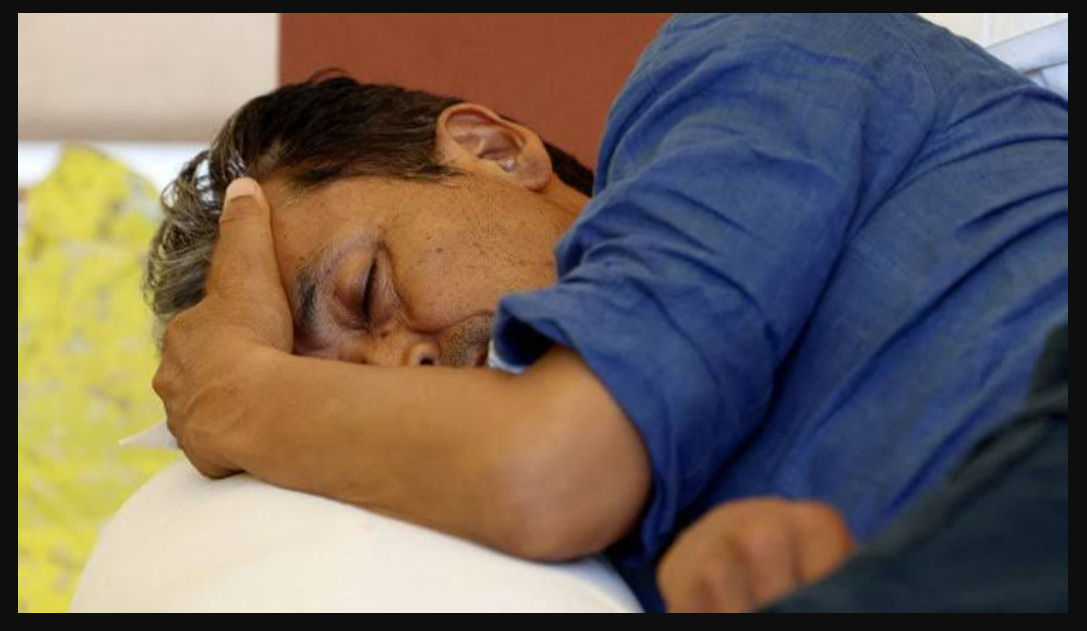

Indian social activist and education reformer Sonam Wangchuk remains in critical condition as his indefinite hunger strike entered its 18th consecutive day. His deteriorating health has prompted growing concern across India, while supporters have announced fresh protests in solidarity with his campaign.
The hunger strike has become a focal point for public frustration over alleged examination irregularities and the NEET paper leak controversy. Consequently, several political leaders and activists have urged Wangchuk to end his fast before his condition worsens further.
Wangchuk’s Health Continues to Deteriorate
Sonam Wangchuk has been observing a hunger strike in central Delhi since June 28. He launched the protest in solidarity with the founder of India’s youth Cockroach Janta Party (CJP), who has been staging a sit-in protest demanding the resignation of Education Minister Dharmendra Pradhan over examination paper leaks that affected millions of students.
According to updates shared by supporters, Wangchuk has lost more than eight kilograms since beginning the protest.
CJP founder Abhijeet Dipke also expressed serious concern over Wangchuk’s condition.
“Wangchuk has been losing muscle mass and is in “immense pain”.”
Supporters further stated that he remains under continuous medical supervision as doctors closely monitor his health.
CJP Announces Nationwide Solidarity Hunger Strike
Meanwhile, the Cockroach Janta Party announced a one-day mass hunger strike on July 16 to support Wangchuk’s ongoing protest.
The party called on supporters across the country to participate through a message shared on X.
“Tomorrow, July 16th join us for 1-day mass hunger strike in solidarity with Sonam Wangchuk and the students of this country.”
The announcement reflects growing public support among students and young citizens concerned about examination transparency and accountability.
Opposition Leaders Appeal to Wangchuk
Several senior opposition leaders have appealed to Wangchuk to end his hunger strike because of his worsening health.
Former Uttar Pradesh Chief Minister Akhilesh Yadav also shared a public message urging him to reconsider.
“His life is invaluable to the entire world because it embodies a commitment to humanity and the environment that is as profound as his commitment to democracy.”
His remarks echoed wider concerns that Wangchuk’s health has reached a dangerous stage.
Petition Seeks Immediate Medical Intervention
A petition has also been filed before the Delhi High Court seeking urgent medical intervention.
The plea argues that Wangchuk’s health has deteriorated significantly and warns that his life could be at serious risk if the hunger strike continues.
According to the petition, authorities should shift him to a government hospital for specialised treatment.
It also requests permission to administer a medically supervised liquid diet containing essential nutrients, vitamins, and minerals if necessary.
The petition argues that such intervention would help preserve his life even if it is carried out against his wishes.
Protest Linked to Examination Irregularities
The protest has drawn national attention because it centres on allegations of examination irregularities and the NEET paper leak controversy.
Supporters argue that accountability is necessary after millions of students were affected by examination-related issues.
As public attention grows, the movement continues to attract students, activists, and political leaders from different parts of the country.
Growing Youth Frustration Adds Momentum
The Cockroach Janta Party describes itself as representing “the lazy, the unemployed, and the chronically correct.”
Its rapid rise on social media reflects growing frustration among many young Indians.
Youth unemployment and concerns over competitive examinations have become major public issues in recent years.
The cancellation of a medical entrance examination involving millions of candidates further intensified criticism over examination management.
Consequently, Wangchuk’s hunger strike has evolved beyond an individual protest and now represents broader demands for transparency, accountability, and reforms within India’s education system.

