
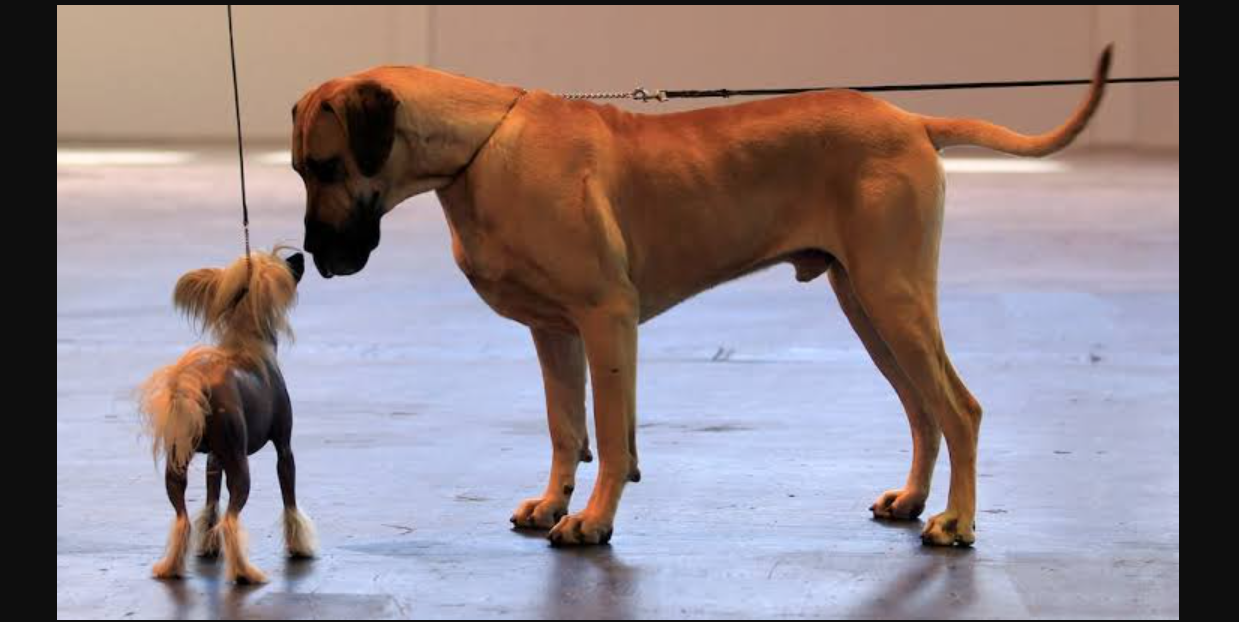

Great Danes and other large dog breeds often live shorter lives than smaller breeds, such as Chihuahuas. Scientists have now uncovered a possible explanation for this difference by examining how dogs’ DNA changes with age.
The findings suggest that larger dogs experience faster molecular aging in their blood. Moreover, male dogs also show signs of accelerated aging, according to a study published in the journal Science.
Researchers analysed DNA methylation patterns to investigate why large dogs tend to die younger. These patterns involve chemical tags that help regulate whether genes remain active or switch off.
The research could help scientists understand the biological processes behind canine aging. However, the findings do not suggest that a single mechanism determines how long every dog will live.
Researchers Develop a DNA-Based Aging Clock
The research team examined DNA methylation, which involves chemical tags attached to DNA. These tags help control gene activity and change as animals grow older.
Using age-related methylation patterns, the researchers developed an epigenetic clock to estimate a dog’s biological age. The clock achieved a median estimation error of less than one year.
The team analysed 1,640 blood methylation profiles collected from 894 pet dogs representing different breeds. Their analysis revealed that larger dogs showed faster molecular aging signatures than smaller dogs.
Furthermore, male dogs also displayed signs of accelerated molecular aging. Dogs whose biological age appeared older than expected faced a higher risk of early death.
Noah Snyder-Mackler, a professor at Arizona State University’s School of Life Sciences and Center for Evolution and Medicine, co-authored the study.
“We all know that big dogs usually don’t live as long as small dogs, but we have not known whether their cells actually age faster, or whether they simply hit certain diseases earlier,” he said.
How DNA Changes May Affect Large Dogs
The researchers found particularly rapid changes in DNA methylation in certain genomic regions. These regions help silence mobile genetic elements known as transposable elements, or jumping genes.
Jumping genes can copy themselves and insert their copies into different locations within the genome. Although these elements form part of the genome, their activity can contribute to genetic instability.
One type, called LINE1, normally remains suppressed through DNA methylation. However, scientists have linked its activation to genome instability, cancer and other age-related diseases.
Snyder-Mackler explained the findings by highlighting how methylation changes in these regions over time.
“We found that large dogs show a faster-moving DNA methylation aging signature in blood, and that this acceleration is especially strong in parts of the genome that normally help keep ‘jumping genes’ quiet,” Snyder-Mackler said.
He added that methylation at these locations appears to decline more quickly as large dogs age. This pattern could weaken the mechanisms that normally keep mobile genetic elements under control.
“In large dogs, Snyder-Mackler said, “methylation at those regions appears to erode more quickly with age, as if the genome is losing some of the tape or clamps that keep these mobile elements suppressed.”
The findings suggest that large dogs may follow a faster molecular aging trajectory. Nevertheless, further research will help establish how these changes contribute to disease and lifespan.
Why Faster Molecular Aging Matters
The study offers a possible explanation for why large dogs often have shorter lifespans. If biological aging processes accelerate throughout adulthood, researchers may be able to track these changes before diseases develop.
“If large dogs simply died earlier after following the same molecular trajectory, we would look for late-life triggers of disease or mortality. But if parts of the aging program move faster throughout adulthood, as our data suggest for the blood methylome, then there may be processes we can measure, follow over time, and potentially modify before disease appears,” Snyder-Mackler said.
This distinction could guide future research into preventing or delaying age-related illnesses in dogs. However, the researchers have not established that changing DNA methylation would directly extend a dog’s life.
Instead, their findings identify molecular processes that scientists can investigate further. Such research could eventually help explain why some dogs age faster and face earlier health problems.
Male and Female Dogs Show Different Aging Patterns
The researchers also identified differences between male and female dogs, particularly on the X chromosome. Females typically carry two X chromosomes, while males generally carry one.
The team observed higher methylation levels at LINE1 elements on the X chromosome in males. However, the researchers found that sex-related patterns differed from those associated with body size.
“In our genome-wide analyses, the sex signal looked distinct from the body-size signal, so I would treat that as a separate biology that needs follow-up rather than the same mechanism in disguise,” Snyder-Mackler said.
Therefore, scientists will need further investigation to understand how sex influences molecular aging. The findings do not establish that the same biological mechanism explains both sex-related differences and the shorter lifespans of large dogs.
Could Selective Breeding Explain Why Large Dogs Age Faster?
Human breeding practices may also help explain the relationship between body size and lifespan. Over generations, people selected dogs for particular traits, including rapid growth and large adult size.
These characteristics proved useful for activities such as guarding, hunting and herding. However, selection for rapid growth or larger bodies may also have carried biological costs that become apparent later in life.
“If selection strongly favors rapid growth or large adult size before old age, late-life costs can come along for the ride,” Snyder-Mackler added.
Earlier explanations for large dogs’ shorter lifespans have focused on growth-related biology. Researchers have suggested that larger dogs may experience more cell growth, develop more rapidly or face greater cancer risks.
The new findings do not replace these explanations. Instead, they add a molecular perspective that may help researchers understand how body size relates to aging.
“Our study does not replace those ideas; it gives us a molecular layer downstream of body size,” Snyder-Mackler said.
Can Slowing DNA Aging Help Large Dogs Live Longer?
The research raises the possibility that slowing molecular aging could improve healthy lifespan in larger dogs. However, scientists caution against viewing aging as a process controlled by one biological clock.
Breed-specific characteristics and health risks would still influence longevity. Consequently, reducing one aspect of molecular aging would not eliminate every factor affecting a dog’s lifespan.
Snyder-Mackler explained that slowing molecular aging would not make a Great Dane live as long as a Chihuahua. Instead, it might reduce the speed of one component of the larger dog’s aging process.
The findings offer a promising direction for future research into canine health and longevity. For now, scientists have identified important DNA-related differences, but further studies must determine whether these processes can be safely modified to improve dogs’ lives.
For the latest updates, visit and follow The Truth International website (www.thetruthinternational.com) and subscribe to the YouTube Channel.

