
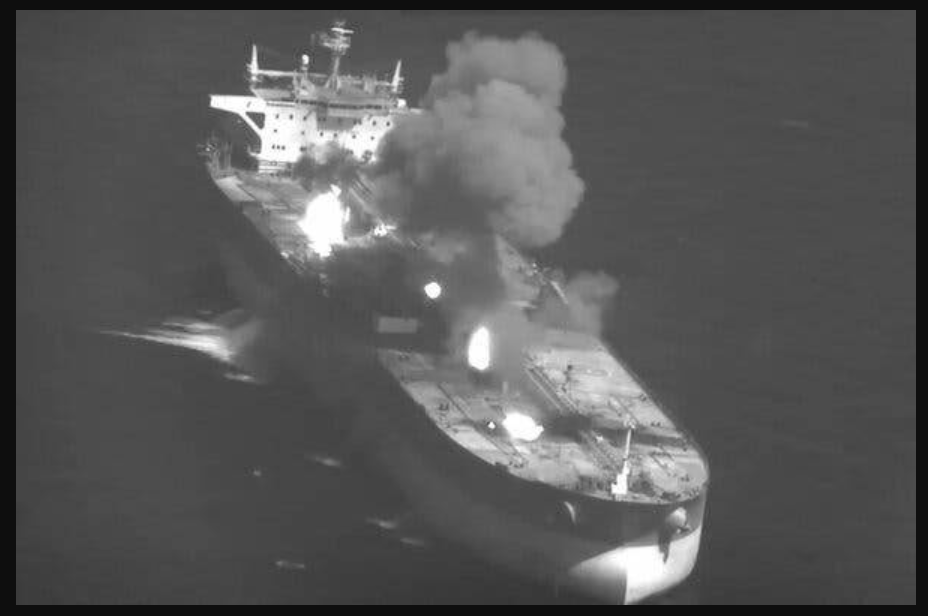

American forces have destroyed three Iranian oil tankers. The strikes happened on Saturday. They were a direct response to attempted missile attacks on US naval vessels. This event marks the latest clash between the two long-time foes. Renewed hostilities have flared up again in the region.
The new fighting started with US raids last week. Both sides are now deadlocked in the ongoing conflict. Iran maintains a strong grip on the Strait of Hormuz. Meanwhile, Washington pushes its counter-blockade against Iranian ports.
CENTCOM Confirms Targeted Attacks on IRGC Vessels
US Central Command (CENTCOM) confirmed the strikes. They said the targeted tankers had links to the Islamic Revolutionary Guard Corps (IRGC). The IRGC is the most powerful military faction in Iran. CENTCOM accused them of firing missiles at American warships. Fortunately, those attacks were unsuccessful.
The military action was swift and decisive. “Following Iran’s failed attacks, CENTCOM permanently disabled the IRGC crude oil carriers M/T Downy off the coast of Kharg Island and M/T Stark 1 near Jask,” a statement revealed. The operation continued with a third target. “American forces also destroyed the unladen crude oil carrier M/T Kylo… in the Gulf of Oman, striking the vessel in multiple critical locations to render it inoperable after the crew was directed to abandon ship.”
CENTCOM later posted video footage of the attack. The visuals showed large fireballs and billowing flames. The projectiles struck the ships with significant force. According to military officials, these three vessels were part of a massive shadow network. This network reportedly funds the IRGC and its regional proxies, worth billions of dollars.
US Admiral Issues Stern Warning to Iran
Admiral Brad Cooper is the CENTCOM commander. He issued a strong warning after the strikes. “If you shoot at two of our ships, we will impose an even higher economic cost — taking out three of yours,” he stated. This aggressive stance shows the US is willing to escalate its response.
The United States is also applying other forms of pressure. Beyond military action, Washington aims to choke Iran’s economy. They recently announced new sanctions on entities with financial links to the Islamic Republic. This dual approach of military and economic pressure seeks to further isolate Tehran.
Regional Reactions and Escalating Tensions
Earlier on Saturday, Iranian media reported explosions. These occurred near the country’s major oil hub. The hub is located at Kharg Island in the Gulf. This was likely the site of the initial US strikes.
Tehran had already signaled its intent to fight back. On Thursday, Iran’s armed forces attacked US military bases in Kuwait and the UAE. They vowed to avenge civilian deaths at a wedding. Tehran blamed the wedding strike on an American attack. US Vice President JD Vance mentioned that the alleged wedding strike is under investigation. However, he expressed personal skepticism regarding the reports.
The Strait of Hormuz Blockade and Conflict
The conflict has a strategic core: the Strait of Hormuz. One-fifth of the world’s oil supplies once flowed through this waterway. Iran has been enforcing a blockade. The US is trying to break this stranglehold. A fragile ceasefire collapsed in July after attacks on commercial ships in the area.
The Trump administration is trying to manage the narrative. They are downplaying the significance of the six-month conflict. The war has proven increasingly unpopular at home. This is especially crucial as midterm elections draw near. Vice President Vance recently stated that he “wouldn’t call it a war.” He claimed that “right now, there is no active shooting” despite the ongoing exchanges of fire. President Donald Trump echoed these comments. He referred to the Iran war as “small potatoes” for the US, insisting, “It’s not a big thing.”
Iran’s Warning and the Future of Oil Flows
Iran’s security chief, Mohsen Rezaei, offered a different perspective. He warned the US this week. He stated that the Islamic Republic has adopted a “new strategy” against Washington. He claimed this strategy “will shatter your foundations.”
The US remains focused on breaking Iran’s control. They have been trying to step up pressure over the blockade. Trump has even threatened to claim sovereignty over the strait. He posted a map showing it as “new US territory.” Vance insisted that the US would not reopen talks with Iran until it ends attacks on commercial shipping.
However, the administration has a new message. They want to show that oil flows through the waterway are returning to normal. They claim that control over the Strait is now effectively gone from Iranian hands. They insist that the flow of oil is returning to pre-war levels. This message is critical for them. Fuel prices could cost Republicans their control of Congress. The administration is trying to assure the public that the conflict is manageable.

