
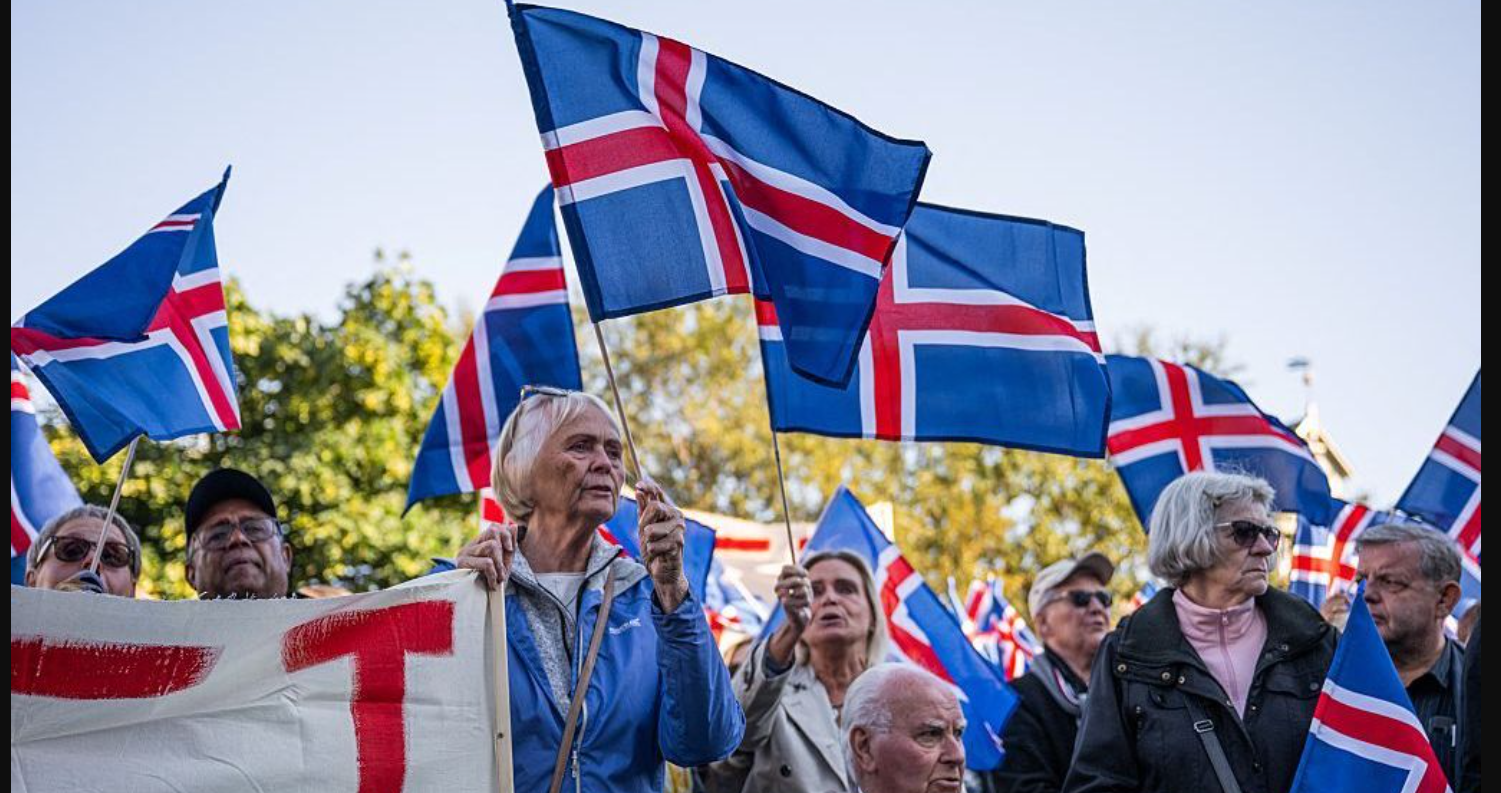

Icelanders have voted against reopening membership talks with the European Union, rejecting the government’s push for renewed negotiations.
The result keeps the island nation outside the bloc after decades of debate over possible EU membership.
Fishing rights, the cost of living, interest rates, and national sovereignty shaped the referendum campaign. Security concerns also featured in the wider discussion.
Some votes from one constituency remained pending. However, these votes were not expected to change the outcome.
The result is likely to disappoint supporters of EU enlargement in Brussels. Some European officials had viewed Iceland as a relatively low-risk candidate.
Iceland has a population of around 400,000 people. Its strategic location has also gained importance as Arctic security receives greater attention.
Iceland Rejects Renewed EU Membership Talks
The government had presented the referendum as an important moment for Iceland’s future relationship with the European Union.
It described the choice as a “now or never” moment.
Prime Minister Kristrun Frostadottir had warned that a rejection would put the membership question aside.
The government argued that EU membership could provide greater protection against trade disputes and Arctic rivalry.
However, opponents maintained that Iceland’s fishing waters were too important to risk through EU membership.
The referendum therefore became more than a simple question about reopening negotiations. It also reflected competing views about Iceland’s sovereignty and economic future.
Why Fishing Rights Became Central
Fishing emerged as one of the strongest arguments against EU membership.
Opponents of membership argued that joining the bloc could threaten Iceland’s control over its fishing waters.
Under EU rules, fishing quotas are based on historical fishing patterns, among other factors.
Some Icelandic officials have therefore argued that Iceland could retain control of its waters.
They noted that no EU country has fished there for decades.
However, opposition leader Gudrun Hafsteinsdottir challenged that argument.
“I know that the European Union will come up with some promises of some flexibility, especially in the beginning, but we know that it will not be for good,” she said.
The disagreement highlighted the importance of fishing to the referendum debate.
For opponents, protecting national control over fishing waters remained a major reason to reject renewed membership talks.
Cost of Living Adds to EU Debate
Economic concerns also played a major role in the referendum campaign.
Iceland has faced high inflation and interest rates. Consequently, expensive mortgages have become an important issue for households.
Supporters of EU membership argued that joining the bloc could help address some economic pressures.
They also suggested that adopting the euro could potentially provide additional relief.
Iceland’s central bank interest rate stands at 8%. Meanwhile, the European Central Bank’s rate is 2.25%.
The difference became part of the argument for closer European integration.
Chief economist Vilhjalmur Hilmarsson at Viska, one of Iceland’s largest labour unions, supported the economic argument for membership.
“It would not solve Iceland’s structural faults, but it could become a catalyst to a more healthy economy,” he said.
However, opponents rejected the idea that Brussels could solve Iceland’s domestic economic challenges.
Hafsteinsdottir, who led the “no” campaign, argued that Iceland should address those problems itself.
“These are not problems that Brussels will solve for us. These are problems that Icelandic politicians must solve,” she said.
Security Concerns Could Not Change the Vote
The referendum also took place against a changing international security environment.
Geopolitical turmoil has increased pressure on countries to reassess their strategic relationships.
The war in the Middle East and US import tariffs added urgency to Iceland’s long-running EU debate.
Supporters of membership argued that closer European ties could provide greater security.
They also pointed to uncertainty created by the war in Ukraine and US President Donald Trump’s rhetoric about annexing another Arctic island, Greenland.
However, security concerns did not overcome opposition to renewed EU membership talks.
Instead, fishing rights, economic conditions, and sovereignty remained central to the campaign.
Iceland’s Long EU Membership Debate
Iceland’s debate over EU membership stretches back several decades.
The country first applied to join the European Union in 2009.
The application came during a financial crisis that severely affected Iceland’s small and exposed economy.
However, a Eurosceptic government ended the membership talks in 2013.
Since then, the question has repeatedly returned to Iceland’s political debate.
The latest referendum again brought the issue directly before voters.
Prime Minister Kristrun Frostadottir described the vote as an important opportunity for Icelanders to decide the country’s direction.
Speaking after casting her ballot in Reykjavik on Saturday, she said:
“We’ve been waiting for this for years to be able to have a vote,” Frostadottir said, adding that her government would continue its work regardless of the outcome.
The result has now provided voters with a direct answer to the question of reopening membership talks.
What Did Voters Think About Independence?
For many opponents, staying outside the European Union represented a way to preserve Iceland’s independence.
Voter Ragnhildur Skarphedinsdottir, 70, said Iceland was managing well independently.
She said she was voting “no” in the referendum.
“By staying independent as we are, we look brightly to the future,” she said before casting her ballot in Reykjavik.
Her comments reflected one of the central arguments made by the opposition campaign.
The “no” side maintained that Iceland could address its economic and political challenges without joining the European Union.
Meanwhile, supporters believed closer European integration could provide economic and security benefits.
A Decision Shaped by Domestic Concerns
Although international security formed part of the debate, domestic concerns dominated much of the campaign.
Interest rates, fishing rights, and the cost of living remained major issues for voters.
Iceland has faced high inflation and costly mortgages. Therefore, the potential economic impact of EU membership became an important point of disagreement.
Supporters saw European integration as a possible route toward greater economic stability.
Opponents, however, argued that Iceland’s economic problems required domestic solutions.
The fishing industry added another layer to the debate. Iceland’s fishing waters remain closely linked to national sovereignty in the eyes of opponents.
Consequently, concerns over fishing rights became a powerful argument against reopening membership negotiations.
Brussels Faces a Disappointing Result
The referendum result is also significant for the European Union.
Some European officials had viewed Iceland as a low-risk case for EU enlargement.
Iceland’s strategic position also carries importance as attention increasingly focuses on Arctic security.
A renewed membership process could therefore have offered the bloc an opportunity to strengthen its position in the region.
Instead, Icelandic voters rejected the government’s push to reopen talks.
The result means the membership question will now move back from an immediate political decision to the broader debate over Iceland’s future.
What Comes Next for Iceland?
The government had warned that a “no” vote would put the membership question aside.
That outcome has now materialised.
The referendum campaign exposed competing views about Iceland’s place in Europe and the wider world.
Supporters highlighted economic relief, lower interest rates, possible euro adoption, and greater security.
Opponents focused on sovereignty, fishing rights, and Iceland’s ability to solve its own economic challenges.
For voters, the decision ultimately came down to whether closer European integration offered enough benefits to justify reopening the membership process. The answer was no.
Icelanders have chosen to remain outside the European Union and reject the government’s current push to resume membership talks.
The result closes another chapter in Iceland’s long-running EU debate.
However, the issues that shaped the referendum remain important to the country’s future, particularly fishing rights, economic pressures, sovereignty, and security.

