
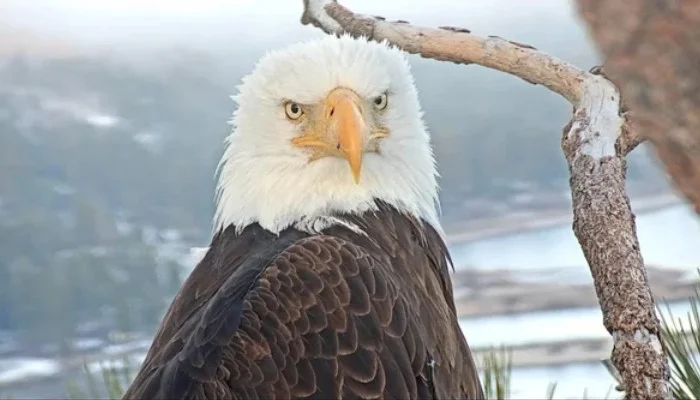

Jackie, a 14-year-old bald eagle who gained worldwide fame through a California wildlife livestream, has died after a prolonged illness. The Ojai Raptor Center confirmed that Jackie died early Monday despite receiving intensive medical care. The center later transferred her remains to the California Department of Fish and Wildlife.
Wildlife rescuers found Jackie on July 17 after reports said she had fought with two other eagles. Veterinarians discovered severe anemia and another condition that had reduced her blood cell count.
Jackie’s Final Fight
The rescue team provided Jackie with oxygen therapy, blood transfusions and other treatments. However, her condition deteriorated over the weekend.
The Ojai Raptor Center expressed deep sadness over her death and described caring for the famous eagle as an extraordinary privilege.
Jackie captured global attention through a livestream operated by Friends of Big Bear Valley. Since 2015, millions of viewers have followed her life with her mate, Shadow, in the San Bernardino Mountains.
Fans watched the pair build their nest and raise eaglets over the years. Jackie became especially admired for her dedication to her eggs during difficult weather.
In 2024, she remained on her nest for more than 60 hours during a severe winter storm. Her determination drew widespread attention from viewers who followed the livestream.
Jackie Leaves a Conservation Legacy
Biologists also regarded Jackie as an important symbol of the bald eagle’s recovery in the United States.
Experts believe Jackie was the first bald eagle to hatch in Big Bear Valley. Her presence therefore represented an important achievement for bald eagle conservation in California.
Her death has brought an emotional end to a remarkable chapter for wildlife watchers around the world. However, Friends of Big Bear Valley will continue its livestream.
The cameras will now allow viewers to follow Shadow and other wildlife living in the region. Jackie’s story will also remain part of the conservation history of Big Bear Valley.
For thousands of viewers, her life offered a rare opportunity to observe an iconic American bird up close. Her journey also showed how wildlife conservation can connect people with nature through technology.

