
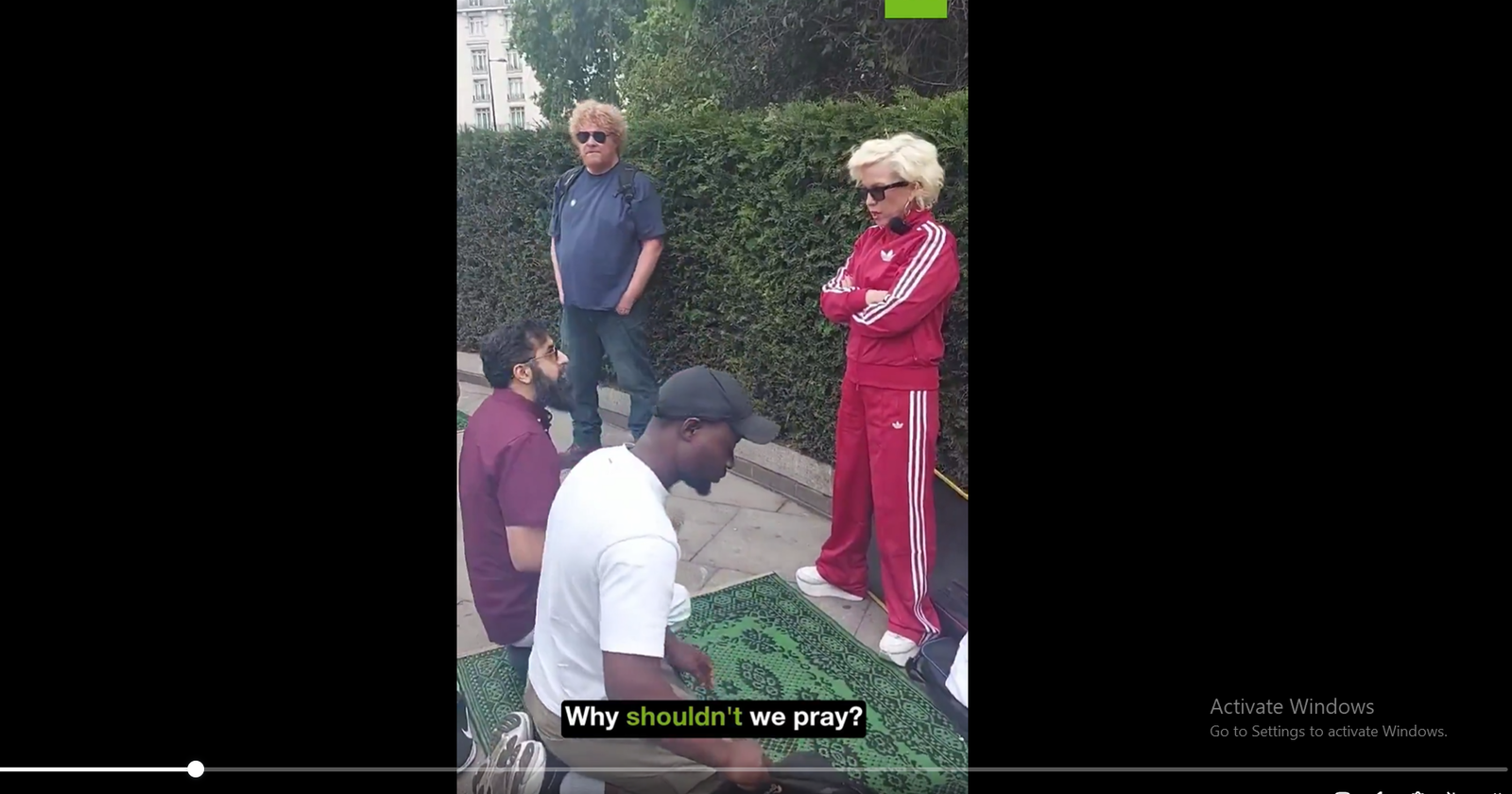

British activist Kellie-Jay Keen has sparked controversy after disrupting a group of Muslim men praying in London’s Hyde Park. The incident drew attention after she described herself as an “Islamophobe” while rejecting accusations of racism.
During the incident, Keen reportedly interrupted the prayer by playing the Christian hymn “Amazing Grace” near the worshippers. She claimed that Muslims praying in public spaces represented “an act of dominance,” though her comments have faced criticism from various groups.
'I'm an Islamophobe. I'm not a racist' — British activist Kellie-Jay Keen disrupts Muslim men praying in Hyde Park
She claims they pray in the street only as 'an act of dominance' while drowning out their prayer with 'Amazing Grace' pic.twitter.com/lyKk2s0W5j
— RT (@RT_com) July 27, 2026
The event quickly gained attention online, with discussions focusing on freedom of expression, religious rights, and the limits of public protest.
Activist’s Comments Create Public Reaction
Keen, who is known for her outspoken views on gender issues and social debates, defended her actions and stated, “I’m an Islamophobe. I’m not a racist.” She argued that her criticism was directed toward a religion rather than individuals based on their ethnicity.
However, critics accused her of targeting Muslims and disrupting a religious practice. They argued that peaceful prayer in public areas should be respected as part of religious freedom.
Meanwhile, supporters of Keen said her actions reflected concerns about public demonstrations and the use of shared spaces. They described the incident as a form of protest protected under free speech rights.
Debate Over Religion and Public Space Continues
The incident has renewed discussions in the United Kingdom about religious expression, tolerance, and the boundaries of activism. Public prayers, particularly during large gatherings, have previously generated debates over access to shared areas and community relations.
Legal experts and community leaders often emphasize that freedom of expression must exist alongside respect for other people’s rights. While protests are protected in democratic societies, authorities may intervene when actions disrupt lawful activities or create public disorder.
The Hyde Park incident remains part of a wider conversation about how societies balance religious freedom, individual expression, and social harmony. As reactions continue, the debate highlights ongoing tensions surrounding identity, belief, and public demonstrations in modern Britain.

